Dar es Salaam forum warns SADC of looming deadline to secure shared satellite slot

Dar es Salaam. The Southern Africa region has eight years to secure its shared satellite in orbit, or permanently lose the slot, the SADC forum heard yesterday.

The stark message was delivered in Dar es Salaam as Tanzania’s Minister for Communication and Information Technology, Ms Angellah Kairuki, rallied SADC member states to move from policy talk to operational execution under the SADC Shared Satellite initiative.
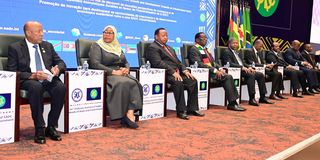
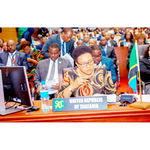
She was officiating the opening of the four-day forum bringing together satellite experts, ICT and telecommunications engineers, as well as ministers from SADC member states to deliberate on the future of the region’s shared satellite utilisation strategy.

“We are convened at a critical juncture to move from the Southern African Development Community (SADC) Satellite Sharing Framework to concrete operational implementation,” Ms Kairuki said, declaring that the region must become “a sovereign master of its own digital destiny.”

At the heart of the urgency is a regulatory deadline under the International Telecommunication Union (ITU).

According to the SADC Secretariat’s Senior Programme Officer for ICT, Dr George Ah-Thew, the bloc has only eight years to bring the satellite into use.

“We have eight years’ regulatory limit to bring this satellite into operation. Otherwise we lose it, and unfortunately we will not be eligible to resubmit as Resolution 170 can only be applied once,” he warned.

SADC is currently the only Regional Economic Community to have successfully applied the ITU’s special procedure under Resolution 170, securing orbital resources that must be operational by September 2033.

The immediate tasks include satellite frequency coordination, capital mobilisation, and the establishment of a private commercial vehicle to procure, launch and operate the shared satellite network.

For Tanzania, the push is not symbolic, it builds on a strong domestic digital foundation.

“Tanzania views space and the use of satellite technologies as the essential ‘final layer’ of a massive terrestrial foundation,” Ms Kairuki said.

That terrestrial backbone is already extensive. Through the National ICT Broadband Backbone (NICTBB) and five submarine cable landings, Tanzania has strengthened links with neighbours including the Democratic Republic of Congo, Malawi, Mozambique and Zambia.

Through the Universal Communication Services Access Fund, 2,151 cellular towers, about 20 percent of all towers nationwide, have been deployed, the minister said.

“As of December 2025, mobile population coverage stood at 98.6 percent for 2G, 93.4 percent for 3G, 94.2 percent for 4G and 30.1 percent for 5G,” she noted.

Yet, as Ms Kairuki stressed, fibre alone cannot bridge every gap.

“We must ensure that satellite technology is not siloed within communications,” she said, highlighting applications in agriculture, mining, climate monitoring, disaster management, and regional security.

Tanzania is already implementing its National Space Programme, including the CubeSat KiboCube Project in partnership with the United Nations Office for Outer Space Affairs and the Japan Aerospace Exploration Agency, alongside its National Five-Year Space Implementation Framework.

The regional case is compelling. In 2024, SADC had roughly 175 million people who were not internet users, according to Dr Ah-Thew.

The shared satellite network is designed to connect the unconnected, enhance broadcasting resilience, and reduce duplication of costly national satellite projects.

A Tanzanian space policy analyst, Dr Faith Mkwizu, said the Dar es Salaam deliberations could redefine the region’s digital future.

“This is about orbital sovereignty. If SADC fails to operationalise the slot, it risks being permanently marginalised in the geostationary arc,” she said.

Telecommunications economist, Prof Thabo Ndlovu, from Botswana added that shared infrastructure could significantly reduce bandwidth costs, particularly for landlocked member states.

“But the governance model must be commercially viable and shielded from political delays,” he cautioned.

Across Africa, space ambitions are accelerating, with nineteen countries having launched satellites by December 2025.

Early movers such as South Africa and Angola have provided valuable lessons in capacity building and regulatory coordination.