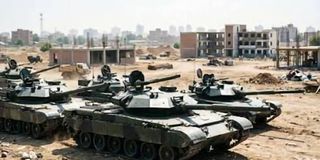
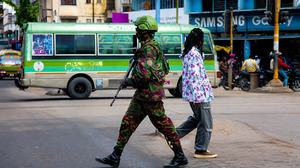
For the third time in a row, Pakistan has committed itself to the budget, which is a nightmare for any Development expert. The 2026-27 budget stood out from its two predecessors, as the government more explicitly chose ‘Guns over Butter’. From around PKR 2.13 trillion in 2024-25, the new defence budget got an allocation of PKR 3 trillion, marking a 40 percent hike. On the contrary, the Public Sector Development Programme (PSDP) received a shrunken share of just Rs. 1 trillion.
Given the current economic crisis ailing the economy, a generous dollop of funds earmarked for the defence sector seems not just extravagant but also oppressive to a large mass of the population vulnerable to poverty. Sectors crucial for human development, especially for an economy with sub-optimum health, education, and other socioeconomic outcomes, and an HDI ranking of 168 out of 193 countries, have faced a major setback under this budget. Pakistan’s awaam is already crushed under the inflationary pressure; now the ambitious rise in the tax revenue target is set to further push them to the margins. The already tight fiscal space in which the government has been operating has given no way for tax restructuring, like broadening the tax base. Though there are concessions to the salaried class in this budget, they also bear a disproportionate tax burden. Thus, the faulty tax structure of the state doubles down on the salaried workers and businesses, while real estate remains out of tax jurisdiction.
As the economy has spent its major financial resources in managing crises over the last few years, keeping economic growth at the backseat, it now finds itself in the ugly middle position between managing BOP crisis and instilling growth, generating employment, and reducing poverty. One thing is apparent, given the current spending behaviours of the government, which prioritises defence over public welfare, the economy might keep on experiencing pendulum-like, fragile stability, highly vulnerable to any internal or external economic shocks. Any macroeconomic stability, let alone growth achieved, isn’t robust and resilient.
The economy is in a low-growth equilibrium trap bordering on stagflation, given the recent double-digit inflation figures, resulting in erosion of purchasing power and rising unemployment. It has been argued that accounting for IMF austerity has been the priority of the Budget 2026-27 in its pursuit of stability, and hence, there isn’t enough room for growth. This argument is not exactly correct. Experts believe that even under the IMF programme, growth needs to be targeted and can be targeted. The budget doesn’t contain the micro-economic interventions by leveraging private-sector funding, which can lead to an economic multiplier and push for growth. The rising bank rate and general lack of trust in the system are the two factors that kill private lending. This has been accompanied by the crowding out of private investment due to government borrowing. If the government focuses on encouraging investment and ensuring the rule of law and compliance, it can incentivise the private sector. However, in reality, we have seen a mass exodus of multinationals from Pakistan in recent years.
Managing crisis over growth may help leaders at the top level, but it crushes the awaam, with declining incomes and jobs. The 2026-27 budget is a make-up attempt, to give good statistical figures while neglecting human development issues. The health sector didn’t see any improvement in its allocations at the federal level, while at the provincial level, there have been some cuts in this sector. For instance, Punjab has made over 20 percent cut in healthcare spending.
On the climate front, one observes a revenue-expenditure paradox. While the government expects to generate Rs 2.026 trillion through green levies, EV adoption taxes, and petroleum support fees, the climate mitigation funding was cut by about 70 percent. Besides, the “green component” of subsidies experienced a budget cut, and the energy sector’s allocation fell by 20 percent to Rs. 423 billion. Other essentials, like food, transport, and the agriculture sectors, faced cuts in the budget.
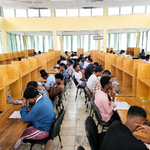
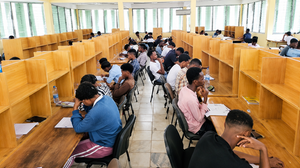
On the Education front, the federal budget skewed its resources toward university-level infrastructure at the expense of primary and secondary education. One pattern of elite capture is observed here with a massive Rs 21.9 billion earmarked for the federal expansion of Daanish Schools (an elite public boarding school model) while only Rs. 3 billion is allocated to address the out-of-school children (OOSC) crisis.
Despite the stability and growth challenges, the economy is busy choosing grenades over human development. This is characteristic of war economies of the Cold War era, where revenue generation hinges on defence production and supply, while citizens’ needs receive thin priorities. Given Pakistan’s rising claim of being a regional security provider and military prowess, a massive budget priority to defence over other essential sectors and human development seems like a contradiction. Though the budget manages to make some apparently pleasing news headlines; Overall, it is a loss of the growth and human development goals, while the economy produces more guns and strives for short-term, non-resilient stability.