U.S. formally withdraws from World Health Organization

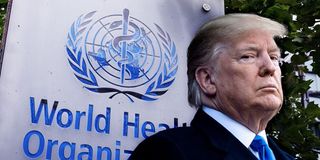
London. The United States has officially withdrawn from the World Health Organization (WHO), ending its membership after months of warnings from global health experts that the move could weaken public health systems in the U.S. and worldwide.

U.S. President Donald Trump issued notice of withdrawal on the first day of his presidency in 2025 through an executive order, citing what his administration described as failures by the UN health agency in its handling of the Covid-19 pandemic.

In a statement issued by the U.S. Departments of Health and State, Washington said it would only engage with the WHO in a limited manner as the withdrawal takes effect and has no intention of rejoining or participating even as an observer.

Instead, the U.S. said it plans to work directly with individual countries on disease surveillance and public health cooperation, rather than through multilateral institutions.

Dispute over unpaid fees

Under U.S. law, Washington is required to give a one-year notice and settle outstanding membership contributions, estimated at about, $260 million, before exiting.

However, U.S. officials dispute that payment is a legal condition for withdrawal. The Department of Health and Human Services said it has already ended all funding contributions to the WHO, arguing that the agency had cost the U.S. trillions of dollars through ineffective pandemic management.

Witnesses in Geneva reported that the U.S. flag had been removed from outside WHO headquarters on Thursday.

The U.S. has also signalled plans to exit several other United Nations agencies, raising concerns among analysts that the move could weaken multilateral cooperation.

WHO officials say the U.S. has not yet paid its outstanding contributions for 2024 and 2025. Member states are expected to discuss the implications of the U.S. exit at the WHO executive board meeting in February.

Legal experts have questioned the legality of the withdrawal without settling outstanding dues.

Financial impact on WHO

The U.S. has traditionally been the WHO’s largest financial contributor, providing about 18 percent of the agency’s total funding.

Its departure has already triggered a financial crisis within the organisation, forcing the WHO to cut its senior management team by half, scale back programmes and reduce budgets. The agency is also expected to lay off about a quarter of its staff by mid-year.

Global health leaders warn that reduced funding could affect disease surveillance, vaccination programmes, emergency response capacity and technical support to developing countries, including those in Africa.

Bill Gates, chair of the Gates Foundation and a major funder of global health programmes, said he does not expect the U.S. to reverse its decision in the near future, but stressed that the world still needs a strong WHO.

Public health experts caution that the U.S. exit could weaken global coordination in detecting and responding to future disease outbreaks, potentially increasing risks for all countries.