Africa urged to unlock domestic capital to bridge $100bn infrastructure financing gap

Dar es Salaam. African governments have been urged to adopt innovative financing models and strengthen partnerships with long-term investors in effort to bridge funding gap in the continent’s vast infrastructure ambitions.

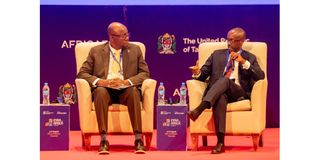
Speaking at the 2026 Infra for Africa Forum and Africa50 General Shareholders Meeting in Dar es Salaam, Stanbic Bank Tanzania chief executive officer Manzi Rwegasira and Standard Bank Group’s global head of energy and infrastructure, Oladele Kuti, said Africa must unlock domestic capital and develop bankable projects to close its widening infrastructure financing gap.

Their remarks came after President Samia Suluhu Hassan called on African leaders, financiers and development partners to move “from vision to delivery”, saying governments cannot finance the continent’s infrastructure needs on their own.

Mr Rwegasira said commercial banks are structurally constrained because they rely largely on short-term customer deposits, making it difficult to provide affordable long-term financing for major infrastructure projects.

“The big challenge that banks face is that our funding comes from depositors, and it is short term,” he said.

“We cannot lend for very long periods at affordable rates because the money we receive is demanded back by our customers quite quickly.”

He explained that projects such as highways, bridges and power infrastructure typically require several years of construction before generating returns over decades, creating a mismatch between banks’ funding sources and infrastructure financing needs. To address this, Mr Rwegasira proposed a financing model in which commercial banks provide capital during the early years of a project before institutional investors, including pension funds, take over long-term financing.

“What banks can do is finance the first five, six or seven years of a project and then bring pension funds in to provide the remaining long-term financing,” he said.

He also urged financial institutions to play a greater role in helping governments design projects that are attractive to private investors.

Mr Kuti said Africa’s infrastructure deficit cannot be addressed without substantial investment in the energy sector, describing reliable power as the foundation of economic growth.

“Driving Africa’s growth story is quite important for us. Our purpose is to drive the growth of the continent,” he said.

“There is no continent that can grow without significant investment in energy and the infrastructure required to support that growth.”

He said nearly 600 million Africans remain without access to electricity, while hundreds of millions still lack clean water, underscoring the scale of investment required across energy, transport and water infrastructure.

Drawing on Standard Bank’s experience across the continent, Mr Kuti pointed to investments in South Africa, Angola, Nigeria and Kenya covering oil and gas, electricity generation, energy storage and transport infrastructure. However, he stressed that commercial banks cannot bridge Africa’s infrastructure financing gap on their own.

“There is a need for Standard Bank, Ecobank, CRDB and NMB, together with other commercial banks, to collaborate,” he said.

“We also need to work closely with development finance institutions such as TDB, Africa50, Afreximbank and the African Development Bank, while leveraging World Bank risk mitigation instruments.”

According to Africa50 chairman and African Development Bank president Sidi Ould Tah, Africa requires between $130 billion and $170 billion annually to meet its infrastructure needs but still faces a financing gap of between $68 billion and $100 billion each year.