Bishops: Cardinal Pengo honoured for parish reforms and national unity advocacy

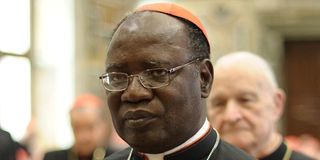
Dar es Salaam. At 10:00 pm on Thursday, February 19, 2026, at the Jakaya Kikwete Cardiac Institute (JKCI) in Dar es Salaam, Polycarp Cardinal Pengo, one of the Catholic Church’s senior spiritual leaders, passed away.

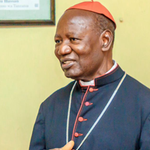
Cardinal Pengo, the retired Archbishop of the Archdiocese of Dar es Salaam, died aged 82.

Throughout his life, he was known for his calm demeanour, both inside and outside the altar, speaking softly yet with authority.

Until retirement, he served the Church for 54 years as a priest, 42 years as a bishop, and 27 years as a Cardinal-Priest.

His funeral programme will begin on Friday, February 27, 2026, when his body will be taken to St Joseph Cathedral for Mass, followed by prayers.

Burial will take place on Saturday, February 28, 2026, at the Pugu Pilgrimage Centre in Dar es Salaam, a site he personally chose as his final resting place.

The Citizen’s sister newspaper, Mwananchi, spoke to several bishops who worked closely with Cardinal Pengo, reflecting on his life and legacy, including his decision to introduce financial guidelines in parishes.

The reforms shifted financial oversight from being handled solely by parish priests to involving lay members, strengthening accountability.

They also highlighted his firm principles and steadfastness in defending what he believed in.

He was described as a leader who valued national unity and empowered those who served under him.

Retired Auxiliary Bishop Methodius Kilaini, who worked with him for more than 20 years in the Archdiocese of Dar es Salaam, said Cardinal Pengo was not easily swayed.

“I worked with him for 10 years at the Tanzania Episcopal Conference (TEC) as Secretary General and another 10 years as his assistant. The last time he attended my jubilee was in March last year. Given his condition, he could easily have stayed away, but because of our closeness, he came,” said Bishop Kilaini.

He added that Cardinal Pengo’s spiritual life was firmly grounded in moral values and Church teachings, noting that he held a doctorate in moral theology from the University of Rome.

“Despite his humility, he was principled in matters of morality and doctrine. He did not waver. When he took a position, he spoke plainly and truthfully,” he said.

Speaking about his daily life, Bishop Kilaini, who also once served as Auxiliary Bishop of Bukoba before moving to Dar es Salaam, said Cardinal Pengo was humble and approachable, speaking freely with everyone.

“Even when I served at TEC, he chaired the finance committee. I never had any difficulty working with him. Since Dar es Salaam hosted the Conference, he was effectively its watchful eye,” he said.

One of his most memorable contributions, Bishop Kilaini noted, was insisting that lay members be involved in parish budgeting.

“We introduced what we called financial guidelines because money is often difficult to manage. He ensured lay people participated in overseeing income and expenditure. Before that, parish priests handled funds alone and reported as they wished,” he said.

Expansion of parishes

Bishop Kilaini said another enduring legacy was Cardinal Pengo’s expansion of parishes.

“When he became Archbishop, he wanted every area to have a parish. He found 30 and left more than 100 when he retired. The good news is that Archbishop Ruwa’ichi has continued the same system, where outstations quickly become parishes,” he said.

He added that Cardinal Pengo was not self-centred and trusted those he worked with, empowering them to take responsibility rather than doing everything himself.

“He was a mentor. He nurtured many leaders and priests, sending some to study in Europe and others to various institutions, including St Augustine University, whose establishment he helped support,” he said.

He also served as the first rector of Segerea Major Seminary and enjoyed teaching young people.

He was particularly fond of children, often inviting thousands to gather at his residence in Kurasini.

According to Bishop Kilaini, Cardinal Pengo was more of a listener than a talker, noting that when addressing important matters, he spoke with moral clarity and authority.

He said many people misunderstood his strong commitment to national unity. At times, this led to claims that he favoured certain national leaders, which was not true.

“He did not want division. He openly disagreed with anyone he felt was causing disunity. Sometimes he was criticised, and because he was not outspoken, few realised how much it hurt him. Yet he never changed his stance,” he said.

Ifakara Diocese Bishop Salutaris Libena described Cardinal Pengo as a leader steadfast in his convictions.

“When I served as his assistant, I found he had already built strong foundations together with Bishop Kilaini. Even though I did not work with him for many years, he consistently stood by what he believed,” he said.

Similarly, Mtwara Diocese Bishop and former Auxiliary Bishop of Dar es Salaam, Titus Mdoe, described him as a quiet but resolute leader.

“He was calm and not very talkative, but he held firm principles,” Bishop Mdoe said.

Like others, he described Cardinal Pengo as a people-centred leader who spoke with everyone regardless of rank, age, or status.

“He loved children. He was more than just a leader,” he said.