Dar es Salaam. Traditional medicine remains a cornerstone of healthcare in Tanzania, with the 2024 Performance Audit Report on the Regulation of Traditional and Alternative Medicine estimating that between 60 and 80 percent of the population relies on it for primary healthcare needs.
In Dar es Salaam, the sector has expanded rapidly, particularly in areas such as Kariakoo, Mbagala, Buguruni and Manzese, which have evolved into major commercial hubs for the sale and distribution of traditional remedies.
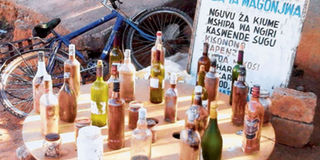
However, this rapid urban expansion has far outpaced regulatory oversight, resulting in a supply chain that experts say exposes consumers to significant and largely preventable health risks.
Clinicians in the city say they are increasingly confronted with complications linked to the use of unverified traditional medicines.
For her part, a clinician at Temeke Regional Referral Hospital, Dr Agnes Kweka, says many patients arrive at hospital after their conditions have deteriorated following the use of herbal remedies.
“Patients often come with complications worsened by traditional medicine. Some remedies, especially when used alongside conventional treatment, can pose serious risks,” she explains.
With similar sentiments, a pharmacist and clinical researcher based in Dar es Salaam, Dr Clemence Mushi, says public confidence in traditional medicine has grown faster than safety awareness.
“Many consumers assume that all shops are safe. In reality, some products contain harmful substances, incorrect dosages or contaminants. Awareness and monitoring are crucial to protect public health,” he says.
At the centre of the problem is a supply chain that remains extensive but largely informal. Raw materials feeding Dar es Salaam’s market are sourced from regions such as Morogoro, Arusha, Manyara and Zanzibar, areas known for biodiversity and long-standing herbal traditions.
Once harvested, these materials move through loosely structured networks involving transporters, wholesalers, processors and retailers, before reaching consumers through physical shops or online platforms operated by informal agents.
According to the 2024 CAG report, of the 499 traditional medicine products sampled in Dar es Salaam, only eight were officially registered, exposing a deep compliance gap between policy and practice.
Experts say this gap is partly driven by weak digital oversight. Traditional medicine activities are not fully integrated into the AfyaSS digital supervision system, leaving regulators without real-time tools to track practitioners, products or reported adverse effects.
Meanwhile, financial constraints continue to undermine enforcement efforts.
According to the 2025 NAOT report, funding allocated to the regulation of traditional and alternative medicine declined sharply from Sh2 billion in the 2023/24 financial year to just Sh329 million in 2024/25.
For her part, a clinician at Muhimbili National Hospital, Dr Asha Suleiman, says this decline has directly affected the ability of regulators to carry out inspections and routine supervision.
“Regulation requires people, transport and laboratory support. Without adequate funding, enforcement remains symbolic rather than effective,” she says.
Beyond institutional weaknesses, experts point to the public’s enduring trust in traditional medicine as a factor that complicates regulation.
Many residents of Dar es Salaam continue to rely on herbal remedies because of cultural familiarity and personal experiences within families and communities, where positive outcomes reinforce perceptions of safety.
However, experts caution that cultural trust, while important, cannot substitute scientific validation.
For her part, a clinician and public health expert, Dr Neema Kessy, says the absence of structured referral and reporting systems has allowed harmful practices to persist unnoticed.
“A structured referral system ensures that patients with complex conditions are directed to hospitals, while the effects of traditional remedies are systematically recorded and analysed,” she explains.
With similar emphasis on scientific oversight, a researcher at the Muhimbili University of Health and Allied Sciences (MUHAS), Dr Benson Mugaka, says the commercial growth of the sector has not been matched by quality control.
“Every medicine must pass through botanical identification, chemical analysis and dosage testing. Rapid expansion without these safeguards exposes users to toxins, heavy metals and organ damage,” he says. Experts further note that safety risks do not begin at the point of sale. Reliance on wild-harvested plants, which remains common in the supply chain feeding Dar es Salaam, increases the likelihood of contamination, inconsistent potency and environmental degradation.
For his part, a clinician at Mwananyamala Regional Referral Hospital, Dr Emmanuel Nyankunga, warns that unsafe practices at any stage of the chain can undermine patient safety.
“From harvesting to processing and storage, poor handling can introduce contaminants. Traceability and proper standards are essential to protect patients,” he says.
To address these challenges, experts argue that regulation must shift from reactive enforcement to an integrated, preventive framework.
One critical step, they say, is the full integration of traditional medicine practitioners and retail outlets into the AfyaSS digital system.
Such integration would enable regulators to monitor registered shops in real time, flag unregistered products and schedule inspections more effectively, particularly in high-density areas such as Kariakoo and Mbagala.
With similar urgency, experts stress the need for stable and adequate funding to restore routine inspections and outreach activities.
For her part, Dr Agnes Kweka notes that without consistent supervision, non-compliant practices are likely to persist unchecked.
“Monitoring requires manpower, transport and equipment. When those elements are missing, regulation loses its meaning,” she says.
Capacity building is another area experts identify as essential. Muhas has already introduced short-term training programmes targeting traditional medicine manufacturers and sellers, focusing on Good Manufacturing Practices, legal compliance, product registration, safe packaging and quality standards.
For his part, Dr Mugaka says improving technical knowledge within the supply chain is key to reducing risks.
“Training ensures that those involved understand safety protocols and the consequences of ignoring them. This protects consumers and strengthens confidence in the sector,” he explains.
Experts also argue that stronger links between traditional and modern healthcare systems are necessary to ensure patient safety.
Formalised referral mechanisms would allow traditional practitioners to direct patients with serious or persistent conditions to hospitals, while enabling health facilities to document adverse reactions linked to herbal remedies.
For her part, Dr Neema Kessy says such systems would generate valuable data for regulators and researchers.
“Without records, harmful effects remain anecdotal. Data allows authorities to identify dangerous products and intervene early,” she says.
At policy level, officials say regulatory reforms are ongoing. For her part, the Acting Assistant Director in the Directorate of Curative Services at the Ministry of Health, Dr Winifrida Kidima, says registered products are subjected to scientific testing and post-market surveillance.
“Through the Traditional and Alternative Health Practice Council, medicines undergo testing before registration. Post-marketing surveillance is conducted, and non-compliant products are removed from the market,” she explains.
However, experts caution that regulation alone is insufficient without public awareness.
With similar concern, Dr Clemence Mushi says consumers must be empowered to question the safety of products they use.
“Even a safe plant can become dangerous if processed incorrectly or combined with other medicines. Public education must go hand in hand with regulation,” he says.
While traditional medicine continues to serve millions, experts acknowledge that there are people who suffer adverse effects due to unsafe or unverified practices.
They argue that strengthening the supply chain requires action at every level, from sourcing and processing to retail and consumption.
For his part, Dr Nyankunga says the system must be viewed as a whole.
“A chain is only as strong as its weakest link. Any lapse, whether in harvesting, processing or distribution, can lead to health complications,” he explains.
MUHAS researchers maintain that science must remain central to the sector’s future. Dr Mugaka says traditional medicine can coexist safely with modern healthcare if standards are consistently enforced.
“Traditional medicine can be safe and effective, but only when every step is guided by science and regulation. Commercial interests must never outweigh patient safety,” he says.
Register to begin your journey to our premium contentSubscribe for full access to premium content