Bona Felix, who has 14 years’ experience in port and terminal operations, currently oversees operations at one of the most critical control points in the logistics chain
Dar es Salaam. Gate Manager at the Dar es Salaam port terminal Bona Felix says leadership in logistics is not defined by gender but by competence, discipline and vision.
Bona, who has 14 years of experience in port and terminal operations, currently oversees gate operations at Terminal One, which is among the most critical control points in the logistics chain.
Her responsibilities include managing truck flow, coordinating traffic and ensuring compliance to keep cargo moving efficiently in a high-pressure environment traditionally dominated by men.
“Being a woman in this field has strengthened my resilience, leadership and commitment to excellence,” she says. “I am proud to represent women who continue to break barriers in logistics and port operations, proving that competence, discipline and dedication have no gender.”
In the fast-paced world of port and terminal operations where precision, discipline and coordination determine the flow of global trade few roles carry as much responsibility as managing the gate. At the centre of this demanding environment stands a leader whose journey reflects resilience, mastery and an unwavering commitment to operational excellence.
Bona began her career as a Documentation Controller in the Control and Planning section, where she built a strong foundation in cargo documentation, compliance systems and operational planning.
“Rather than rushing through positions, I intentionally mastered each step of the logistics chain,” she explains.
Her career progressed through several key operational roles, including Warehouse Supervisor at KICD, Permit and Booking Supervisor and Gate Supervisor, before she rose to her current position as Gate Manager in Port and Terminal Operations at TEAGTL.
“I did not skip levels I mastered them,” she says. “Each role deepened my understanding of cargo flow, compliance systems, truck coordination and team leadership.”
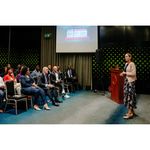
Today, alongside managing complex gate operations, Bona also serves as Chairperson of Women in Logistics Africa (WILA) Tanzania, where she champions the advancement of women in the logistics sector.
Port and logistics operations have long been male-dominated fields. Entering this space as a woman required not only competence but also the determination to prove it consistently.
“In high-pressure environments, women are often tested more rigorously, questioned more frequently and observed more closely,” she reflects.
Her strategy for overcoming these challenges was straightforward: let results speak for themselves.
By immersing herself in operational systems, mastering performance data and strictly adhering to standard operating procedures, she built credibility through consistency. Over time, her technical knowledge, calm leadership under pressure and fairness earned the respect of colleagues across departments.
“In terminal operations, performance is the ultimate currency. Once people witness consistency and knowledge, respect follows naturally.”
As Gate Manager, Bona oversees the coordination of truck flow, compliance checks and operational efficiency under intense pressure. Her leadership philosophy is built on structure, clarity and discipline.
She emphasises clear instructions, structured coordination and strict adherence to operational procedures, supported by real-time monitoring of truck flow and turnaround times.
While discipline remains non-negotiable, she believes motivation is equally essential.
“A motivated team will always outperform a fearful one,” she says. “When people understand the purpose behind the urgency, they cooperate more effectively and take ownership of their roles.”
Her leadership is grounded in four core principles: integrity, operational safety, accountability and respect.
“Integrity means doing what is right always. Operational safety means protecting people and assets without compromise. Accountability means owning every outcome, whether success or setback. And respect means treating every stakeholder with dignity,” she explains.
“In terminal operations, shortcuts don’t save time they create congestion and invite risk. I believe in doing things correctly the first time, every time.”
One defining moment in her career came during a period of intense vessel pressure and peak congestion at the terminal, when operations faced mounting delays. Through coordinated leadership with planning teams, ground crews, truck drivers and inland container depots, she helped stabilise the flow of cargo.
“It was a moment where everything came together systems knowledge, teamwork and decisive leadership,” she recalls. “That was when I realised I was no longer simply participating in the industry; I was leading it.”
Beyond operations, Bona is passionate about mentorship and representation, believing that creating opportunities for the next generation is an important part of leadership.
“When younger women see someone who advanced through competence and resilience, it builds confidence in their own potential,” she says.
As Chairperson of WILA Tanzania, she also advocates for stronger networks of support among women in logistics.
“When women support one another, we elevate not just individuals, but the entire logistics industry.”
For Bona, the future of logistics depends on diversity in leadership.
“Women bring strategic thinking, emotional intelligence, meticulous attention to detail and resilience—qualities that are essential in logistics environments where precision matters,” she says.
Her journey from a documentation desk to managing the gate of a major terminal demonstrates that leadership in logistics is not defined by gender, but by competence, discipline and vision.
And for the next generation of women watching from the sidelines of the port yard, her message is simple: there is space for you here and you can rise.