Dar's Tambaza graduates call on former students to invest in school development
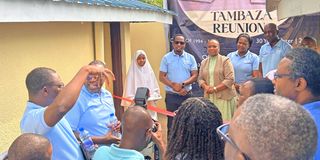
Tambaza Secondary School alumni hand over renovated toilets and bathrooms to the school’s female students during an event held on July 11. PHOTO | COURTESY
Dar es Salaam. For decades, schools have been recognised as the foundation where future leaders, professionals and entrepreneurs are shaped.
But beyond classrooms, teachers and textbooks, a growing number of education stakeholders believe another resource remains largely untapped – the alumni who passed through those institutions.
They argue that while governments and education authorities continue to play a central role in developing schools, alumni can provide additional support by using their experience, networks and resources to transform the institutions that contributed to their success.
The call gained momentum on Saturday during a reunion of Tambaza Secondary School’s 1994–1996 alumni, marking 30 years since they joined the school, where former students came together to support improvements to sanitation facilities expected to benefit about 200 female students.
Their initiative has renewed debate on the role alumni can play in school development, with stakeholders saying successful graduates should see their former schools not only as places of memories but also as institutions worth investing in.
Speaking to The Citizen, Country director of WaterAid Tanzania Anna Mzinga, who graduated from Tambaza in 1996, said alumni have a responsibility to give back to the schools that contributed to their success.
"As alumni, we have a great opportunity to give back to the schools where we studied and demonstrate our appreciation for the environment that shaped who we are today," she said.
Ms Mzinga noted that many historic public schools, including Tambaza, Zanaki and Jangwani, continue to require support despite producing some of the country's finest professionals.
"These schools have produced outstanding graduates and public servants. If former students become actively involved, they can inspire current learners to believe that dedication and hard work can open opportunities just as much as studying in private schools," she said.
Tambaza academic head Shalon Kabigumila said alumni networks should go beyond maintaining social connections and instead become catalysts for improving learning environments.
She said the Tambaza 1994–1996 alumni group has set an example by undertaking development projects every 10 years, including renovating dormitories, improving access to clean water and rehabilitating toilets and bathrooms.
"When alumni come together with a shared purpose, the benefits extend beyond themselves to the wider school community," she said.
She added that former students understand the challenges facing their schools because they once experienced the same conditions.
"When people care about the places they came from, they can collectively become a blessing to future generations. They should never abandon the institutions that helped shape them," she said.
On the other hand, the chairperson of the Tambaza Secondary School 1994–1996 alumni's 30th reunion organising committee, Gesona Ngabo, said the group's decision to renovate the sanitation facilities was intended not only to improve students' welfare but also to encourage other alumni groups to contribute to their former schools.
"As we discussed possible projects, Dr Mavumba pointed out that the school also needs improvements to its computer laboratory. However, we decided to begin with sanitation because students' health comes first," he said.
Mr Ngabo said the impact would be even greater if other graduating classes adopted a similar spirit of giving back.
"I hope our efforts will inspire other alumni through the media so they can also contribute to the schools they attended," he said.
National Housing Corporation (NHC) architect Robert Kintu said while the government continues to invest in education infrastructure, alumni also have an important role to play in complementing those efforts.
He said support should not be limited to physical projects, but should also include mentorship and career guidance for students.
"Contributions do not always have to involve construction. Alumni can also invest their time by mentoring students and helping them prepare for their future," he said.
Mr Kintu also urged schools to maintain updated records of former students and strengthen communication with them.
"Schools should build closer relationships with their alumni. There are situations where a former student may be working in a ministry or institution that can help unlock approvals or provide technical support. Strong communication makes such assistance possible," he said.
Register to begin your journey to our premium contentSubscribe for full access to premium content