Bus Rapid Transit monopoly bid sparks backlash from Kilwa Road minibus operators

Dar es Salaam. As Mofat Company, which provides Bus Rapid Transit (BRT) services along Kilwa Road, calls for the removal of daladala minibuses from the route, stakeholders and residents have opposed the proposal, arguing that transport demand is far greater than the capacity of the rapid buses.

Mofat’s request to remove daladala stems from what the company says is financial loss since it began operations in October 2025, due to low passenger numbers as many commuters continue using daladala, motorcycle taxis (bodaboda) and tricycles (bajaji).
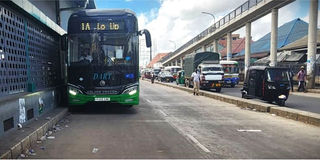
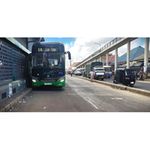
The company has already submitted a request to the Land Transport Regulatory Authority (Latra), asking that daladala, bodaboda and bajaji be removed from the route so that it remains the sole transport service provider on that corridor.

Amid Mofat’s complaints, residents and transport stakeholders say it would be an unwise decision to allow the company to operate alone on the route, citing what happened on Morogoro Road, where the removal of daladala caused serious transport hardships for residents.

Some residents went further, saying BRT services are more expensive for them, charging Sh1,000 per trip compared to daladala and bajaji, which charge between Sh500 and Sh700.

Commenting on Mofat’s request, Toangoma resident Anord Kelvin questioned how the company could be making losses while competing with daladala and bodaboda, yet it has its own congestion-free lane, buses that use gas, and higher fares.

“There should come a point when BRT operators stop seeing themselves as superior to other transport providers because they have already been given every advantage, starting with infrastructure,” he said.

Chamazi resident Jenifer John said daladala are still needed, especially for passengers traveling to Ubungo, Kawe or Mwenge, areas not yet reached by the BRT system.

She explained that by taking one daladala from Mbagala she can reach her destination directly, but using BRT would require her to take two vehicles and pay higher fares.

Mbagala resident Oscar Shimbo said transport demand in Dar es Salaam remains very high, and if Mofat has more buses than passengers, they should be deployed to other areas where infrastructure is more than 90 percent complete.

“For example, Gongo la Mboto—the BRT road there is said to be 90 percent complete. Why not take the buses there? And when buses for that route arrive, then remove them from this one. After all, contracts are made by human beings—what’s the problem with amending them to spare citizens from transport hardships?” he said.

Latra urged to listen

The Secretary of the Tanzania Drivers’ Union (Tadwu), Ramadhan Seleman, said Latra should remember the transport chaos that occurred on Morogoro Road when daladala were removed.

“From a business perspective, removing daladala may make sense, but from a service perspective it does not. If daladala are removed abruptly, we may see a repeat of what happened in Kimara, where residents protested and unrest erupted when their transport challenges under the BRT system were ignored.

“Later, the government had to intervene and deploy Mofat buses to save the situation, but the reality is that conditions were bad,” said Seleman.

He added that it is too early for Mofat to claim losses since it has not even completed a year of operations, and urged the company to give itself more time.

The chairman of daladala drivers and conductors at Mbagala terminal, Mwinshehe Chambuso, said incomes vary among citizens, which is why people choose transport they can afford.

“The BRT fare is Sh1,000 from station to station, while daladala charge as low as Sh500, especially for those alighting at intermediate stops. If you remove them completely, the people who will suffer are citizens—considering that some wake up in the morning without even Sh1,000,” he said.

However, he said they have observed Mofat buses being full during morning and evening peak hours, while a drop in passengers during midday is normal.

He advised that daladala should not be removed for now, and if it becomes necessary, research should be conducted first to determine where they would be relocated, since many families depend on them for their livelihoods.

“One daladala employs up to five people, not counting garage workers. If you take away their bread today, how do you expect them to survive? The government should reflect on this as well,” he said.

Meanwhile, the chairman of the Federation of Bajaji and Bodaboda Drivers, Daud Kagomba, said while Mofat complains about them, it should realize that they are the ones who bring passengers from outlying areas, meaning the services depend on each other.

Kagomba questioned how they could be seen as competitors when a motorcycle carries two passengers, a bajaji no more than four, while one bus carries over 160 passengers.

He warned the government that if it decides to remove them, it should expect the return of muggings and street crime, considering the sector currently employs more than 200,000 people. In Temeke District alone, registered bajaji and bodaboda exceed 38,000.

He said Mofat should focus on improving its services instead of blaming bodaboda and bajaji, which are not comparable to it.

He added that the BRT system was introduced by the government to ease transport hardships in areas where passengers previously struggled, including Mbagala, where people were once seen boarding vehicles through windows.

One daladala owner who requested anonymity said they had held several meetings with Latra, offering advice on how to remove daladala without causing negative impacts, including awarding them tenders to ferry passengers from peripheral areas to BRT stations.

However, he said they were surprised when the tender was awarded to a foreign company, warning that such decisions could later cause problems for local daladala owners.

What Mofat says

Speaking to Mwananchi in a special interview on their operational assessment since launching services, Mofat’s Chief Operations Officer, Mabrouk Masasi, said the company has been making losses since it began operations.

He explained that when the buses were introduced, daladala, bajaji and bodaboda were supposed to have been removed from the route, but unfortunately they remain to this day.

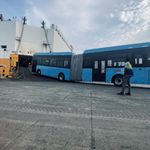
“By operating alongside these vehicles, we end up sharing the available passengers, meaning we make no profit. That is also why we have failed to add more buses to the road. Currently only 40 buses are operating, while 160 are parked.

“From a business perspective this is not viable. Beyond idle buses, we have loans taken to purchase them that require repayment, and we have employed more than 187 drivers, not all of whom are fully utilized, yet at the end of the month they must all be paid salaries and benefits,” he said.

Because of this situation, he said they have written to Latra requesting the removal of daladala and bajaji so that the company can at least make minimal operational profit.

Latra’s head of public relations, Salum Pazzy, confirmed receipt of the letter and said it is under review, noting that the matter requires consultation with other stakeholders in the transport sector.