Mbeya. Thousands of Tanzanian children with disabilities continue to miss out on timely support because their conditions are identified too late, prompting education stakeholders to launch a national campaign aimed at strengthening early diagnosis and inclusive education across the country.
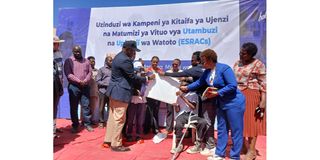
The campaign, launched at Mwenge Primary School in Mbeya on June 3, 2026 seeks to increase public awareness about the importance of identifying disabilities at an early age, particularly learning disabilities and other conditions that are not immediately visible.
Led by HakiElimu in collaboration with Child Support Tanzania (CST) and government institutions, the initiative will also advocate for the expansion and strengthening of Early Screening, Recognition, Assessment and Care Centres (ESRACs), which provide specialised assessment and support services for children with developmental and learning challenges.
The launch comes amid concerns that despite Tanzania's commitment to inclusive education, many children are still being left behind because their disabilities go unnoticed or are discovered long after they begin school.
For years, Tanzania has made significant policy strides towards ensuring that every child has access to quality education. The Education and Training Policy, the National Inclusive Education Strategy and the country's Development Vision 2050 all emphasise equal learning opportunities for every child regardless of their condition.
Yet, despite these commitments, many children continue to fall through the cracks because their disabilities are identified too late—or not at all.
"Today, we have not gathered merely to launch a campaign," said HakiElimu Executive Director, Ms Mary Ndaro during the event. "We have come together to discuss the future of children whose learning difficulties often go unnoticed and who therefore fail to receive the support they need at the right time."
Her remarks echoed a growing concern among education stakeholders that many children with developmental delays, autism, dyslexia, speech impairments and other learning-related disabilities are often labelled as lazy, stubborn or slow learners instead of receiving professional assessment and support.
According to Ms Ndaro, although the government issued guidelines for establishing ESRAC centres in 2022, implementation remains slow.
Out of 184 councils across Tanzania, only 36 have established ESRAC centres, and many of those are operating with inadequate infrastructure, equipment and specialised personnel.
"This means many children continue to experience delays in receiving assessment and the support they need," she said.
The challenge is particularly significant because many disabilities are not physically visible.
At Mwenge Inclusive Primary School, Headteacher, Ms Aness Mwakaje, said the campaign could play a crucial role in helping communities recognise children who struggle silently in classrooms.
"Many people easily recognise physical disabilities, but there are children with learning disabilities whose challenges cannot be seen," she told The Citizen.
"Some of these children are misunderstood and considered poor performers, yet they simply need specialised assessment and support. Through this campaign, parents and teachers will become more aware of the signs and seek help earlier."
She said early diagnosis gives teachers an opportunity to adapt learning approaches to meet individual needs, while also enabling parents to access professional support before challenges become barriers to education.
The choice of Mwenge Inclusive Primary School as the launch venue was symbolic.
The school hosts one of the country's model ESRAC centres and has become a reference point for inclusive education services in the Southern Highlands.
Data presented during the event showed that between January and April this year alone, the centre assessed and supported 190 children, demonstrating both the demand for such services and the impact they can have when made accessible to communities.
Assessment services at the centre are offered three days a week, while specialists spend additional time conducting home visits and follow-up interventions for children requiring further support.
Education experts say such services are critical because the early years of a child's development often determine long-term educational outcomes.
According to UNICEF, children with disabilities remain among the most marginalised groups in education globally, facing barriers related to stigma, limited awareness and inadequate support systems. Worldwide, an estimated 240 million children live with disabilities, many of whom are at risk of being excluded from education.
In Tanzania, negative perceptions and low awareness within communities continue to prevent many children from accessing timely assessment and educational support.
Speaking during the launch, the Mbarali District Commissionor, Brigadier general Maulid Surumbu, who graced the event, noted that strengthening early identification services should not be viewed as an education issue alone but as an investment in the nation's future.
"A child who receives support at the right time has a much greater chance of succeeding in education and life," he said.
He urged councils across the country to prioritise the establishment and strengthening of ESRAC centres through their plans and budgets, while calling for stronger collaboration between government institutions, development partners, teachers, parents and communities.
Stakeholders also highlighted the important role of the media in changing public attitudes towards disability and helping families understand the benefits of early diagnosis.
As Tanzania continues implementing its inclusive education policy, campaign organisers hope the initiative will spark broader conversations about disability, challenge stigma and ensure that more children receive the support they need before learning difficulties become lifelong barriers.