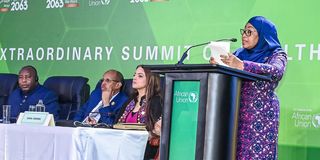
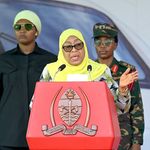
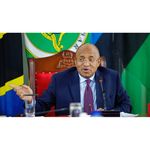
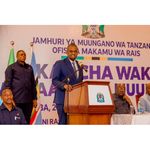
President Samia Suluhu Hassan addresses the African Union (AU) Special Summit of Heads of State and Government on Health at the Elisa Hotel in Accra, Ghana, on July 22, 2026. PHOTO | STATE HOUSE
Accra. President Samia Suluhu Hassan has called on African countries to increase domestic investment in healthcare, saying stronger local capacity is essential for building resilient and self-reliant health systems.
Speaking at a Special Summit of African Union Heads of State and Government on Health in Accra, Ghana, President Hassan said Africa has the knowledge, human resources and capacity needed to transform its healthcare systems, but requires stronger political commitment, investment and continental cooperation.
“Africa has knowledge, human resources and the capacity to transform its health systems. What we need now is stronger political commitment, domestic investment and continental solidarity,” she said.
Her remarks come amid growing concerns over declining global health financing and the need for African countries to reduce dependence on external support for essential healthcare services.
President Hassan said Tanzania had already started implementing the African Union Health Strategy 2030 by incorporating it into the country’s Five-Year National Development Plan for 2026/27–2030/31.
She said the strategy focuses on strengthening local pharmaceutical production, improving healthcare systems and increasing the country’s ability to produce essential health products.
For years, many African countries have relied heavily on imported medicines, vaccines and medical equipment, leaving health systems vulnerable to global supply disruptions. The Covid-19 pandemic exposed these challenges as countries struggled to access critical supplies.
President Hassan said Tanzania was responding by creating a favourable environment for investment in pharmaceutical manufacturing and healthcare services.
She said policy and legal reforms had attracted investors, leading to the establishment of 13 pharmaceutical manufacturing plants, while 149 investors had expressed interest in investing in the sector.
A major milestone in Tanzania’s efforts to strengthen health self-reliance was the achievement by the Tanzania Medicines and Medical Devices Authority (TMDA) of World Health Organisation (WHO) Maturity Level 3 status.
The achievement made TMDA the first medicines regulatory authority in Africa to reach the level, which President Hassan said would help improve confidence in locally produced medicines and support access to regional and international markets.
She said strengthening local production would reduce dependence on imported medical products while improving access to quality healthcare supplies.
Beyond pharmaceutical production, President Hassan highlighted Tanzania’s wider investment in healthcare infrastructure and access.
She said the health sector budget had increased from Sh1.8 trillion in 2024/25 to Sh3.1 trillion in 2026/27, alongside efforts to introduce universal health insurance to enable more citizens to access affordable healthcare services.
The increased investment has supported expansion of healthcare facilities across the country.
According to President Hassan, Tanzania has constructed 119 district hospitals, 649 health centres and more than 2,700 dispensaries, increasing the number of health service delivery points from about 10,000 to 13,700 by March 2026.
She said the improvements had contributed to increased access to skilled healthcare services, with deliveries conducted at health facilities rising from 65 percent to 86 percent.
The proportion of births attended by skilled health workers has also increased from 66 percent to 85 percent, while deaths among children under five have declined from 147 to 43 per 1,000 live births.
Maternal mortality has also dropped from 556 to 104 deaths per 100,000 live births, according to government figures.
The call for greater investment in health self-reliance was echoed by other African leaders attending the summit.
Opening the meeting, Ghanaian President John Dramani Mahama said declining international health funding should encourage African countries to increase domestic investment and develop self-sufficient health systems.
He also pledged support for President Hassan in her role as African Union champion for reproductive, maternal and child health, saying her leadership would help accelerate progress in the sector.
African Union Chairperson and Burundi President Évariste Ndayishimiye called on member states to increase investment in primary healthcare and strengthen Africa’s ability to prevent, detect and respond to disease outbreaks.
WHO Director-General Dr Tedros Adhanom Ghebreyesus said the summit’s commitments would only have an impact if followed by effective implementation, adding that decisions made today would shape the future of health across Africa.
African Union Commission Chairperson Mahmoud Ali Youssouf urged member states to accelerate the development of a continental health manufacturing value chain to improve access to medicines, vaccines and medical equipment.
For Tanzania, the push for health self-reliance represents a broader ambition — strengthening domestic production, attracting investment and contributing to Africa’s long-term health security by producing solutions not only for its own population but also for the wider region.