Cement prices to top Sh18,000 as manufacturers raise prices
Cement bags seen in storage. The price changes come after several cement producers issued notices between July 3 and July 6, 2026, citing rising production costs. PHOTO | COURTESY
Josephine Christopher is a senior business journalist for The Citizen and Mwananchi newspapers
Mwananchi Communications Limitted
Dar es Salaam. Tanzanians could soon pay more for a 50-kilogramme bag of cement after major manufacturers announced new price adjustments, with the increases expected to push retail prices above Sh18,000 in key markets such as Dar es Salaam.
The new adjustments could push the price of a bag of cement to approximately Sh17,000 to Sh18,150, depending on the brand, location and distributor margins, after manufacturers announced increases ranging from Sh500 to Sh650 per bag, excluding Value Added Tax (VAT).
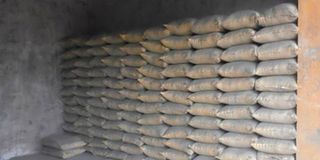
The price changes come after several cement producers issued notices between July 3 and July 6, 2026, citing rising production costs, taxation charges, raw material expenses, transport costs and higher operational expenses.
The move is expected to increase construction costs for households, property developers and contractors at a time when cement remains one of the biggest inputs in housing and infrastructure projects.
One manufacture argue that the adjustments are necessary to sustain production amid rising business costs, taking into account the new amendments in the excise duty Act.
The Citizen also contacted the Ministry of Works for comment on the potential impact of the price increases on construction projects and government infrastructure programmes, but a response had not been received by the time of publication.
Dangote Cement Tanzania announced a uniform increase of Sh650 per 50kg bag, excluding VAT, across all its cement grades, including 32.5R, 32.5N, 42.5N, 42.5R and 52.5N.
The company attributed the adjustment to higher fiscal obligations, statutory charges, procurement costs, and general operational expenses.
Similarly, Moshi Cement, operated by Jun Yu Investment International Company Limited, announced a Sh500 per bag increase, citing rising costs of raw materials and transportation.
Other producers announced adjustments based on tonnes rather than bags.
Maweni Limestone Limited (Huaxin) increased cement prices by Sh13,000 per tonne, excluding VAT, for all cement types produced at its Tanga and Mkuranga plants, citing increased production costs, including recent maintenance activities.
Tanga Cement PLC (Simba Cement) also announced a Sh13,000 per tonne increase, blaming higher taxation charges, input costs and overall business operating expenses.
Lake Cement Limited, producer of Nyati Cement, announced a similar Sh13,000 per tonne increase, linked to higher operational and transportation costs.
Meanwhile, Mbeya Cement Company Limited adjusted prices by product category, increasing Fastaplus 32.5 by Sh9,085 per tonne, while Tembo Supaset 42.5 and Tembo Powerplus 42.5N increased by Sh14,136 per tonne.
Tax pressure adds to manufacturers’ concerns
The price adjustments come as the government begins implementing changes to specific excise duty rates under its tax calendar for the 2026/27 financial year.
Presenting the national budget, Finance Minister Khamis Mussa Omar said the government would introduce an 8 percent increase in specific excise duty rates in 2026/27, replacing the previous approach of making larger adjustments after every three years.
“The objective of this measure is to reflect the true value of Government revenue and enable the country to have predictable tax policies and create a favourable environment for investment,” the minister said. The measure is expected to raise approximately Sh251.54 billion in additional government revenue.
Manufacturers have previously cited taxation and statutory charges among factors increasing the cost of doing business.
Surplus production, rising prices
The price increases come despite Tanzania having expanded its cement manufacturing capacity beyond domestic demand.
According to Minister of Industry and Trade Judith Kapinga the country currently has 15 cement manufacturing plants with an installed capacity of 13.6 million tonnes annually.
During budget tabling she said by April 2026, factories had produced approximately 10.3 million tonnes of cement, compared with domestic demand estimated at around 8.5 million tonnes annually.
The surplus is exported to regional markets, including Malawi, Zambia, the Democratic Republic of Congo (DRC), Rwanda and Burundi.
Tanzania’s cement production has previously exceeded domestic requirements, allowing manufacturers to target neighbouring markets.
The sector provides about 6,020 direct jobs and 20,280 indirect jobs, according to government data.
A new entrant, WIH Holding Limited in Kigoma Region, expanded the country’s production base during the 2025/26 financial year.
The plant has an installed capacity of 1.9 million tonnes annually and had produced about 1.5 million tonnes by April 2026.
The developments present a new test for Tanzania’s industrialisation drive on whether increased manufacturing capacity can deliver lower costs for consumers or whether rising fiscal and operational pressures will continue to outweigh production gains.
Register to begin your journey to our premium contentSubscribe for full access to premium content