Airtel Africa posted a sharp rise in annual earnings after strong growth in data usage and mobile money services boosted performance across its African operations.
The telecommunications group reported a net profit of $813 million for the year ended March 31, 2026, more than double the $328 million recorded a year earlier, supported by stronger operating income and favourable foreign exchange gains.
Revenue increased by 29.5 percent to $6.42 billion, while constant currency revenue growth stood at 24 percent, reflecting rising demand for digital services across the company’s 14 African markets.
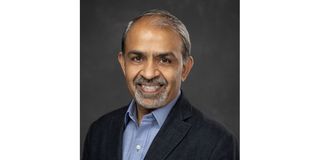
Chief Executive Officer Sunil Taldar said the company’s performance reflected strong execution, rising digital adoption and continued investment in network infrastructure.
“Our strategy delivered record customer additions, revenue and EBITDA growth,” Taldar said. “Data and mobile money remain key engines of expansion as we scale digital access across our footprint.”
The company’s customer base grew by 10.5 percent to 183.5 million users, marking Airtel Africa’s highest-ever net customer additions.
Data subscribers rose by 14.8 percent to 84.2 million, while smartphone penetration increased to 49.5 percent, supporting higher data consumption and stronger monetisation.
Average monthly data usage per customer climbed to 8.9 GB from 7.0 GB a year earlier, helping data revenue rise by 35.2 percent in constant currency.
Mobile money services also maintained strong momentum, with Airtel Money customers increasing by 21.3 percent to 54.1 million users.
The company said annualised transaction value exceeded $215 billion in the fourth quarter, while mobile money revenue grew by 28.4 percent in constant currency, driven by increased adoption of digital payments, merchant services and cross-border transactions.
Underlying earnings before interest, taxes, depreciation and amortisation (EBITDA) rose by 30.4 percent in constant currency to $3.16 billion, with margins improving to 49.3 percent as revenue growth and cost optimisation strengthened operational efficiency.
Operating profit increased by 45.1 percent to $2.12 billion, while earnings per share rose to 18.6 cents from 6.0 cents a year earlier.
Capital expenditure increased by 31.9 percent to $884 million as the company expanded its network infrastructure, including the addition of more than 3,250 new sites and 3,200 kilometres of fibre.
The company said 98.5 percent of its sites are now 4G-enabled, while more than 3,100 5G sites are operational across six markets.
Airtel Africa plans to increase capital expenditure to about $1.1 billion in the 2027 financial year to support further digital expansion.
Taldar said artificial intelligence and digitisation are helping improve operational efficiency and customer experience through faster onboarding and enhanced services on the MyAirtel app.
The app recorded strong growth during the year, with transacting users increasing by 74 percent and digital transaction value rising by 79 percent to $8.3 billion.
The company also reported improved cash generation, with operating cash flow increasing by 41 percent to $3.20 billion and free cash flow rising nearly 40 percent to $2.28 billion.
Its leverage ratio improved to 1.8 times from 2.3 times a year earlier, reflecting stronger earnings and cash flow performance.
The board declared a final dividend of 4.26 cents per share, bringing total dividends for the year to 7.1 cents per share, up 9.2 percent from the previous year.
Looking ahead, Airtel Africa said it remains focused on expanding its digital ecosystem, particularly in mobile money, enterprise services and home broadband, while also extending connectivity to underserved areas through strategic partnerships, including collaboration with SpaceX’s Starlink Direct-to-Cell initiative.
Taldar said the company remains optimistic about long-term growth opportunities despite rising energy costs and broader economic pressures.
“Our markets continue to offer significant opportunities for digital and financial inclusion,” he said. “We are focused on scaling responsibly while delivering long-term value.”