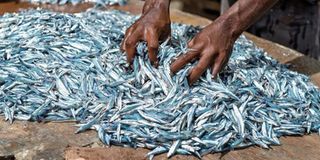
Mafia Island. A new study has revealed that Tanzania’s sardine value chain loses about $15 million (approximately Sh40.5 billion) every year due to post-harvest inefficiencies as the fish is transported from Mafia Island to markets in the Democratic Republic of Congo (DRC).
The research warns that the losses are undermining the incomes of small-scale fishers while affecting food security across East and Central Africa.
Titled Understanding Dried Marine Small Fish Losses in the Regional Supply Chain of Tanzania, the study was led by Patrick Ngwenyama of the WorldFish Centre in collaboration with researchers from the Tanzania Fisheries Research Institute (TAFIRI), the Food and Agriculture Organisation (FAO) and other experts. The study tracked sardines (dagaa) from Mafia Island’s Tumbuju landing site through Kisiju, Tunduma, Nakonde and Kasumbalesa, before reaching Lubumbashi in the DRC. About 70 percent of Mafia’s 6,000 tonnes of dried dagaa is exported to the DRC market.
Researchers used FAO load tracking, Informal Fish Loss Assessment (IFLAM) and Questionnaire Loss Assessment (QLAM) methods, alongside interviews and field measurements of consignments during transport.
Findings show that processing and transport stages account for the highest losses. Processing alone contributes 19.5 percent quality loss and 10 per cent physical loss, driven by poor drying conditions, over-boiling and animal damage, particularly during the rainy season.
Transport contributes a further eight percent physical loss and six percent quality loss due to overloading, poor handling and compression in trucks, which causes breakage and lower market value.
The study also found that nutritional quality declines during the supply chain, with protein content falling from 38 percent to 34 percent. By the time the fish reaches Lubumbashi, losses are estimated at $2.50 per kilogramme, reflecting both physical damage and reduced quality.
The researchers recommend improved drying technology such as solar dryers, better storage infrastructure, and stronger logistics systems. They also call for training for fish processors, particularly women, who dominate the sector, to improve handling practices.
The study concludes that addressing inefficiencies in processing and transport is critical to improving incomes and sustaining the dagaa fishery on Mafia Island.
Register to begin your journey to our premium contentSubscribe for full access to premium content