Dar es Salaam. Dr Emmanuel Nchimbi is undeniably not the first political heavyweight within the ruling CCM to suffer the ultimate sanction of expulsion.
Indeed, various prominent cadres have suffered this precise political fate previously.
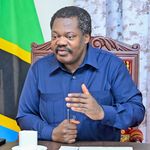
Dr Nchimbi was formally expelled from CCM on August 26, 2026, by a Central Committee and National Executive Council (NEC) resolution regarding ethical misconduct.
The leader, who remained a Central Committee member and Vice President until his expulsion, had also previously served as CCM Secretary-General.
He was expelled just a day after writing a formal letter to President Samia Suluhu Hassan requesting to resign from the vice presidency, a request promptly accepted by the President Hassan who doubles as the CCM chairperson.
Dr Nchimbi’s ouster subsequently places him among five other top figures expelled this past decade alone.
Excluding Dr Nchimbi, who was expelled on August 26, 2026, the remaining five were concurrently expelled in March 2017.
However, all of them ultimately apologised and were formally reinstated to full membership.
Those expelled before Dr Nchimbi include Sophia Simba, Ramadhan Madabida, Erasto Kwirasa, Christopher Sanya, and Salum Madenge.
What the CCM regulations stipulate
Section 8 of the CCM Leadership and Ethics Regulations explicitly delineates the party's disciplinary measures for offending cadres, citing expulsion as the absolute ultimate punishment.
Under these guidelines, the expulsion penalty served on Dr Nchimbi is reserved for members convicted of severe ideological offences that threaten the party's survival, particularly those who fail to reform after prior reprimands.
"Therefore, the Central Committee shall recommend that such a member be expelled and shall forward the matter to the National Executive Council for the final decision," the official regulation document formally states.
The regulation explicitly clarifies that the gravest offence in the CCM is betraying the ruling party, thereby putting it at risk of losing state power or public credibility, or secretly collaborating with opposition factions to undermine its operations.
"Such a person cannot be accepted among us. They must be expelled from the party. Therefore, if proven that the member committed this intentionally, they shall be expelled permanently," the document reads.
Alternatively, the provision indicates that should a member act from sheer ignorance or misfortune, their probation period will be 48 months, and all such disciplinary decisions must invariably be made public.
How others were expelled
One of the most prominent politicians historically expelled from CCM remains Mr Seif Sharif Hamad back in 1988.
Following his controversial expulsion, Mr Hamad embraced opposition politics, subsequently co-founding the Civic United Front (CUF) in 1992, serving as secretary-general until his eventual ouster in 2019.
Ms Sophia Simba was sacked on March 11, 2017, whilst simultaneously serving as the National Chairperson of the CCM Women’s Wing (UWT) alongside her parliamentary role.
The definitive resolution to expel Ms Simba was endorsed by the National Executive Council regarding severe allegations of betraying the ruling party during the 2015 General Election.
Following a strict nine-month penalty, she formally wrote to the committee and was mercifully pardoned and reinstated on November 21, 2017.
On the very day Ms Simba departed, Mr Ramadhani Madabida, then CCM Dar es Salaam Regional Chairman, was similarly expelled for the identical offence of political betrayal during the 2015 General Election.
Ultimately, Mr Madabida authored a written apology and received a pardon separately.
In December 2018, having completed his penalty of one year and nine months, he was fully forgiven and reinstated.
A comparable punishment was formally administered to former CCM Shinyanga Regional Chairman, Mr Erasto Kwirasa.
He was unceremoniously ousted on that same afternoon for the same election offence as his colleagues.
Mr Kwirasa dutifully served his twenty-one-month sentence; on December 18, 2018, the national executive council eventually forgave him, thereby restoring his full party membership seamlessly.
Furthermore, Mr Christopher Sanya, the former CCM Mara Regional Chairman, was expelled alongside Mr Kwirasa over identical political betrayals.
He similarly endured his disciplinary penalty for one year and nine months before the national executive council publicly announced his official December 2018 pardon, restoring membership.
Similarly, Ms Jesca Msambatavangu, then CCM Iringa Regional Chairperson, was expelled alongside colleagues in 2017. However, she was later forgiven and reinstated.
This precise penalty was also handed to former CCM Kinondoni District Chairman, Mr Salum Madenge.
Mr Madenge was expelled on March 11, 2017, and forgiven twenty-one months later.
Another prominent figure subjected to this penalty was the late Mr Bernard Membe in February 2020.
Mr Membe was ultimately expelled over severe ethics violations.
CCM stated his dismissal followed internal records highlighting persistent misconduct since 2014, noting that he had received prior disciplinary measures intended for reform, which proved entirely ineffective.
Nevertheless, in May 2022, Mr Membe triumphantly announced his return to CCM.
Political analysts weigh in
Commenting on the developing matter, independent political analyst Dr Baraka Mfinanga notes that across its impressive six-decade history, CCM has meticulously built a formidable reputation rooted in strict discipline.
"Time and again, top leaders, ministers, permanent secretaries, and chairpersons have faced firm disciplinary measures for actions the party defines as violations of ethics, established rules, or core positions," he states.
He adds that most expelled politicians returned smoothly after officially apologising and being welcomed back.
"That is precisely why news regarding Dr Nchimbi’s expulsion has triggered widespread national debate. While some genuinely believe his long political journey has ended, CCM’s intricate history tells a completely different story," explains Dr Mfinanga.
He emphasises that CCM records demonstrate expulsion is rarely a life sentence; the party has repeatedly opened reconciliation doors for members who acknowledge their mistakes and seek forgiveness.
Echoing these sentiments, Tumaini University governance lecturer, Dr Lazaro Swai, observes that CCM’s historical timeline shows expulsion does not necessarily mark the absolute end of a politician's journey within the party.
He notes that there exist prominent examples of former leaders who were ousted and subsequently reinstated, actively demonstrating that political parties can effectively employ reconciliation mechanisms depending on specific circumstances.
This phenomenon, he adds, remains globally common, as political parties worldwide routinely reverse disciplinary decisions to issue pardons following dialogue.
He conclusively argues that public attention should not focus solely upon the penalty itself, but rather heavily on the underlying reasons dictating the punishment, investigating whether those initial conditions causing the internal conflict persist.
If such reasons disappear, members are often warmly welcomed back.
Register to begin your journey to our premium contentSubscribe for full access to premium content