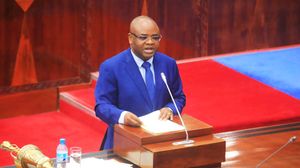
The government defended the extension of primary school education from six to 10 years, saying it aims at providing students with competence-based education so that acquired skills and knowledge would enable school leavers to employ themselves and render a fair competition in the employment market.
Dar es Salaam. The government says it is developing learning infrastructure and training more teachers in its efforts to solve the double cohort challenge by 2028.
Educational authorities extended the mandatory primary education from seven to 10 years as part of the implementation of the new education policy.
This means students who are in Standard Three this year will join Form One in 2028 after having completed Standard Six where they will meet students who will complete Standard Seven in 2027.
Those completing Standards Six in 2027 and join Form One in 2028 will do so under the new education curriculum, while those completing Standard Seven in 2027 and join Form One in 2028 will do so under the old curriculum.
As such, over two million students are expected to be enrolled in Form One in 2028, which will almost double. This is known as a double cohort in education parlance.
But it will put more pressure on educational infrastructure and facilities.
The government defended the extension of primary school education from six to 10 years, saying it aims at providing students with competence-based education so that acquired skills and knowledge would enable school leavers to employ themselves and render a fair competition in the employment market.
Speaking during a recent Policy Forum’s X Space Dialogue, Policy and Planning director at the Ministry of Education, Science and Technology (MoEST), Atupele Mwambene, said the government was aware of the challenge.
“The government has started building infrastructure in its preparations to accommodate over two million students in 2028,” he said.
He said the new policy is adopted phase-wise, with the nursery, Standard One and Standard Three being the first targets, hinting that in July this year, the policy execution will be extended to students enrolled in Form Five.
“Everything has been covered for nursery, Standard One and Standard Three, which are the first targets of the new education policy. They include learning materials, capacity building for teachers, head teachers, quality controllers and wards, divisions, districts, regions and national education officers,” he said.
“We are now starting to build a conducive environment for students expected to be enrolled in Form Five by July this year. However, everything has been done in the areas of teaching and learning materials,” he added.
Clarifying the reasons for choosing the nursery, Standard One and Standard Three in the commencement and execution of the new education policy, Mr Mwambene said disparities in teaching goals were the key factor.
He said it was difficult to commence implementation of the new education policy in classes as it would have increased demands for resources, teaching materials, and learning materials—”something” that would have compromised the quality of education.”
Mr Mwambene stated that the government is continuing to build infrastructure to meet demand and that 100 schools, both public and private, have been chosen to begin implementing the new education policy.
According to him, the chosen schools have been identified to have both the pre-requisite infrastructure and trained teachers to serve the intended purpose.
The Tanzania Education Network (TEN/MET) acting national coordinator, Ms Martha Makala, called for increased public education, saying the majority of citizens were unaware of the new education policy.
Citing an example, she said society still had a negative perception of the government’s decision to reinstate students who had dropped out of school in order to complete their respective learning cycles.
“Over 99 percent of teachers teaching the chosen three classes have been reached through capacity-building training,” she said.
“Students are also being taught to choose skills of their wishes once appropriate time arrives for future career development,” she added, insisting that competence-based education would make school leavers more competitive in the labour market.
For his part, Shule Direct data manager Charles Mwambene said adopting artificial intelligence (AI) in the implementation of new education policy would reach more students and stakeholders without necessarily having textbooks.
“Provided they have devices, students will be in a position to learn about different issues at once through soft copies, hence enabling them to continue learning,” he said.
According to him, the technological support provided by Shule Direct has facilitated learning for over 4.1 million students as well as reaching more than 60,000 teachers countrywide.i