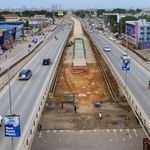
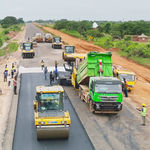
Dar es Salaam. Poor road development planning and chronic underfunding are slowing Tanzania’s infrastructure expansion, increasing arrears and threatening service delivery, a new audit has revealed, showing that only half of planned road upgrades have been implemented over the past four years.
Despite rising demand for road infrastructure across the country, the government has over the past four consecutive financial years implemented an average of only 50 percent of planned road improvements between 2021/22 and 2024/25, a shortfall that the Controller and Auditor General (CAG) warns is now undermining transport efficiency, delaying economic activity and driving up unpaid contractor bills.
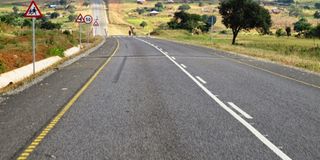
This is according to CAG Charles Kichere in his 2024/25 audit report, which assessed the planning and execution of road infrastructure programmes and found systemic weaknesses in budgeting, prioritisation and fund disbursement across key implementing agencies.
The report shows that the Prime Minister’s Office [Regional Administration and Local Government (PO-RALG)] and the Rural and Urban Roads Agency (Tarura), which manage a large share of the road network, have been operating under insufficient and inconsistently disbursed budgets, resulting in repeated failure to meet annual targets.
It further warns that the absence of a National Road Infrastructure Master Plan has left the sector without a coordinated long-term framework, weakening prioritisation, investment planning and delivery outcomes.
Mr Kichere’s findings come amid growing political pressure, with Members of Parliament urging the government to urgently prioritise road rehabilitation, particularly under Tarura, citing worsening conditions that disrupt transport, trade and access to services during rainy seasons.
The concerns were raised during debate on the Prime Minister’s Office budget estimates tabled on April 1, where lawmakers warned that deteriorating roads had become a recurring national challenge requiring emergency-level attention.
Lawmakers also called for increased and predictable funding to Tarura to address the large backlog of damaged roads across districts and municipalities.
Efforts to obtain responses from PO-RALG and the Ministry of Works on the audit findings were unsuccessful. However, MPs are expected to press the Government further when the Prime Minister’s budget debate concludes, as road infrastructure remains one of Parliament’s most persistent concerns.
What the CAG found
The audit report, tabled in Parliament on April 10, shows that reduced and inconsistent budget allocations have weakened implementation of road development plans, with direct consequences on project completion rates and transport reliability.
Annual targets for road upgrading have declined from 1,227 kilometres in 2021/22 to 1,023 kilometres in 2024/25, signalling reduced ambition and constrained execution capacity.
“Implementation of various activities, including upgrading roads to bitumen and gravel standards, showed wide variation between years, affecting the pace of sector development,” the report states.
Performance data shows gravel road upgrades were achieved at between 39 and 69 percent of targets, while bitumen road works ranged between 45 and 65 percent. Only in the 2024/25 financial year were bitumen upgrade targets fully met.
The CAG attributes the shortfalls to weak prioritisation in planning and inadequate mobilisation of financial resources, noting that the result has been delayed project delivery and worsening transport conditions in several regions.
The report also highlights a growing stock of unpaid contractor claims, linking it directly to under-disbursement of allocated funds.
“I observed that failure to fully disburse allocated funds for road infrastructure development has contributed to an increase in outstanding payment arrears related to road improvement works,” Mr Kichere notes.
Outstanding arrears under Tanroads rose from Sh0.633 trillion in 2021/22 to Sh0.701 trillion in 2022/23, before peaking at Sh1.295 trillion and stabilising at Sh1.221 trillion in subsequent years, reflecting mounting fiscal pressure.
Master plan gap weakens coordination, investment
The CAG further warns that the absence of a National Road Infrastructure Master Plan continues to undermine coordinated planning and long-term investment in the sector.
“The absence of such a plan has been identified as a key cause of the lack of a unified direction in setting priorities and attracting investment in the road sector,” the report states.
Funding trends also reveal a mismatch between allocations and actual infrastructure needs. Regional road funding declined from Sh94.64 billion in 2021/22 to Sh87.27 billion in 2023/24, while remaining stagnant in 2024/25.
For Tarura -managed district roads, budgets fell from Sh716.8 billion in 2021/22 to Sh704.7 billion in 2023/24, with no increase in the following financial year.
The CAG notes that reliance on fixed budget ceilings rather than needs-based planning has resulted in critical projects being delayed or dropped entirely, while less urgent works proceed.
Weak prioritisation, planning gaps
The audit also identifies structural weaknesses in how projects are selected and prioritised.
Tanroads’ 2021/22–2025/26 strategic plan is criticised for including 132 feasibility studies and 81 road upgrading projects covering 9,346 kilometres without adequate assessment of road condition, economic value or social impact.
For Tarura, although prioritisation criteria exist, including road condition, traffic volume and socio-economic importance, the CAG finds that these are inconsistently applied.
He warns that this raises the risk of inefficient spending, where low-impact projects are funded while urgent interventions are delayed, ultimately weakening the national road network. Coordination gaps were also noted, with limited engagement of key institutions such as the Ministry of Finance and the Planning Commission in prioritisation and resource mobilisation processes.
Recommendations
The CAG recommends urgent reforms, including the development of a National Road Infrastructure Master Plan, improved prioritisation mechanisms and stronger mobilisation of financial resources. He also calls for realistic cost estimation and timely release of funds to prevent delays and cost escalations in road projects.
According to him, addressing these weaknesses would not only improve transport efficiency but also support broader economic growth and ensure safer, more reliable mobility for citizens.
Weighbridge failures cost billions in lost revenue
In a related audit, more than Sh1.62 billion in road damage fees remains uncollected from overloaded vehicles, exposing serious enforcement gaps at weighbridge stations. The CAG reports that the uncollected amount is part of Sh1.9 billion assessed in road damage fees, with Tanroads failing to recover significant sums due to weak enforcement systems.
Key weaknesses include failure to impound overloaded vehicles, inadequate verification of driver and vehicle details, and limited use of digital tracking systems to enforce compliance.
Out of 70 sampled cases, 18 vehicles were weighed without proper identification checks, undermining traceability and recovery efforts. Vehicle traffic through weighbridges rose from 10.3 million in 2021/22 to 11.4 million in 2024/25, while overloaded vehicles increased from 2.77 million to 3.59 million over the same period.
The CAG links the trend to weak enforcement and misuse of allowable tolerance limits, contributing to accelerated road deterioration. He also flags poor calibration and maintenance of weighbridge equipment, with some devices going years without statutory inspection.
Recommendations include a centralised real-time database for tracking penalties, stronger inter-agency coordination and improved maintenance of enforcement equipment.
The audit further reveals that Sh91.94 billion in compensation for project-affected persons remains unpaid, despite legal requirements mandating settlement within six months of valuation approval. Delays of up to three years were recorded across multiple agencies, largely due to delayed Treasury releases and the absence of a dedicated compensation fund.
Major cases include the Tanzania Airports Authority (TAA), where more than 1,300 beneficiaries in Kipunguni remain unpaid, and the Tanzania Electrical, Mechanical and Electronics Services Agency (Temesa), which owes Sh2.78 billion.
Other delays include grave relocation works in Tanga and unresolved claims under the Engaruka Soda Ash Project.
The CAG warns that prolonged delays risk legal disputes, social tensions and setbacks in strategic infrastructure delivery.
He recommends establishing a dedicated compensation fund and improving record reconciliation to ensure timely settlement of legitimate claims.
Reported by Hellen Nachilongo, Gadiosa Lamtey and Nasra Abdallah
Register to begin your journey to our premium contentSubscribe for full access to premium content