How digital tools are transforming Tanzania’s education system

Dar es Salaam. Technology is increasingly being positioned as a catalyst in strengthening Tanzania’s competency-based education system, with stakeholders arguing that digital tools could significantly improve how knowledge and skills are delivered in classrooms.

From augmented reality to 3D simulations and artificial intelligence-driven platforms, education technology providers say the shift is designed to move schools away from rote memorisation towards practical, skills-oriented learning aligned with real-life demands.
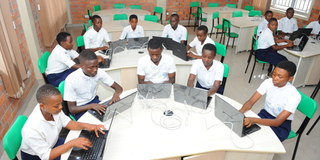
Tanzania has in recent year’s expanded digital learning initiatives through programmes such as the Tanzania Education and Research Network (TERNET), Smart School projects introduced in selected urban schools, and the National Digital Education Strategy for 2024/25–2029/30.

One of the companies leading this transition is Ekima, a Tanzanian technology firm that has introduced a digital learning platform featuring interactive videos, 2D and 3D animations, AI-powered tools, and augmented and virtual reality experiences.

According to the company, its platform has so far reached 297 educational institutions nationwide, serving more than 500,000 students and teachers.

However, details on how these figures were verified or independently assessed were not immediately available.

In a new partnership with the Christian Social Services Commission (CSSC), Ekima aims to support the implementation of Tanzania’s Competency-Based Curriculum (CBC), which was introduced to address long-standing concerns about graduates lacking practical and workplace-ready skills.

The collaboration seeks to integrate digital content, simulations, virtual laboratories and competency-based assessments into teaching, with the goal of improving learning outcomes and strengthening students’ skills readiness.

According to the Roman Catholic Archdiocese of Arusha, Fredrick Mosha said competency-based teaching requires more than syllabus coverage.

“It is about assessing skills and values, and whether students can apply what they have learned in real-life situations,” he said.

On the other hand, Ekima’s Chief Strategy Officer, Kusiluka Aginiwe, described the current phase of Tanzania’s education system as a major shift, noting that employers, policymakers and educators have for years expressed frustration over skills gaps among graduates.  “The competency-based curriculum was introduced to respond to these concerns. This partnership is designed to help close those gaps systematically,” he said.

Mr Aginiwe further added that the use of interactive multimedia content can improve learning outcomes by between 20 and 30 percent.

 “Particularly in STEM subjects where visualization enhances understanding, citing research from the Education Development Center,” he shared.

Beyond academic performance, proponents argue that technology-supported competency-based education enhances employability.  According to Tanzania’s 2023 ICT Survey, only 32 percent of Tanzanians aged between 15 and 35 possess basic digital skills, while just 18 percent are able to use productivity software such as word processors or spreadsheets.

This comes at a time when Tanzania’s emerging sectors, including fintech, e-commerce, business process outsourcing, creative industries and technology start-ups, increasingly require exactly these capabilities.

The Tanzania ICT Commission projects that the country will need more than 200,000 ICT professionals by 2030, yet current training pipelines are producing fewer than 15,000 graduates annually, raising concerns about the country’s ability to meet future skills demand without significant changes in education delivery.

Students exposed to simulations, problem-based learning and real-world scenarios are said to develop transferable skills such as critical thinking, collaboration, creativity and digital fluency.

“The competencies that matter today go beyond the classroom,” Aginiwe said. “Digital fluency and problem-solving skills are increasingly central to employment readiness.”

As Tanzania’s economy diversifies into services, logistics, technology, tourism and creative industries, stakeholders argue that aligning education with digital transformation is no longer optional.

“Technology-enabled competency-based education is strategic,” Aginiwe said, pointing to countries such as Singapore, Estonia and South Korea, which have invested heavily in digital education and skills-based learning and now rank highly in global innovation and education indices.

Historically, Tanzania’s efforts to integrate information and communication technology into education have been fragmented.

However, progress has been recorded in recent years.

In 2020, the government equipped 1,696 primary schools with science and ICT facilities and provided ICT training to trainee teachers at primary education colleges.

By 2023, primary schools nationwide were reported to have 17,700 desktop computers and 10,384 laptops, with a majority connected to the national electricity grid.

While the ambition is clear, the long-term success of such initiatives will depend on infrastructure readiness, teacher training, affordability, and sustained public-private collaboration.

For Tanzania, the question is not only whether technology can improve classrooms, but how inclusively and equitably that transformation can be implemented nationwide.