How Tanzania loses revenue in illegal Tunduma forex
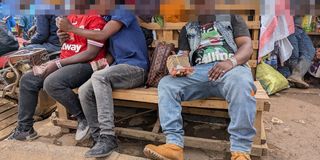
Informal currency traders at the Tunduma border in Songwe display bundles of Tanzanian shillings and Zambian kwacha, providing quick exchange services to travelers and traders crossing the frontier.PHOTO/ ALI MLANZI
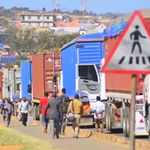
Dar es Salaam. It is 9am at the Tunduma border in Songwe region. The lorry queue barely moves a hundred metres, yet another business is thriving at full speed—a black market for foreign currency.
The area, locally called Kilimanjaro, is not the northern region of Tanzania but a busy border post connecting the country to Zambia and serving as a gateway to the Democratic Republic of Congo (DRC).
Here, young men dressed in worn clothes openly handle large bundles of cash: Zambian Kwacha in one hand, Tanzanian shillings in the other. Nearby lie small bags packed with money worth millions, visible to anyone passing by.
As journalists moved around the roundabout, the youth approached, silently showing stacks of notes. One whispered:
“Here we change money, boss… good rates,” fanning cash in his hand as proof of his business.
This is no small roadside operation. It is an informal, unlicensed foreign exchange system operating openly, daily, under the watchful eyes of authorities, costing the government revenue and leaving no official records.
Investigations by reporters reveal that the black market has become a daily livelihood at Tunduma. Many young traders, most unregistered and unknown to authorities, handle millions of shillings every day, serving lorry drivers, small traders, travellers and even freight agents.
Transactions are rapid. A client names an amount, and the “rate” is agreed immediately. There is no reference to Bank of Tanzania (BoT) official rates, no verification of the money’s origin, and no oversight. By law, foreign currency exchange must be conducted by licensed institutions. “It is not allowed for any person or institution to engage in foreign currency exchange without a valid licence issued by the Bank of Tanzania,” states Section 3 of the 2023 Foreign Currency Exchange Shops Regulations. Despite this, Tunduma operates outside these rules.
The youth act as street-level cash handlers, but the money belongs to bosses who direct small teams of about eight traders at the border. “You might wonder where all this money comes from. It all belongs to the boss. We get paid from daily sales,” one trader explains, requesting anonymity.
Each street transaction represents lost government revenue. Taxes and fees go unpaid, while crucial financial data for economic planning and inflation control are missing, warns Prof Benedict Mongula, an economist.
“In other words, the government loses not just money, but also control of its financial system at the border,” he says.
The black market also poses security risks. With no monitoring, counterfeit notes, illicit funds, or criminally-sourced cash can circulate unchecked.
“Where there is an unofficial currency market at the border, it opens a door to risks that extend far beyond Tunduma,” Prof Mongula cautions.
Even lorry drivers have been victims. Driver Gugu Abdulsalim recalls receiving fake Zambian Kwacha notes from the street traders.
“Sometimes they sell counterfeit notes, and there’s nothing you can do. That’s life here,” he says. The market thrives partly because no legal exchange shops operate nearby, banks are distant and close early, and drivers often need cash urgently after waiting in lorry queues for days.
These informal traders also act as de facto security, watching over cash to prevent theft or escape, while other young men patrol the streets to ensure money stays within the network.
“You may see them carrying cash bags openly, but they are controlled by bosses who ensure the money doesn’t leave the operation,” says one insider.
Authorities admit challenges in enforcement. Songwe regional manager for Tanzania Revenue Authority (TRA), Mr Rashid Herith said BoT regulates foreign currency exchange but acknowledged that unlicensed trading is widespread. BoT Governor Emmanuel Tutuba described the situation as a border-specific enforcement challenge.
“It is difficult to regulate because these people move constantly. To operate legally, one needs Sh200 million in capital and an office, which most border traders lack. Those who work on the streets cannot formalise their businesses under current requirements,” Mr Tutuba said.
He added that BoT is preparing a strategy to ensure all foreign exchange trading is formally registered and monitored.
Economists warn that the unofficial system not only drains revenue but also fuels economic instability, facilitating money laundering and undermining official monetary policy.
“The black market at Tunduma is a hidden hazard. It is not just a loss of revenue, but also a risk to financial integrity, public security, and economic management,” Prof Mongula said.
In short, the Tunduma border is a vivid example of how informal, unregulated foreign exchange operations flourish where demand is high, enforcement is weak, and legal avenues are limited—a daily challenge for authorities and a continuing risk for the economy.
Register to begin your journey to our premium contentSubscribe for full access to premium content