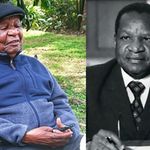
How Nyerere, Mtei drifted apart during the 1970s economic crisis


Dar es Salaam. When President Julius Nyerere appointed Edwin Mtei as Minister for Finance and Planning in 1977, the decision placed two men of immense stature but fundamentally different economic philosophies at the helm of Tanzania’s struggling economy.

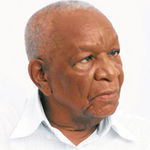
Mtei, who died early yesterday, was a seasoned technocrat and the country’s first Governor of the Bank of Tanzania (BoT).

He entered Cabinet at a moment of deep economic strain.

The collapse of the East African Community, the closure of the Kenya border, declining exports and mounting fiscal pressures had left the economy fragile and increasingly dependent on state intervention.

From the outset, Mtei approached the Treasury with a technocrat’s discipline. His priorities were clear: stabilise public finances, revive exports, strengthen revenue performance and confront inefficiencies in parastatal corporations that were draining the national budget.

The early phase of his tenure was dominated by the urgent task of integrating former East African Community departments and corporations into Tanzania’s administrative and financial system.

Customs and Excise, civil aviation, research institutes and regional corporations had to be absorbed into ministries already under strain.

At the same time, Tanzania had to negotiate the apportionment of the defunct Community’s assets and liabilities with Kenya and Uganda. This process demanded technical rigour and financial realism.

Yet beneath these administrative challenges lay a deeper ideological divide.

The export tax dispute

As detailed in his 2009 book titled From Goatherd to Governor, The Autobiography of Edwin Mtei, his first major clash with prevailing government thinking emerged during budget preparation.

Mtei was convinced that Tanzania’s recovery depended on boosting production and exports, particularly agricultural exports that generated foreign exchange.

He opposed export taxes outright, arguing that taxing exports suppressed production, reduced foreign earnings and entrenched rural poverty. It was his view that higher peasant incomes would stimulate demand for taxed goods, compensating for lost export revenue.

“This would enable them to purchase more goods bearing customs duty and sales tax, which would more than compensate for the loss in export tax. But this argument was of no avail,” Mtei wrote in the book.

But the Cabinet, reflecting the ethos of self-reliance, disagreed. With global coffee prices high, the government retained export taxes, arguing that peasants should contribute directly to public revenue. Those outside export agriculture, ministers argued, would contribute through development levies.

Mtei warned that this approach would stagnate exports and impoverish rural producers. His arguments were rejected. Though he continued to advocate export-led growth in all three budgets he presented, the philosophical divide widened.

Parastatals: efficiency versus ideology

The second fault line was parastatal reform.

By the late 1970s, many state-owned enterprises were deeply inefficient, loss-making and reliant on heavy Treasury subsidies. Their debts to the National Bank of Commerce had reached levels that, in Mtei’s assessment, threatened the bank’s solvency.

Mtei believed the solution lay in stronger management accountability, including limited private participation to restore discipline and efficiency.

As Finance minister, Mtei wrote in his autobiography, that the studies he commissioned such as a Danish review of the National Milling Corporation revealed systemic abuse of assets, poor supervision and widespread misuse of public resources.

He proposed measures that would give managers a stake in performance, even suggesting partial reintroduction of former private shareholders to stabilise operations.

But such ideas were anathema in an era when socialism defined economic legitimacy. Any proposal resembling private ownership was dismissed as ideological betrayal.

President Nyerere, while aware of the parastatals’ failures, was unwilling to accept reforms that touched ownership structures or diluted state control.

The IMF confrontation

The decisive rupture came in 1979, as Tanzania entered negotiations with the International Monetary Fund (IMF) and the World Bank for balance-of-payments support and economic rehabilitation.

Mtei details in his autobiography that he personally led the talks, working to craft an adjustment programme he believed balanced external assistance with national priorities.

He modified IMF proposals, softened their conditionality and sought a phased approach to reform.

Two issues, however, proved immovable.

First was currency devaluation. The Tanzanian shilling, officially fixed at Sh9.60 to the US dollar, was widely regarded as overvalued. Black-market rates were double or triple the official rate, confidence had collapsed and smuggling was rife.

Mtei supported a gradual devaluation whereby the first was to be Sh10.80 and later to Sh12.50. He argued it would restore competitiveness, boost exports and stabilise foreign exchange flows.

But President Nyerere categorically rejected the idea. To him, devaluation symbolised surrender to external control and an assault on national sovereignty. “I will devalue the shilling over my dead body,” he declared as outlined in the autobiography.

The second issue was parastatal reform. The IMF proposed stronger management and outside participation. Nyerere rejected any involvement of external or private actors in public enterprises, seeing it as ideological capitulation.

When IMF mission leader Bo Karlstrom presented the proposals at State House, the meeting ended abruptly. Nyerere dismissed the advice, accused the visitors of insolence and declared he would not allow Tanzania to be “run from Washington”.

For Mtei, the message was unmistakable.

A matter of principle

In the days that followed, Mtei noted in his autobiography that his position had become untenable. His advice was no longer trusted; his policy prescriptions were rejected outright. Worse still, he feared being asked to implement decisions he believed would deepen the crisis.

He drafted a letter requesting to be relieved of his duties. He explained that despite modifying IMF proposals and working tirelessly with local experts, the President had rejected them entirely. He suggested that another minister, whose advice would be more readily accepted, should take his place.

The final trigger came during discussions over the government’s proposed purchase of Tanganyika Planting Company. Mtei warned that Tanzania lacked the foreign exchange even to service existing debts, let alone remit funds for acquisition. His warnings were dismissed.

That day, he delivered his resignation in person.

President Nyerere accepted it without hesitation.

Aftermath

Officially, Mtei resigned for health reasons. In reality, the international press reported a policy clash at the heart of government. While foreign media criticised Nyerere, local newspapers remained silent.

Mtei avoided confrontation, declined interviews and withdrew from public office. Within weeks, he turned to farming, exchanging his Dar es Salaam home for a coffee estate in Arusha.

In retrospect, his resignation marked one of the rare moments in Tanzania’s post-independence history when a senior minister chose principle over compliance.

It exposed the limits of technocratic influence in an ideologically driven system and foreshadowed policy shifts that Tanzania would only embrace years later.

For Mtei, the decision ended a chapter but defined his legacy: a finance minister who resigned not for power, but for conviction.