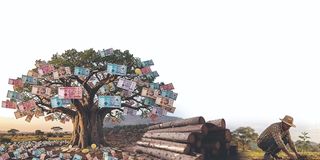
Each year after selling maize, Mr Chengula invested part of the proceeds in tree plantations. At the time, buying an acre of land planted with young pine trees cost between Sh2 million and Sh3 million. The trees were only knee-high, but he knew patience would pay off.
Pine plantations typically take seven to 10 years to mature. By then, their value increases significantly.
“Just last week, my neighbour sold one acre of mature pine trees for Sh50 million. For the past eight years I have been buying two to three acres annually. I now own 16 acres, and some are ready for harvesting,” he said.
Mr Chengula is among thousands of residents in Iringa and Njombe who have turned forestry into a long-term investment that generates income, creates jobs and supports household development.
Across the two regions, tree farming has become more than an environmental activity. It has evolved into a commercial enterprise supporting education, housing, transport businesses and rural employment.
From small beginnings
In Mufindi District, tree farmer Mr John Mtewele began with five acres in 2012. Today, he owns more than 30 acres planted with pine and eucalyptus.
“I started small. Trees have enabled me to build a house, buy a tractor and educate my children,” he said.
Initially, he sold only logs. As he gained experience, he diversified into higher-value products, including treated poles, processed timber and other wood products.
The industry’s value chain begins long before trees reach maturity.
In Mafinga, seedling producer Ms Rehema Mponzi says demand for quality seedlings has created business opportunities for women and young entrepreneurs.
“Every seedling sold marks the beginning of a value chain. Farmers obtain planting material while industries secure future raw materials,” she said.
She believes more training on seed quality, nursery management and market access would improve productivity.
A growing investment
For many households, tree farming has become a form of long-term savings.
Njombe resident Ms Sara Chadenyile said many farmers now recognise forestry as an income-generating activity rather than simply an environmental conservation measure.
“We now understand that trees have economic value. They help us increase household income and meet family needs,” she said.
She added that farmers still require better knowledge of plantation management, value addition and market opportunities. In neighbouring Iringa Region, farmer Mr Gwakisa Makasi shares a similar view.
“We plant trees knowing they will appreciate in value over time and provide financial security for our families,” he said.
Growing demand for timber and wood products continues to encourage farmers to expand their plantations.
Value addition creates more jobs
According to Njombe Regional Commissioner Mr Anthony Mtaka, increased investment in wood processing has transformed the forestry sector.
“In the past, trucks mainly transported raw logs and timber. Today we are producing treated poles, plywood, veneer, charcoal and many other products, creating more employment and income,” he said.
Even wood waste has found commercial value.
At Tanganyika Wattle Company Limited (TANWAT), wood residues that were previously discarded are now used to manufacture products such as doors and engineered wood.
A visit by The Citizen to the company’s processing plant showed how logs move through inspection, cutting, drying and manufacturing before reaching domestic and export markets as processed timber, plywood, veneer, finger-jointed timber and other products.
The process illustrates how one tree supports a network of businesses involving nursery operators, plantation owners, harvesting crews, transporters, sawmills and manufacturers.
Jobs and business opportunities
The sector has also become an important employer.
Mr Amani Ngowi, who works in tree harvesting, said forestry provided him with stable employment after years without permanent work.
“Through this sector I have built a house and supported my family,” he said.
Timber trader Mr Juma Mhando said demand continues to grow alongside construction activity across the country.
“Transport costs remain a challenge, but the business is still profitable,” he said.
Most timber is supplied to regions including Dodoma, Mwanza, Musoma and Shinyanga, while some products are exported.
Economic contribution
Data from the Tanzania Forest Services Agency (TFS) show that Njombe planted more than 26 million tree seedlings during the 2025/26 season, covering about 23,456 hectares.
In Iringa, more than 154 million trees were planted between the 2021/22 and 2024/25 seasons. During the 2024/25 season alone, the region planted 39.4 million trees, with a survival rate of 89.1 per cent.
The forestry sector also contributes to government revenue.
Tanzania Revenue Authority Taxpayer Education Manager Mr Paul Walalaze said taxes generated include income tax, value-added tax, customs duties and withholding tax from businesses operating across the forestry value chain.
Challenges remain
Despite its growth, stakeholders say the industry still faces high transport costs, production expenses, limited market access and the threat of forest fires.
Mr Mtaka said public awareness campaigns continue to promote responsible fire management and plantation protection.
“A single careless act, such as throwing a cigarette into dry grass, can cause significant losses,” he said.
The sector is also receiving support through the Forestry, Land Use and Value Chains Development in Tanzania (FORLAND) programme, a four-year partnership between Tanzania and Finland aimed at promoting sustainable forest management and stronger value chains.
University of Iringa economist Dr Neema Kindu said forestry’s economic importance lies in the broad range of activities it supports.
“Every stage of the value chain creates employment, income and business opportunities. That is why forestry continues to transform livelihoods in Iringa and Njombe,” she said.
From seedling nurseries and plantations to processing plants and export markets, forestry has become one of southern Tanzania’s most important rural industries. For many families, trees are no longer simply part of the landscape—they are long-term investments that finance education, create employment and drive local economic growth.
Register to begin your journey to our premium contentSubscribe for full access to premium content