Dar es Salaam. Barely seven months after the October 29, 2025, General Election, political temperatures within the ruling CCM are already rising over the 2030 presidential race, with the issue increasingly dominating discussions among party and government leaders.
Political analysts say the trend suggests that some leaders are no longer fully focused on discharging their current responsibilities, but are instead laying the groundwork for possible presidential bids in the next election cycle.
The unfolding debate has drawn mixed reactions from political stakeholders.
While some warn that the emerging succession politics could divert leaders from addressing citizens’ needs, others argue that CCM should rely on its constitution and internal regulations to discipline those accused of launching premature campaigns.
One senior CCM cadre, who requested anonymity because of the sensitivity of the matter, said on Sunday, May 24, 2026, that political manoeuvring was already evident beneath the surface.
“The tensions are there, although quietly. Those interested are organising themselves, and we will continue seeing this intensify, especially as we approach the party’s internal elections next year,” he said.
According to the senior official, the internal elections scheduled for next year will effectively shape the political roadmap towards the 2030 presidential contest, as aspiring candidates seek to consolidate influence from the grassroots upwards.
He said those eyeing the presidency were expected to position loyal supporters in strategic party structures to strengthen their future path to Parliament and eventually the State House.
The official added that the struggle was not confined to the party alone, but was also becoming visible within government circles, where perceived allegiances to particular camps were allegedly attracting silent pressure.
“Even inside the party, camps are already forming. The presidential race will certainly leave political dust behind,” he said.
On May 23, 2026, Prime Minister Dr Mwigulu Nchemba, while on a working tour of Iringa Region, warned against individuals claiming there was a plan to install a president from the Evangelical Lutheran Church in Tanzania (ELCT) in 2030.
“Today, we have not even completed a year since the election, yet every day, the agenda is elections and personal interests. A country that should be discussing development six months after an election is instead discussing another election,” said Dr Nchemba, who is himself an ELCT follower.
A similar debate has also emerged in Zanzibar, where some members of the House of Representatives have pushed for constitutional amendments that would allow President Hussein Ali Mwinyi to seek another term in 2030 after completing two constitutional terms.
This is not the first time the proposal has surfaced. A similar attempt was made in 2024, but Dr Mwinyi rejected the suggestion, insisting that he respected the Zanzibar Constitution.
He dismissed the proposal, saying he saw no reason to amend the Constitution simply to extend the leadership term beyond the constitutionally recognised 10 years.
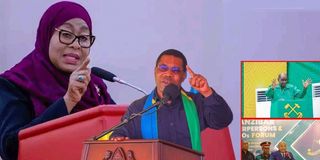
Speaking on May 23, 2026, while opening a forum bringing together board chairpersons and heads of public and private institutions, Dr Mwinyi said he had sworn to defend the Constitution and would not support any effort to prolong the presidential term.
“The remaining four and a half years are sufficient to deliver development. After that, we shall hand over the baton. This debate is untimely and unnecessary,” he said.
On March 27, 2026, CCM Mainland Vice-Chairman Stephen Wasira also cautioned party members against discussing the 2030 presidential race.
Speaking while laying the foundation stone for the construction of CCM district offices in Bunda District, Mara Region, Mr Wasira said the country still faced significant development challenges that required unity and political solidarity.
“How can you discuss the 2030 presidency today when you do not even know whether you will still be alive? That is like testing God. Right now, our focus should be on building the party and the nation,” he said.
During a meeting with elders in Dar es Salaam on December 2 last year, President Samia Suluhu Hassan also raised concerns over alleged manoeuvres linked to the 2030 succession race.
She warned government appointees harbouring presidential ambitions for 2030 to relinquish their positions and pursue those ambitions outside government.
“I told my ministers that I am watching each one of them. If you have interests elsewhere, pursue them outside government, not within it. I appointed you to serve citizens; your personal interests can come later. Only God knows who will become a leader,” she said.
The 2030 General Election is expected to usher in new presidents for both Mainland Tanzania and Zanzibar, as the current leaders from the ruling party will have completed the maximum constitutionally permitted terms in office.
Warnings against premature succession politics were also issued by the Minister for Information, Culture, Arts and Sports, Mr Paul Makonda, during a meeting with education stakeholders in Arusha Region on March 25, 2026.
Mr Makonda said those already positioning themselves for the 2030 presidency would not succeed.
“When you see leaders trying to distance themselves from government, they should simply step aside and join the critics attacking it. Those preparing themselves now will not get the presidency; they will not succeed in 2030,” he said.
What does this signify?
Political analyst Magabilo Masambu says the growing noise surrounding the 2030 race reflects a worrying reality that some leaders are prioritising political ambitions over public service.
“Those organising themselves for 2030 are people already occupying leadership positions. That sends a dangerous message that the offices they hold are no longer being used primarily to serve citizens,” he said.
According to Mr Masambu, early succession politics could negatively affect development because leaders might shift attention from implementing programmes to consolidating political camps ahead of the next election.
He added that leaders openly positioning themselves while others remained in office could also signal dissatisfaction with the current leadership.
Political analyst Prof Ali Makame Ussi shares similar concerns, arguing that the repeated public warnings from senior leaders indicate such activities are not endorsed by the party leadership.
“The fact that senior leaders continue condemning these actions publicly shows that what is happening is not acceptable within the party. It means there are secret preparations taking place contrary to the party’s official position,” he said.
Prof Makame said it was too early for presidential campaigns when leaders elected only recently had yet to fully implement their promises to citizens.
He warned that the trend could deepen divisions within society and create political factions that might ultimately delay development.
“This should be the time to fulfil promises made to citizens. Beginning preparations for the 2030 election now is premature and potentially harmful to national development,” he said.
However, lawyer and political analyst Ibrahim Bendera offered a different perspective, saying CCM already has clear constitutional structures and should act decisively against anyone violating party rules instead of repeatedly issuing warnings.
“CCM has its constitution. If someone is found acting contrary to it, disciplinary action should be taken.
But at the same time, we must accept that in politics preparations for elections begin early, even if the election is years away,” he said.
“People naturally organise themselves politically during such periods. Therefore, if some individuals are being criticised, perhaps those criticising them are themselves concealing political interests,” he added.
Register to begin your journey to our premium contentSubscribe for full access to premium content