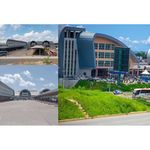
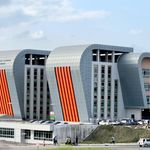
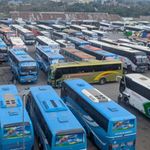
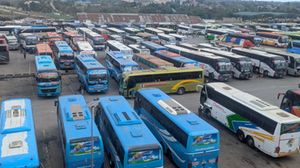
Dar es Salaam. The terminal’s distance from the city centre, poor environment and hygiene, the existence of private terminals, legal inconsistencies, commercial competition, and political interference have been cited as reasons some intercity buses avoid the Magufuli Main Bus Terminal for upcountry and cross-border travel.
These remain persistent challenges for transport stakeholders, who argue that it makes little sense to compel buses to enter the terminal in Mbezi Louis, Dar es Salaam, when each company already operates private offices with superior passenger facilities, including waiting lounges, clean toilets, and entertainment amenities, which they say are inadequate at Magufuli Terminal.
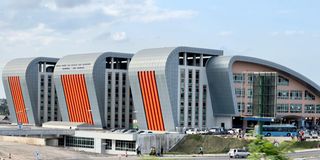
They further argue that the terminal is located far from residential areas where most passengers live, to the extent that the cost of reaching it is equal to or even higher than the fare for travelling upcountry.
As a result, many passengers opt to board buses at private terminals instead.
These explanations come amid repeated government directives ordering all buses to use the terminal so that Ubungo Municipality can collect revenue.
However, those directives have never been fully enforced.
Following several failed attempts and pronouncements, on December 27, 2025, the Deputy Minister of State in the Prime Minister’s Office (Regional Administration and Local Government – PMO-RALG), Mr Reuben Kwagilwa, formed a 90-day committee to assess the terminal’s operations and establish why buses are avoiding it.
Despite this move, some bus industry stakeholders who spoke to The Citizen’s sister newspaper, Mwananchi, on Monday, January 5, 2026, criticised the decision, arguing it was a waste of public funds because the reasons are already known.
One municipal councillor, who requested anonymity, said Ubungo Municipal Council by-laws require all intercity buses to enter Magufuli Terminal before starting their journeys.
“This is for vehicle inspections by traffic police and, secondly, so the council can collect gate levies charged per bus,” he said.
“They do not stay away out of sheer defiance. This business is like the drug trade; if you confront them, it is not easy because they are powerful and have heavyweight politicians behind them. At times, they even bring down ministers, so it is not a simple matter.”
The terminal is too far
The Tanzania Bus Owners Association (Taboa) Secretary General, Mr Priscus John, said the terminal’s distance, design, and surrounding environment discourage some operators.
He said a facility like Magufuli has been built far from the city centre, where most passengers are found.
Passengers, he noted, are forced to spend more to reach the terminal than they pay to travel upcountry.
“A person travelling from Chanika to Magufuli Terminal pays Sh20,000 or more for a bajaj, which at times equals the fare from Dar es Salaam to Iringa. Such a person will not go to the terminal,” he said.
Because of this distance, he said, bus companies have established private terminals in areas with high passenger volumes, where they board passengers and begin their journeys.
The location of a private terminal and the direction of travel, he added, determine whether a bus enters the main terminal or proceeds directly to its destination.
“If you are going to Arusha and your terminal is in the city centre, you are forced to first go to Magufuli, which is far, instead of proceeding directly via Mwenge, Tegeta, and onward. That is why people avoid it,” he said.
Terminal environment
Another factor, Mr John said, is the terminal’s design, which conceals ticket offices and creates room for touts to exploit passengers.
Given the layout, he said, passengers encounter shops and bars before ticket offices, where they meet touts and get conned.
“Ideally, a passenger should first encounter ticket offices and buy a ticket. When they meet touts instead, they get conned, and the bus loses passengers,” he said.
Despite the levies charged, he added, the terminal suffers congestion, dirt, and filthy toilets to the extent that some passengers fear entering the facility.
However, he said revenue is generated, but the government has failed to put in place robust collection systems, resulting in losses.
Private terminals are the problem
The Tanzania Bus Drivers Association (Uwamata) Chairman, Mr Majura Kafumu, said many bus companies operate private terminals outside Magufuli.
He said these terminals explain why buses bypass Magufuli, as they load passengers and goods there and begin their journeys directly.
“It made sense to allow terminals in Chanika because it is far from the city, but I see no justification for building a small terminal in Shekilango instead of buses waiting at Magufuli Main Terminal,” he said.
He said a system should have been established to transport passengers to the main terminal, rather than buses picking them up.
“We continue to see absurdities where private terminals are built as far as Kariakoo, yet Ubungo was removed for being unsuitable and relocated to reduce congestion,” he said.
He also questioned the government’s decision to form a committee when there is already a directive requiring buses to enter the terminal.
He said they had been assured during construction that the terminal would meet international standards and be beneficial, but questioned how the opposite had happened.
He said leaders, including Dar es Salaam Regional Commissioner Albert Chalamila, have made many statements, but questioned why they were never implemented.
Commercial competition
Beyond these factors, commercial competition was also cited by a former Magufuli Terminal official as a key reason buses avoid starting or entering the terminal.
He said some companies operate terminals outside Magufuli and attract many passengers, while those waiting at the main terminal get none, prompting the rush to establish private facilities.
“Transporters are ready to enter Magufuli, but only if all buses start their journeys there,” he said.
He added that the Land Transport Regulatory Authority (Latra)’s decision to allow private terminals contradicts the municipal directive requiring buses to enter Magufuli.
With Latra approval, he said, companies have acquired land to establish terminals within the city.
Political interference
Politics, he added, is the biggest obstacle, noting fears that strict enforcement could trigger strikes and unrest.
“For enforcement to work, an order must come from the top, especially the President, so lower-level leaders can act without fear of repercussions,” he said.
When contacted, Latra Director General Habib Suluo did not answer his phone. Calls to Latra Director Johansen Kahatano also went unanswered.
Register to begin your journey to our premium contentSubscribe for full access to premium content