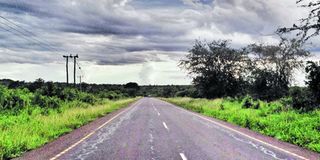
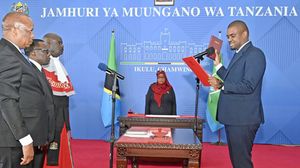
The toll road, part of the wider Dar es Salaam–Chalinze–Morogoro corridor, is expected to ease congestion on one of Tanzania’s busiest transport routes linking the commercial capital with the interior and neighbouring countries
Dar es Salaam. The government is restructuring the long-awaited Kibaha–Chalinze expressway project to eliminate historic delays and accelerate implementation. Officials describe the venture as a linchpin for national infrastructure that will support Tanzania’s ambitious drive toward a $1 trillion economy.
Speaking at a national dialogue on Public–Private Partnerships (PPP) at the University of Dar es Salaam on March 9, 2026, the Executive Director of the PPP Centre (PPPC), Mr David Kafulila, confirmed that the project is undergoing a strategic overhaul.
This move follows years of procedural stagnation and mismatched expectations between the state and private bidders.
The 78.9-kilometre section is a critical component of the Dar es Salaam–Chalinze–Morogoro corridor. As one of the country’s most congested routes, it serves as the primary artery linking the commercial capital to the lake zones and landlocked neighbouring states.
Once completed, the road will operate under a toll system, allowing private investors to recoup construction costs through user fees.
“This is a vital project for the movement of people and goods,” Mr Kafulila stated.
“Despite past delays, the government is now employing a special arrangement to move the project forward at a faster pace.”
The project’s history has been marked by significant procurement hurdles since preparations began in 2017.
Initial feasibility studies conducted by Korean and South African consultants drew interest from nine international firms.
After rigorous evaluation, the pool narrowed to three Chinese finalists. However, the process faltered when two firms failed to submit necessary documentation, leaving a single bidder, SBRG, in the final negotiations.
This lack of competition created a strategic disadvantage for the state. “When negotiations started, there was no second bidder to provide an alternative,” Mr Kafulila explained. Financial discrepancies further stalled progress. The remaining investor proposed a budget exceeding $900 million (approx. Sh2.4 trillion), far surpassing the government’s internal estimate of $560 million (approx. Sh1.5 trillion).
“Certain cost items appeared exaggerated, making it impossible to proceed with the same investor under those terms,” Mr Kafulila noted.
To resolve this impasse, the Prime Minister’s Office and the Ministry of Works have intervened to explore fresh investor arrangements.
As Tanzania’s first major PPP highway, the project is viewed as a litmus test for future infrastructure financing.
During the same forum, the Minister for Planning and Investment, Prof Kitila Mkumbo, highlighted that such infrastructure is central to the Fourth Five-Year Development Plan (2026/27–2030/31). This plan aims to set Tanzania on a trajectory to reach a $1 trillion GDP by 2050.
“We have identified four major priorities, including macroeconomic stability and structural reforms that empower the private sector to drive growth,” Prof Mkumbo said.
National economic growth rose to six percent in 2025, with projections hitting 6.3 percent this year. The government targets 10.5 percent annual growth by 2031 through strict fiscal discipline and infrastructure strengthening.
To fund these development priorities by 2031, Tanzania requires approximately Sh477.7 trillion ($183 billion).
The government expects the private sector to provide 70 percent of this capital, making successful PPP frameworks like the Kibaha expressway essential.
Private sector leaders have welcomed the restructuring but emphasised the need for policy consistency.
The Tanzania Private Sector Foundation (TPSF) Director of Policy and Planning, Ms Mwanahamisi Hussein, urged the government to continue refining the investment climate.
She also called for increased investment in local expertise to manage these complex, large-scale engineering and financial models. The successful delivery of the Kibaha–Chalinze stretch is expected to pave the way for a modern expressway network eventually connecting Dar es Salaam directly to the capital, Dodoma.