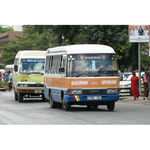
Dar es Salaam. The Land Transport Regulatory Authority (Latra) has announced eight new commuter bus routes and identified several existing routes that require additional vehicles, in a move aimed at easing transport challenges in the city.
Latra’s head of public relations and communications, Mr Salum Pazzy, said three existing routes require an additional 60 buses, while the eight new routes will require 200 buses.
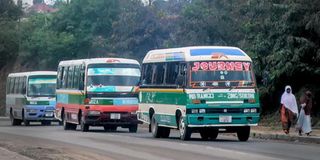
The new routes include: Videte–Buza via Mvuti to Kilungule; Videte–Mbezi Luis via Mvuti; Kuvule–Malamba Mawili; Videte–Kivule Hospital via Mvuti; Msongola–Fremu Kumi; Videte–Tabata Segerea via Nyerere to Majumba Sita; Mburahati Sokoni–Mlonganila via Maji Chumvi, Morogoro; and Mbezi–Tegeta Nyuki via Msumi to Mandale.
Routes earmarked for additional vehicles include Mwenge Stand–Mnazi Mmoja via TRA, Tandale Sokoni and Kawawa to Uhuru; and Mwanagati–Mnazi Mmoja via Banana to Nyerere, as well as Mwanagati–Muhimbili via Banana to Nyerere.
Mr Pazzy said a total of 260 buses, each with a minimum seating capacity of 25 passengers, are required to serve the identified routes.
He stressed that only vehicles with registration numbers beginning with “DAA” will be eligible for licensing, and that all drivers must be officially registered and approved by Latra to operate legally.
The requirements, he said, are intended to ensure orderly and professional service delivery as Dar es Salaam continues to expand and invest in transport infrastructure.
The secretary general of the Dar es Salaam Commuter Bus Owners Association (Darcoboa), Mr Shifawaya Lema, welcomed the move, saying the introduction of new routes would create business opportunities for operators and improve service coverage.
“Although I have not yet seen Latra’s official statement, the introduction of new routes would allow more operators to deploy their commuter buses. It is also an opportunity for bus owners who have long observed demand along those corridors,” he said.
Mr Lema noted that operators are often cautious about investing in newly introduced routes, but passenger uptake typically grows over time.
“For example, when the Mnazi Mmoja–Mbezi via Maji Chumvi route was first introduced, many operators were reluctant because of the high number of three-wheelers operating around Kimara. Today, however, it has become one of the busiest routes, widely used and appreciated by passengers,” he said.