Lawmakers warn as Universal Health Insurance plan faces Sh489.5 billion funding gap

Dar es Salaam. Tanzania’s Universal Health Insurance (UHI) programme faces a major financing challenge, with Parliament’s Budget Committee warning that the scheme is currently short of about Sh489.5 billion annually, raising concerns over its long-term sustainability as implementation begins.

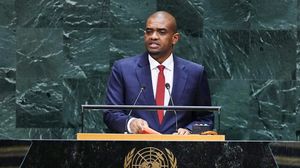
Presenting the committee’s report in Parliament, Budget Committee chairman Mr Mashimba Mashauri Ndaki said that while the government has established dedicated funding sources for the scheme, current revenue streams are insufficient to support its full rollout.

“The government should use households identified in the first phase as a pilot for implementing UHI and assess the financial sustainability of the fund before expanding the programme further,” Mr Ndaki told Parliament.

The UHI scheme, established under the Universal Health Insurance Act of 2023, introduces an Equity Fund intended to cover medical costs for poor households, patients with chronic illnesses, long-term conditions and emergency cases arising from accidents.

According to the committee, the programme is expected to benefit about 3.9 million vulnerable households, equivalent to 26.4 percent of all poor households in mainland Tanzania, based on National Bureau of Statistics (NBS) data.

However, only 931,693 households have so far been identified in the first phase of registration, leaving nearly three million households yet to be captured. The Ministry of Health plans to complete the remaining identification process over three financial years from 2026/27 to 2028/29.

Lawmakers said the government intends to begin implementation using already identified households while continuing nationwide registration.

The committee estimated that full implementation of the programme will require about Sh691.3 billion annually. Of this, Sh587.6 billion will go towards financing insurance benefits, Sh96.8 billion for services outside the benefits package, and Sh6.9 billion for administration, including public awareness and household identification.

However, current revenue sources earmarked for the fund are projected to generate only Sh201.9 billion, leaving a financing gap of Sh489.5 billion.

“Existing revenue sources are not sufficient to meet the cost of implementing Universal Health Insurance, leaving a significant financing gap that must be addressed to ensure sustainability of the scheme,” Mr Ndaki said.

The committee recommended that funds collected for the scheme be ring-fenced to ensure they are protected and used strictly for their intended purpose, while the identification exercise continues.

Lawmakers also raised concern over structural weaknesses in the health system that could undermine the success of the programme, particularly fragmentation of digital health platforms.

According to the report, more than 15 health information systems are currently operating independently without interoperability or data-sharing capacity.

Parliament urged the government to prioritise completion of the Universal Health Data System, which is expected to integrate patient records from primary healthcare facilities to referral hospitals to improve efficiency and coordination under the insurance scheme.

The committee also called for increased investment in telemedicine services to improve access to healthcare, especially in remote areas, while reducing operational costs.

In addition, MPs stressed the need for sustained investment in health personnel, medicines, diagnostic services, referral systems, infrastructure and quality assurance to ensure service delivery matches the scale of the new insurance system.

To strengthen long-term sustainability, the committee proposed the introduction of additional dedicated revenue streams, including levies on health-risk products such as alcohol, cigarettes, shisha and energy drinks.