Margaret Edwin: From journalist to Africa CDC’s first communications chief

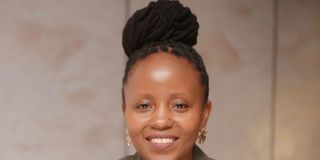
Margaret Edwin, the Director of Communications and Public Information at the Africa Centres for Disease Control and Prevention. PHOTO | COURTESY

What you need to know:

  • Margaret Edwin’s  leadership journey was shaped very early by journalism in a professional way, with much of her work focused on community-based feature stories

Dar es Salaam. Today, we are celebrating one of our own journalists from the establishment of The Citizen back in 2004. Margaret Edwin is now the Director of Communications and Public Information at the Africa Centres for Disease Control and Prevention (Africa CDC).

Her leadership journey was shaped very early by journalism in a professional way, with much of her work focused on community-based feature stories, listening to people whose experiences rarely made it into policy debates or national headlines.

“That period of training came long before today’s fast-moving digital and information landscape, and watching journalism evolve over the years has reinforced for me the importance of adaptability, credibility, and purpose in communication,” she said.

Reporting from communities taught her that power is not only held by those who speak the loudest but by those who decide which stories are told and how they are framed. It also showed her how easily people can be excluded when language becomes technical, distant, or disconnected from lived experience.

“That grounding has stayed with me throughout my career. Even now, working in public health and governance spaces, I am constantly asking whose voice is missing, whose reality is being overlooked, and how do we bring people closer to decisions that affect their lives,” she said.

A strong advocate for community engagement, she has served on non-profit boards and mentored early-career communication professionals. Her volunteer work with United Kingdom charities earned her the Chevening Gold Award in 2016. She also advised start-ups on brand storytelling and strategic positioning.

After transitioning from journalism into strategic communications, her first role was an advisory one with a pan-African firm, working closely with CEOs and senior leaders and supporting high-level decision-making within multinational organisations.

“That experience gave me an early education in what it really means to sit close to power. Decisions move quickly, reputations matter, and influence depends less on volume and more on judgement,” she said.

Margaret holds a Master of Science in Corporate Social Responsibility and Energy from Robert Gordon University. She has also completed executive leadership training at Harvard Business School. She is driven by a commitment to integrity, equitable access to information, and strengthening Africa’s public health systems through trusted, evidence-based communication.

In her current role, she became the institution’s first-ever communications chief in 2024, leading continent-wide crisis communications, public information systems, global media engagement, and strategic positioning across all 55 African Union Member States.

“Stepping into this role was both humbling and personal. I took it on just a year after losing my mother, at a time when I was still grieving and trying to make sense of life. I did not step into the role feeling fully healed or fearless. I stepped in carrying loss, vulnerability, and a strong sense of responsibility. What sustained me was the resilience my mother had passed on to me, and the values she lived by every day,” she narrates.

Growing up as one of four daughters with one brother, her mother was often criticized for giving birth to only girls. She never questioned that and focused instead on raising confident daughters who never questioned where they belong.

One of her clearest childhood memories is owning pink T-shirts that her mother made them wear regularly. Inscribed on the T-shirts were the words, “Anything boys can do, girls can do better.” The message shaped how she sees herself and what she believes is possible. Her mother taught them empowerment long before it became a popular word.

“I often wish my mother were here to witness this chapter of my journey. But I know that the confidence, resilience, and belief that carried me into this role are very much hers. In many ways, I am walking a path she prepared me for long before I knew where it would lead,” said Margaret.

That grounding mattered profoundly when she stepped into a role that had never existed before, with no template to follow. She had to define not just the function, but its strategic value at a continental level.

She said communications was not treated as an afterthought, but as a core leadership tool, central to trust, credibility, and accountability. It meant building the rhythm, standards, and ways of working that help leadership communicate clearly during crises and show up credibly across 55 member states.

It also meant shaping a community-facing voice, making sure messages travel beyond conference rooms and reach people through trusted channels, in language that is practical, culturally aware, and action-oriented. Building the role involved showing how clear, credible communication could strengthen Africa CDC’s authority, support decision-making during emergencies, and ensure African perspectives are visible and respected in global health conversations.

Margaret oversees a 23-member team responsible for shaping Africa’s public health narrative and strengthening regional collaboration during major outbreaks, including mpox, Marburg, and cholera.

Her work sits at the intersection of public health, governance, and strategic leadership, bridging scientific evidence, political decision-making, and community engagement.

She has mobilized partnerships, expanded Africa CDC’s digital and media footprint, and positioned the organization’s leadership as authoritative voices on global health security.

Commenting on the leadership sacrifices and demands, and how she learned to protect her values, wellbeing, and sense of purpose, she said leadership stretched her both professionally and personally.

Leading at a continental level has also meant spending long periods moving between countries and contexts, while leading and supporting a diverse, multidisciplinary team working across Africa CDC’s five Regional Coordinating Centres in East, Southern, West, Central, and North Africa. It has been deeply rewarding, but it also requires constant recalibration, learning how to stay grounded and protect her values while operating at pace.

Asked how African women are redefining leadership, she said African women are changing what power looks like in practice. More women are stepping into senior roles, but what inspires her most is how many are choosing to lead differently, with purpose, with people at the centre, and with a strong sense of responsibility for the impact their decisions have on real lives.

She connects this with her recognition after being named among the 50 African Women in Development in 2023 and receiving the PR Excellence Award from the Public Relations Society of Tanzania in 2022.

“I have seen women use influence quietly but decisively, bringing others into the conversation, building coalitions instead of silos, and making leadership feel less like performance and more like service,” she said.

“And I will be honest, some of the recognition I’ve received has mattered most because it affirmed that kind of leadership.

The award reminded me that credibility is not only about title, it is about consistency, integrity, and how you show up for others,” she said. For Margaret, that is the shift African women are driving.

They are not only changing who is in the room, they are changing the tone of the room, making leadership more human, more accountable, and more grounded in communities.

That is how power becomes something that strengthens institutions and opens doors, not something that closes them.

She leads communications during some of Africa’s most complex public health emergencies. As a woman leading in moments of crisis, she reflected on the unique pressures and the strengths women bring to high-stakes decision-making, noting that just five months after she joined Africa CDC, mpox was declared a Public Health Emergency of Continental Security.

“One of the first things I did was institute regular weekly press briefings. It was not about visibility. It was about creating clarity and consistency at a continental level. Member States, partners, and the public could count on one reliable stream of updates.”

She said the same approach mattered again when Marburg broke out in Rwanda and Africa CDC hosted the Minister of Health, Dr Sabin Nsanzimana, to speak directly to the continent. It gave people a trusted space for transparent engagement at a critical moment, and it reinforced just how central communication is to effective crisis leadership.

Offering advice to young African women who want to lead in policy, governance, or global institutions but doubt whether there is space for them, she said the doubt they feel is not proof they are unqualified. It is often a sign they are walking into spaces that were not designed with them in mind.

“I say this as a leader, but also as a mother to a 19-year-old daughter. I want her to grow up believing that she does not need permission to belong in rooms where decisions are made. She belongs because she has something to contribute.” she said.