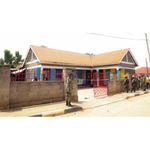
Dar es Salaam . Nestled in the rolling hills of Morogoro, Tanzania, Mazimbu is more than just a picturesque landscape; it is a testament to resilience, unity, and the relentless pursuit of freedom.
During South Africa’s darkest era of apartheid, Mazimbu became a sanctuary for thousands of South Africans who had fled their homeland in search of safety and the opportunity to continue the struggle for liberation.
Under the visionary leadership of Tanzania’s first president, Julius Nyerere, the country opened its doors, providing land, resources, and unwavering support to the African National Congress and other liberation movements.
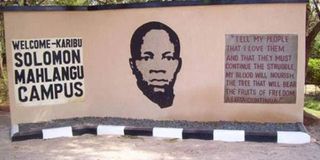
Mazimbu was transformed from a simple sisal estate into a thriving community, where freedom fighters lived, learned, and prepared to return to South Africa as leaders of a liberated nation. Among its most significant contributions was the establishment of the Solomon Mahlangu Freedom College, named after a young hero executed by the apartheid regime.
What began as classes under trees quickly evolved into a fully functioning institution with dormitories, classrooms, vocational workshops, and farms. Education at Mazimbu was more than academic—it was a weapon against oppression, equipping young activists with the knowledge, skills, and resilience required to rebuild a free South Africa.
The community at Mazimbu thrived through collaboration between Tanzanians and exiled South Africans. Families settled, children studied, and adults trained in leadership, agriculture, medicine, mechanics, and community organisation.
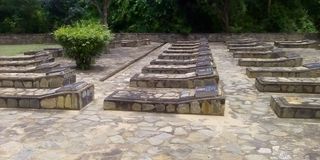
The site also became a place of profound sacrifice, with cemeteries scattered across the estate, honoring those who never returned home. These graves stand as solemn reminders of the cost of freedom and the enduring courage of those who fought for it.
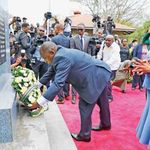
Mazimbu’s significance has been recognised at the highest levels. In August 2019, South African President Cyril Ramaphosa visited the site, walking the paths once trodden by the country’s freedom fighters and paying homage to the struggles endured on Tanzanian soil.
His visit underscored the deep historical bond between the two nations and the vital role Mazimbu played in shaping South Africa’s liberation. Former President Thabo Mbeki also visited in 2025, commemorating the sacrifices made and announcing initiatives to preserve the site’s history for future generations.
Former President Jacob Zuma, reflecting on the enduring memory of Tanzania’s support, said: “There are places in this country (Tanzania) that we can never forget — Mazimbu in Morogoro and Dakawa.” Zuma emphasized Tanzania as a “second home” to South Africa’s freedom fighters and highlighted the moral and material support that made the struggle possible.
Beyond the rolling hills of Mazimbu and the carved memorials to freedom fighters lies a much broader tapestry of Tanzanian–South African relations that few fully appreciate. The bond between the two nations was forged not just in shared diplomacy but in shared struggle.
Long before South Africa’s democratic dawn in 1994, Tanzania stood as a steadfast ally, hosting ANC programmes such as the Solomon Mahlangu Freedom College on land generously donated by the Tanzanian government, with facilities that at times accommodated up to 5,000 South Africans and included hospitals, farms, workshops, and classrooms that countered apartheid’s oppressive Bantu education system.
Tanzanians were not merely hosts; they were collaborators, workers, and neighbours — with Tanzanian women forming families with exiles and Swahili becoming the unexpected lingua franca of daily life in Mazimbu, symbolising a cultural unity born of struggle and shared purpose.
The handing over of Somafco and related centres back to Tanzania in the early 1990s marked the end of apartheid, but the lived connections between people of both nations — through marriage, language, and memory — have endured to this day.
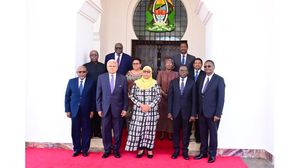
The powerful historical threads that tie both nations together also played out on the diplomatic stage long after apartheid’s fall. Leaders from both countries have repeatedly used visits to Mazimbu to underscore shared history while building frameworks for future cooperation in trade, education, and cultural exchange.
These moments have cemented a partnership that spans political, economic, and social dimensions, demonstrating that the bonds forged in struggle have matured into a robust, forward-looking relationship rooted in mutual respect and shared heritage.
Today’s Tanzania–South Africa relationship continues to evolve on foundations laid by the sacrifices witnessed at Mazimbu.
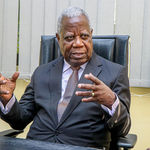
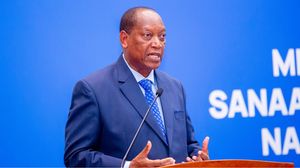
In an interview with The Citizen on November 1, 2024, Tanzania’s High Commissioner to South Africa, James Bwana, highlighted how this shared history of solidarity has blossomed into dynamic people to people connections and expanding economic cooperation.
He pointed to increased bilateral engagement — including efforts to facilitate direct travel links, significantly boost trade, and deepen cultural and educational exchanges such as the promotion of the Swahili language in South African institutions — as key examples of how the legacy of liberation has shaped modern collaboration.
Bwana stressed that visa facilitation and strategic partnerships under the African Continental Free Trade Area provide fresh momentum to a relationship that was once defined by refuge and now thrives on mutual opportunity and cultural respect.
In this light, Mazimbu is not only a monument to the past but a living pillar of a future where Tanzania and South Africa, bound by history, continue to write new chapters of unity and growth together.
Today, Mazimbu stands as more than a historical site; it is a living legacy. It embodies the power of solidarity, the importance of education in liberation, and the transformative impact of collective action.
Mazimbu reminds the world that freedom is never given—it is built, nurtured, and defended, often far from home, on sacred soil where courage and hope converge.
Register to begin your journey to our premium contentSubscribe for full access to premium content