Morogoro motorists set for 60pc fuel cost cut as new CNG station set to open in October
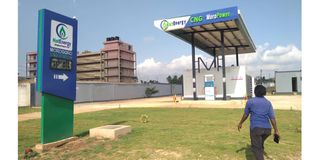
New natural gas station expected to start providing natural gas services for cars and rickshaws as photographed recently in the Morogoro Municipality. The station is expected to be opened in October this year. PHOTO| JUMA MTANDA
Morogoro. Motorists and auto-rickshaw operators in Morogoro are set for substantial financial relief as a new compressed natural gas (CNG) refuelling station opens this October, promising to slash daily operating transport costs by over 60 percent across the entire regional urban transport network.
The station, constructed by Natenergy/MoroPower, is designed to serve between 600 and 800 vehicles daily, while the firm plans to construct three additional facilities across Morogoro by December 2027.
Speaking to The Citizen’s sister newspaper Mwananchi, project consultant and engineer for the Morogoro natural gas facility, Ms Mercy Chilumba, demonstrated how transitioning from liquid fuel yields immediate savings.
She explained that a vehicle consuming one litre of fuel for 10 kilometres uses 1.5 litres for 15 kilometres, a distance comparable to using roughly one kilogramme of CNG fuel.
Under current fuel price caps in Morogoro, petrol retails at Sh3,851 per litre while diesel costs Sh3,932 per litre, according to regulatory prices published by Ewura effective from September 2, 2026.
Consequently, 1.5 litres of petrol costs Sh5,777, and diesel costs Sh5,898, whereas one kilogramme of CNG is expected to retail between Sh1,950 and Sh2,150 in Morogoro.
"By that calculation, a driver covering an equal distance of 15 kilometres will spend roughly Sh2,150 on CNG instead of nearly Sh5,777 on petrol, saving about 63 percent; or Sh5,898 for diesel, saving nearly 64 per cent," stated Ms Chilumba.
She added that the refuelling station is expected to employ between 20 and 25 people, noting that CNG usage can significantly reduce operating costs for thousands of drivers using vehicles and auto-rickshaws for income generation.
A teacher and motorist residing in Morogoro, Ms Vestina Lubao, said launching natural gas refuelling in the town will bring immense relief to drivers and youth engaged in local transport businesses due to significantly lower running costs incurred in daily operations.
Ms Lubao noted that experience from auto-rickshaw operators in Dar es Salaam shows that compressed natural gas helped them lower expenses compared to traditional liquid fuel.
"When operational costs are low, youth in this business can earn higher profits," she said.
She added that the facility will give drivers who have never used CNG an opportunity to learn about and adopt it, while stressing the need for sufficient stations to prevent long queues and guarantee timely, efficient service delivery.
For his part, Tanzania Petroleum Development Corporation (TPDC) Senior engineer, Mr Hassan Temba, said Dar es Salaam already boasts over 16 CNG stations, while TPDC continues constructing pilot facilities in Morogoro and Dodoma to demonstrate the feasibility of expanding natural gas beyond Dar es Salaam urban centres.
Mr Temba said the Morogoro station forms part of a strategy to demonstrate market demand, encouraging private investors to build more refuelling stations.
He noted that CNG offers environmental, financial, and energy security benefits, explaining that domestically produced natural gas shields local motorists from severe oil price volatility driven by global market fluctuations across international commodity trade routes.
He added that TPDC is pursuing strategies to expand the national gas pipeline network and deploy alternative distribution technologies to reach unpiped regions across Tanzania efficiently.
Meanwhile, Natenergy/MoroPower Director, Mr Mkomwa Mtiga, stated that his own investment decision stemmed from rising demand for affordable, safe, and eco-friendly energy to power motor vehicles and auto-rickshaws operating within local urban communities.
He confirmed that the station expects to commence operations in October 2026, following full compliance with technical, safety, and regulatory procedures.
"The goal is helping car and auto-rickshaw owners cut running costs while curbing reliance on petrol and diesel," said Mtiga.
He added that CNG usage will lower vehicular air pollution emissions, explaining that safe usage depends on strict adherence to technical standards and guidelines established by relevant regulatory sector authorities across Tanzania.
Ms Chilumba noted that since Morogoro connects various regional transit routes nationwide, expanding CNG stations will enable travellers to utilise clean energy when journeying across different regions of the whole country.
She noted that plans to add three additional stations in Morogoro by December 2027 will expand CNG availability, reduce reliance on a single facility, and encourage adoption among private car owners and commercial fleet operators regionally.
Consequently, Morogoro is expected to join regions expanding natural gas adoption in transport, providing local drivers with an alternative energy option offering significantly cheaper running costs and daily transport expenses.