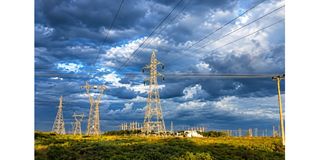
Songwe. The Tanzania Electric Supply Company (Tanesco), has signed a Sh198.67 billion contract with Chinese contractor TBEA Company to construct a 220-kilovolt power transmission line and receiving substation, aiming to permanently eliminate persistent electricity supply shortages across the mineral-rich Songwe and Mbeya regions.
The 18-month project involves erecting a high-voltage transmission line running from Iganjo in Mbeya Region to Saza in Songwe Region, alongside constructing the new Saza Power Receiving and Cooling Substation.
The infrastructure is designed to stabilise grid reliability and stimulate productive economic activity, particularly commercial gold and mineral mining across Chunya and Songwe districts.
Speaking on Friday, September 11, 2026, during the signing ceremony in Saza village, Songwe District, Deputy Minister for Energy, Ms Salome Makamba, emphasised that completing the project will boost industrial production, advance modern agriculture, and expand trade, while eliminating long-standing power supply bottlenecks that have hindered regional socio-economic development for years.
Ms Makamba reassured local communities that the government remains fully committed to tackling public hardship.
"I want to assure residents of Songwe and Mbeya regions that the government recognises the power supply challenges in your mining areas, and we are taking action to solve that challenge by commencing this project," the deputy minister affirmed.
Reiterating the Tanzanian government's focus on equitable public service delivery, Ms Makamba stressed that development projects are implemented strictly according to public need rather than political favouritism.
She added that the new power infrastructure will serve as a powerful catalyst for local enterprise, industrialisation, and sustainable wealth creation.
"President Samia (Suluhu Hassan) instructed us to create Tanzanian tycoons, so through this power project, major wealthy individuals will emerge," said Ms Makamba, issuing a clear directive instructing project contractors to prioritise hiring Tanzanian youth for both skilled and technical tasks throughout the implementation phase.
The deputy minister further contextualised the project within broader regional grid integration, noting that as the Iganjo–Saza transmission line progresses, citizens should recognise its alignment with the Tanzania–Zambia Transmission Interconnector Project (TAZA).
TAZA forms a cornerstone of national plans to strengthen power infrastructure and promote cross-border electricity trade across East and Southern Africa.
Outlining existing technical constraints, Tanesco deputy managing director responsible for Planning, Research, and Investment, Mr Amos Joas, representing the utility’s managing director, explained that Chunya and Songwe districts, particularly around Mkwajuni, currently rely on an inadequate 33-kilovolt line extending over 116 kilometres from Mbeya’s Mwakibete substation.
"Due to such a long distance combined with rapidly increasing electricity demand, there have been persistent power supply challenges, meaning executing this project will permanently improve the situation," stated Mr Joas, confirming that full construction will take 18 months.
Parliamentary Standing Committee on Energy and Minerals Chairperson, Ms Subira Mgalu, commended the Ministry of Energy and Tanesco for launching the scheme.
She emphasising that upgrading regional power infrastructure will yield direct economic benefits for local communities, including generating local employment and stimulating mining operations.
The Tanesco Board of Directors Vice Chairperson, Ambassador Zuhura Bundala, stated that the state utility continues implementing strategic infrastructure measures to build and upgrade electricity grid capacity to keep pace with rising energy demand driven by expanding socio-economic activities across the region.
"Implementing this power project is an essential part of Tanesco’s mandate to continually build infrastructure to meet current and future energy demands," said Ambassador Bundala, clarifying that strict supervision will ensure efficient construction and maximum value for invested public funds.