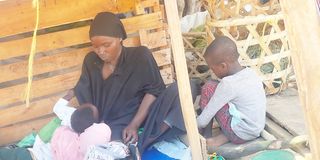
Iringa. Mothers and guardians in Iringa have spoken out about the challenges of raising children severely affected by stunting, a form of malnutrition largely caused by undernutrition.
Their stories emerged during an investigation by The Citizen conducted between October and December 2025 in Iringa Municipality, Kilolo District, and Iringa Rural.
The investigation sought to understand the scale of the problem and develop recommendations to reduce and ultimately eliminate stunting.
The findings come against alarming statistics: while stunting in Tanzania exceeds the global average of 22 percent, Iringa remains among the regions with the highest prevalence, at 56.9 percent.
Such figures point to a crisis that continues to threaten children’s growth and overall development.
The situation contravenes the Food and Nutrition Act of 2003 (Chapter 109), which obliges health facilities to provide growth monitoring, nutrition counselling, and follow-up support.
It also contravenes the World Health Organization (WHO) Growth Standards, ratified by Tanzania, which require routine measurement of both height and weight.
For a Dar es Salaam resident visiting her parents in Iringa Municipality, Ms Devotha Sebastian, the crisis became painfully personal.
“I remember holding my baby in my arms and feeling my heart sink,” she recalls.
“The doctor looked at me and said her weight was too low for her age. I had never been told that before,” narrates Ms Sebastian.
She had rushed her nine-month-old daughter to Iringa Regional Referral Hospital after a harrowing night, as the baby had a severe cold, struggled to breathe, and refused to breastfeed.
“She could not breathe properly when she tried to feed. None of us slept that night,” she recounts.
At the hospital, the doctor asked for her child’s weight, to which she calmly but confidently replied: six and a half kilogrammes.
“He became alarmed immediately. He said, ‘This is too low for a child of this age.’ At that moment, I felt both fear and guilt. I kept asking myself how I had missed it,” she said.
After laboratory tests ruled out infections, Ms Sebastian’s daughter was referred to a nutrition specialist.
“The nutrition doctor explained that although the tests were normal, my baby had moderate malnutrition,” she says.
“He measured her and explained the growth chart. That is when I learned that this is not something you can tell just by looking at a child,” adds Ms Sebastian.
Her daughter was prescribed vitamins and advised to improve her diet with fruits and freshly prepared juices, alongside daily meals. A return date was set for follow-up at the nutrition clinic.
“It was the first time anyone had explained growth properly to me. Before that, clinic visits were about vaccines or illness. I did not know growth had to be followed closely,” she discloses.
Ms Sebastian was born and raised in TRM Street, Kihesa Ward, Iringa Municipality, before moving to Dar es Salaam after marriage.
“That is where I failed my child,” she admits quietly.
“I did not take the nutrition doctor’s contact details. The follow-up clinic became something I postponed, then forgot,” Ms Sebastian adds softly.
Although her daughter’s weight gradually improved, the experience continues to trouble her.
“I was a first-time mother. I needed guidance. I wish I had continued with the nutrition clinic. Growth is not something you guess. It must be followed,” she reflects.
In Ilula, Kilolo District, the ordeal of raising a malnourished child took a different form.
Enock Tweve, now four years old, lost his mother to illness when he was only four months old.
His father did not immediately assume responsibility, leaving his grandmother, Ms Salome Mlula, to care for him, and later they relocated to Iringa town in search of better support.
By March 2023, when Enock was 11 months old, his condition had worsened.
Upon enrolment in Call Africa Organisation’s Kipepeo Nutrition Programme, his measurements painted a stark picture: a weight of 4.1kg, a mid-upper arm circumference (MUAC) of 10.1cm (red zone), and a height of 59.1cm, clear indicators of acute malnutrition.
“He was not breastfeeding and was always weak. I knew something was very wrong,” recalls Ms Mlula.
A community health worker in Frelimo Street, Iringa Municipality, referred her to Call Africa, where she received nutrition education, medical follow-up, and economic support, including livestock keeping to enhance household food security.
By the age of two, Enock showed remarkable recovery as his weight had increased to 9.7kg, MUAC improved to 13.3cm (green zone), and height reached 75.1cm, a testament to the positive impact of sustained nutrition support.
“They not only treated the child, but they also taught me how to care for him. That support saved his life,” she says.
Enock’s case highlights both the dangers of delayed growth monitoring and the lifesaving potential of community nutrition programmes.
In Mkimbizi Shule, Iringa Municipality, Ms Edister Mbimbi faced the challenge of raising her twin grandchildren when their parents were unavailable due to work commitments.
“There was a time when the twins stayed at the same weight for almost ten months,” she recalls.
“I kept moving from one clinic to another because I was afraid nurses would scold me for the children not gaining weight,” she adds.
At one point, she asked her husband to take the twins to the clinic, reasoning that he would not be criticized, “Luckily, that month their weight had increased.”
Yet even when clinic measurements seemed reassuring, Ms Mbimbi sensed something was amiss.
“The doctor told us everything was fine, but my grandson always looked much smaller than his twin sister. The difference was that he did not like eating,” she explains.
To address the problem, she adjusted his diet at home, “I would mash fish and meat to make it easier for him to eat, add eggs to maize porridge, and grind vegetables and fruits into juice. Slowly, he began to gain appetite and grow.”
Her experience shows that growth challenges can remain hidden even when children fall within normal clinical ranges, particularly when follow-up is inconsistent, and caregivers fear blame rather than support.
She stresses that education, not intimidation, is essential: “Mothers need guidance on what to do differently, not to be shouted at. It does not improve the child’s condition; it only creates fear and confusion.”
Why is it often the first warning?
Medical experts note that early detection of growth problems often begins at the clinic.
A paediatrician at St Joseph’s Mission Peramiho Hospital in Ruvuma Region, Dr Jida Said, explains that while stunting is measured using height-for-age, a child’s weight is usually the first visible indicator of growth or nutrition problems.
“At the clinic, we use a child health card that records weight against age,” explains Dr Said.
“The chart has three main zones: green, indicating good weight; grey, showing inadequate or borderline weight; and red, a dangerous state,” she adds.
Dr Said says children in the red zone are often admitted alongside their mothers for close medical and nutritional supervision, as further tests or referrals may follow if a problem is suspected.
“It is also possible for a child to have the correct weight but an inappropriate height for their age. That is why weight alone is not enough to rule out stunting,” notes Dr Said.
She stresses the role of parents in recognising early warning signs, “If a parent or healthcare provider senses that something is wrong, additional tests are done to understand the problem.”
However, she acknowledges systemic challenges, “Given how clinics operate and the high number of children seen daily, it is not always easy to measure both weight and height at every visit. That is why mothers are educated on danger signs and advised to return immediately if they notice changes.”
Community outreach programmes, such as those in Songea, Ruvuma Region, have proven effective in reaching mothers who miss clinic visits, ensuring children do not slip through the cracks.
Dr Said also underscores the importance of respectful care. “Health providers must explain procedures clearly and avoid scolding mothers, because harsh treatment pushes them away from clinics,” she says.
When growth problems go unnoticed
Yet, as Ms Sebastian’s story shows, many mothers only learn about growth problems when they visit clinics for other reasons, such as vaccinations or illness.
A resident of Kihesa Ward, Ms Joyce John, admits that responsibility for clinic visits has shifted to older relatives.
“My child is being raised by my mother, who mainly takes her to the clinic during immunisation campaigns or vitamin days. If the child looks active and well, another appointment is simply set, and they leave,” says Ms John.
Similarly, Ms Janeth Mhondele of Ilula Ward explains that nutrition education often targets children already showing problems.
“Those of us whose children seem fine are left out,” she says, adding that children can appear healthy yet still have growth problems, a fact often overlooked in routine counselling.
The experiences of these mothers and guardians underscore the urgent need for comprehensive growth monitoring, nutrition education, and community support.
Without such measures, many children risk lifelong consequences from stunting, even when outward appearances suggest they are healthy.
In Iringa, as in many parts of Tanzania, the challenge persists, but the stories of resilience, learning, and determination shared by mothers such as Ms Sebastian, Ms Mlula, and Ms Mbimbi show that timely support, education, and community programmes can make the difference between a child suffering in silence and a child thriving.
Register to begin your journey to our premium contentSubscribe for full access to premium content