Mwalimu Nyerere Chair turns to summer school to groom young leaders
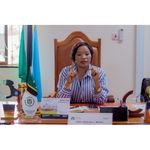
Mwalimu Nyerere Professional Chair in Pan African Studies, Chairman, Prof Alexander Makulilo, addresses a group of selected youth for the 2026 Summer School during the programme's launch at the University of Dar es Salaam (UDSM). PHOTO | COURTESY
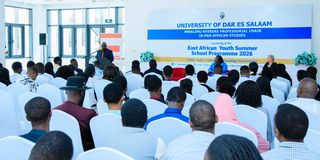
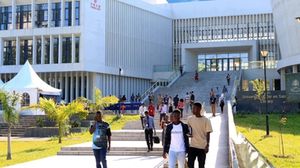
Dar es Salaam. At the University of Dar es Salaam (UDSM), the Mwalimu Nyerere Pan-African Institute is using a six-week Summer School to prepare young people not only for employment, but also for leadership, critical thinking and participation in society.
The East African Youth Summer School (EAYSS) Programme 2026, launched on Saturday, September 5, 2016, brings together 50 young people from universities and higher learning institutions across Tanzania.
The programme is being implemented by the Mwalimu Nyerere Pan-African Institute in partnership with the Rosa-Luxemburg Foundation, exposing participants to issues beyond their academic disciplines.
Approach seeks to strengthen confidence, responsibility and constructive civic participation.
The Mwalimu Nyerere Pan-African Institute Chairman, Prof Alexander Makulilo, said the programme was developed after recognising that many young people lack adequate guidance as they navigate an increasingly complex world.
“Many of them lack guidance, and this can sometimes make them want quick solutions instead of being guided on the right way to achieve their goals,” he said.
He said the programme seeks to develop young people who can think independently and participate in economic, social, political and environmental affairs.
“We are trying to prepare people intellectually; people who can think instead of simply making noise, and who can look for answers to problems instead of only complaining,” said Prof Makulilo.
Unlike short programmes, the EAYSS runs for six weeks, allowing participants to combine classroom learning with practical experiences.
Participants have already visited Parliament, where they interacted with young legislators and learnt about parliamentary processes and political leaders’ personal journeys.
The programme will also expose them to environmental issues, tourism and community experiences, including visits outside Dar es Salaam.
For the director of the Rosa-Luxemburg Foundation Regional Office in Dar es Salaam, Ms Katrin Voss, the partnership is designed to go beyond funding.
“We are not here only as funders. It is also important for us to contribute content. We sat together and thought about what might be important for the youth of Tanzania and East Africa to learn besides the disciplines they study at their universities,” she said.
“Our aim is political education and critical thinking, and this is exactly what we are trying to develop together with UDSM,” said Ms Voss.
A UDSM student and participant, Mr Aaron Mayala, said the programme was challenging young people to think beyond national boundaries.
“As a young person who wants to become a leader, I expect to learn how young people should approach leadership, especially from an intellectual perspective,” he said.
He said the programme was also teaching participants to question information rather than accepting everything they are told.
“You have to ask questions, challenge ideas, understand and analyse things instead of simply accepting everything you are told,” he said.
For Prof Makulilo, the answer is not to discourage young people from demanding change, but to equip them with knowledge and critical thinking needed to turn those demands into constructive solutions.
“We want young people with broad thinking who can look at issues from different perspectives,” he said.
The Summer School therefore places the Mwalimu Nyerere Chair at the centre of a wider experiment: whether universities can prepare young people not simply to seek jobs, but to understand society, question established ideas and develop solutions to challenges facing their generation.