Necta results: Mathematics, Biology expose persistent learning gaps

Necta Executive Secretary, Prof Said Mohamed

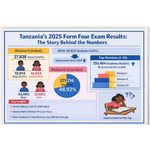
Dar es Salaam. Despite an overall improvement in pass rates in the 2025 Form Four examinations, persistent weaknesses in Mathematics and Biology continue to expose deep learning gaps within Tanzania’s secondary education system.

Data released by the National Examinations Council of Tanzania (Necta) on January 31, 2026 show that while many students are progressing through the system, performance in these two core subjects remains worrying, raising questions about foundational skills and classroom learning.
Basic Mathematics remains the most challenging subject for candidates. In 2025, only 26.45 percent of candidates passed the subject, despite a slight improvement compared to the previous year. A staggering 73.55 percent failed, underlining a long-standing crisis in numeracy.

This means that nearly three out of every four Form Four candidates left school without the minimum mathematical skills required for further studies, technical training or many modern jobs.

Biology, another core subject taken by the majority of candidates, also recorded a decline. The pass rate dropped to 65.68 percent from 74.15 percent in 2024.

Even more concerning was the sharp fall in quality performance: only 24.92 percent of candidates attained grades A to C, down from 40.04 percent the previous year. More than one-third of candidates failed Biology outright.

Education experts warn that weak performance in these subjects threatens progress elsewhere.

“This shows that gains in science will be difficult to sustain if learners continue to struggle with mathematics and foundational biological concepts,” noted education analyst Mussa Johnson.

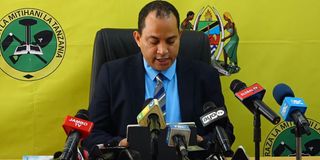
Speaking during the official release of the results, Necta Executive Secretary Prof Said Mohamed acknowledged the mixed picture, noting that while overall performance has improved, subject-level analysis reveals areas that still demand urgent attention.

Beyond these weaknesses, the 2025 results also show areas of strong performance, particularly in science and applied subjects where teaching conditions and resources are more favourable.

Chemistry remained one of the strongest subjects nationally, with a pass rate of 96.88 percent, slightly higher than in 2024. Nearly three-quarters of candidates (74.36 percent) achieved grades A to C, pointing to solid conceptual understanding.

Physics also showed notable improvement. The pass rate rose to 84.04 percent, up from 73.98 percent in 2024. Quality performance improved significantly, with the proportion of candidates scoring grades A to C increasing from 32.59 percent to 44.21 percent.

Applied science subjects performed even better. Food and Human Nutrition recorded a 100 percent pass rate, while Information and Computer Studies saw more than 83 percent of candidates attaining grades A to C.

“These results indicate that where resources, trained teachers and practical learning are available, students can perform well,” Mr Johnson observed, adding that remaining setbacks are largely systemic.

NECTA also reported firm action against examination misconduct.

Prof Mohamed said results for 77 candidates were cancelled after they were found guilty of cheating, including 30 school candidates and 47 private candidates.

Additionally, results for two candidates were cancelled after they wrote abusive language in their answer scripts.

“These measures are necessary to safeguard the credibility of national examinations,” Prof Mohamed said.

Meanwhile, results for 435 candidates who missed most papers due to illness were withheld, with arrangements made for them to re-sit the affected subjects in 2026.

Overall, the 2025 Form Four results suggest selective progress. Strong performance in Chemistry, Physics and applied sciences shows what is possible under the right conditions.

However, the continued struggles in Mathematics and the decline in Biology highlight unresolved gaps in teaching quality, learning time and foundational skills.

“Without decisive improvements in core subjects, many students will continue to leave school with certificates, but without the confidence or competence needed for higher learning and the labour market,” concluded Mr Johnson.