Dar es Salaam. A new chapter is unfolding in how research is produced, shared and used in Tanzania and across the region, as a coalition of more than 11 universities launches a joint push to make scientific knowledge openly accessible to the public.
At the centre of this shift is the growing adoption of “Open Science”, a model that seeks to break long-standing barriers that have kept research findings locked behind paywalls, institutional silos and technical systems often inaccessible to ordinary citizens.
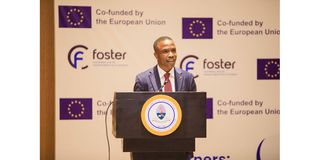
Speaking during the second Open Science Forum held at the University of Dar es Salaam (UDSM) yesterday, the Director of Science, Technology and Innovation in the Ministry of Education, Science and Technology, Prof Ladislaus Mnyone, said the initiative could fundamentally transform how knowledge supports national development.
“Open Science is not just a concept; it is a transformative global movement rooted in openness, collaboration and inclusivity,” he said.
"Through this programme, we are building the capacity of Tanzania and other countries to ensure research data and scientific information are easily accessible to all stakeholders.”
The three-year programme, funded by the European Union and running until 2027, brings together universities from over nine countries under a shared framework to promote open access, shared digital infrastructure and collaborative research.
For decades, access to research in Tanzania has largely been confined to academic institutions, leaving policymakers, entrepreneurs and communities with limited ability to utilise evidence-based findings.
Experts say this has slowed innovation and weakened the link between research and real-world problem-solving.
Prof Mnyone noted that the initiative comes at a critical moment as Tanzania prepares to implement its new Science, Technology and Innovation Policy, which prioritises openness and collaboration in knowledge production.
“As we move towards the National Development Vision 2050, research and development, science, technology, innovation and digital transformation are key pillars,” he said. “All these depend on the availability and effective use of scientific data.”
University leaders echoed the call, urging institutions to rethink their role in society.
The Vice Chancellor of Daystar University in Kenya, Prof Laban Ayiro, said universities must move beyond producing research for academic recognition and instead focus on direct community impact.
“We are here as universities to expand this project so that our institutions are recognised for serving society through research,” he said. “It is time for scholars to go to the grassroots, listen to communities and co-create knowledge that addresses real challenges.”
He added that initiatives such as citizen science, where communities actively participate in research, could redefine how universities engage with issues such as sanitation, water access and urban development.
At UDSM, the Deputy Vice Chancellor for Research, Prof Nelson Boniface, stressed that the urgency of open access has grown in the era of artificial intelligence.
“In today’s data-driven world, accessible and well-structured research data is not optional, it is essential,” he said.
“Without open systems, we risk limiting innovation and excluding key actors from contributing to solutions.”
Independent experts say the shift could be a game changer for Tanzania’s knowledge economy.
A policy analyst and former academic, Dr Amon Mbelle, noted that open science can improve decision-making across sectors.
“When research findings are accessible, they empower governments, businesses and communities to make informed choices. This is crucial for a country aiming at industrialisation and inclusive growth,” he said.
Similarly, a governance and development expert, Mr Johnson Mkabwa, said the model could strengthen public trust in science. “Bringing research closer to people demystifies science and ensures accountability. Citizens begin to see the value of research in their daily lives,” she said.
Backed by international partners and aligned with global frameworks such as UNESCO’s 2021 recommendations on Open Science, the initiative signals a decisive shift from closed academic systems to a more inclusive and impact-driven research ecosystem.
As Tanzania charts its path towards Vision 2050, stakeholders believe the success of this approach will depend not only on technology and policy reforms, but also on a cultural shift within universities, one that places society at the heart of research.
If realised, this new model could redefine the modus operandi of knowledge production in the country, turning research from a largely academic exercise into a powerful tool for national transformation.