Probe commission granted 42-day extension, sparks debate

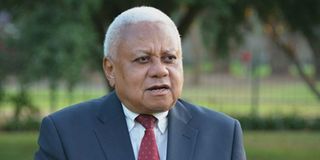
Retired Chief Justice Mohamed Chande Othman. PHOTO | COURTESY 

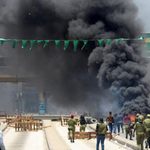
Dar es Salaam. The commission investigating breaches of peace during and after the October 29, 2025, General Election has been granted a 42-day extension, a move that has drawn mixed reactions from stakeholders who warn the delay could erode public confidence.

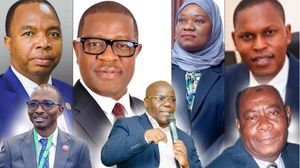
Appointed and inaugurated by President Samia Suluhu Hassan, the commission is chaired by retired Chief Justice Mohamed Chande Othman.
It was initially mandated to complete its work within 90 days, from November 20, 2025, to February 20, 2026. Under that schedule, the final report was due last Friday.

With the extension, the commission must now conclude its investigations and submit its findings to the President on or before April 3, 2026.

In a statement on Saturday, February 21, 2026, the commission said the additional six weeks were needed to finalise a comprehensive inquiry into unrest linked to the October 29 polls.

The secretariat noted the extension would allow individuals and institutions, both locally and abroad, to submit information, evidence, or views.

“The objective is to ensure that no person or institution is denied the opportunity to be heard,” said the statement.

The commission cited several technical reasons for the delay, chiefly the volume and complexity of data collected.

Members said the intricate nature of the incidents requires “in-depth analysis” beyond the initial three-month timeframe.

In addition, the commission has sought assistance from local and international experts to carry out scientific examinations and digital forensic analysis, following the collection of electronic evidence and exhibits that require specialised authentication.

Internal reviews also identified gaps in existing testimony. More time is needed to cross-check facts and secure the attendance of key stakeholders who have not responded to repeated invitations.

These include certain religious leaders, political party heads, non-governmental organisations, and private individuals whose testimony is considered essential to a balanced report.

The statement further cited the unexpectedly high number of citizens coming forward daily with information and advice as another factor affecting the timeline.

Following the extension, Justice Chande renewed a call for the public to continue submitting evidence through established channels, including physical appearances, written submissions by post, the commission’s official website (www.tume.uchunguzi.go.tz), email, and social media platforms.

The commission urged political and religious leaders to use what it described as a “final window” to contribute to the inquiry in the interest of national cohesion and future electoral integrity.

It assured the public that sessions would remain open, except where witness protection is necessary to safeguard identities from the media and public scrutiny.

The Citizen’s sister newspaper, Mwananchi, spoke to several stakeholders on the implications of the 42-day extension.

While some described such extensions as procedurally normal, others cautioned that a prolonged wait could weaken public demand for timely accountability.

A former senior lecturer at the University of Dar es Salaam (UDSM), Dr Benson Bana, warned that an extended silence could undermine the perceived credibility of the probe.

“If the President considered it prudent to grant more time, that is acceptable. However, given the sensitivity of the October 29 events, the commission must uphold the highest professional standards. Any further delays could weaken public trust,” said Dr Bana.

“Ninety days was not a short period. In research, one works with representative samples rather than interviewing every individual. The secretariat must endeavour to submit the report promptly so the nation can understand the root causes of the breaches identified,” added Dr Bana, who also serves as a retired Tanzanian envoy to Nigeria.

From a legal perspective, advocate Dr Onesmo Kyauke said extensions are warranted where compelling reasons exist.

“Even in the courts, a judge may require additional time to prepare a judgment after proceedings have closed. The public should allow the commission adequate space to conduct a thorough inquiry. Ultimately, what matters is the quality and credibility of the final report,” said Dr Kyauke.

However, some members of the public voiced frustration. A resident of Kimara in Dar es Salaam, Mr Frank Charles, said the delay risks diminishing the urgency surrounding the matter.

“Adding another 42 days makes the investigation feel prolonged. We expected early results; pushing the deadline forward creates uncertainty about the outcome,” he said.