Push for justice as mining communities gain new support tools

Faith leaders and partner organisations display newly launched guidelines aimed at strengthening access to justice for communities affected by mining activities across East Africa and the Great Lakes region during a forum held in Arusha on Monday, June 8, 2026. PHOTO| BERTHA ISMAIL
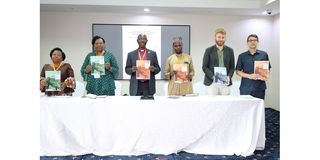

Arusha. Communities affected by mining across East Africa and the Great Lakes region now have a stronger voice in their pursuit of justice following the launch of new guidelines aimed at breaking systemic barriers that often prevent victims from accessing remedies and fair compensation.

The guidelines, unveiled in Arusha on Monday, June 8, 2026, during the Eastern Africa Exchange Platform on Business, Human Rights and the Environment, are designed to help communities, faith leaders, and civil society organisations to engage more effectively with mining companies and push for accountability when rights are violated.

Organisers said many communities living near mining operations continue to face challenges, including land dispossession, forced displacement without adequate compensation, unsafe working conditions, and environmental degradation.

The Fellowship of Christian Councils and Churches in the Great Lakes and Horn of Africa (FECCLAHA) programme manager, Ms Monica Njoroge, said the guidelines were developed after recognising that affected communities across the region face similar human rights concerns.

“We have seen communities bearing the burden of mining activities while having very limited avenues to seek justice,” she said.

She noted that the document provides practical guidance on handling grievances, monitoring compensation claims, and strengthening accountability among mining companies.

As part of the initiative, FECCLAHA plans to train faith leaders in 10 African countries to educate communities about their rights, document complaints related to mining projects, and advocate for fair treatment of affected populations.

Among the most frequently reported concerns in mining areas are violations of land rights, displacement without fair compensation, inadequate protection for workers particularly women, and environmental pollution that threatens livelihoods and public health.

The forum was organised by FECCLAHA, Swedwatch, ACT Church of Sweden, and Christian Council of Tanzania, in partnership with Norwegian Church Aid Advocacy Programme Africa.

The launch brought together faith leaders, civil society organisations, human rights experts, and mining sector stakeholders from across East Africa and the Great Lakes region, reflecting growing concern over the social and environmental impacts of extractive industries.

Sweden-based human rights organisation Swedwatch programme officer, Mr Benjamin Claeson, said research across the Great Lakes and Horn of Africa shows that communities affected by mining and other business activities often encounter the same obstacles when seeking justice.

“In many cases, communities lack effective pathways to obtain remedies, compensation, or satisfactory responses from companies,” he said, adding that this is a systemic barrier that requires a systemic solution.

He described the guidelines as a practical tool that will enable communities and faith leaders to engage directly with mining companies while also encouraging greater responsibility among businesses operating in the sector.

Mr Claeson added that the initiative seeks to influence companies sourcing raw materials in the Global North, as well as international investors, to use their leverage to ensure mining firms respect the rights and interests of communities living around extraction sites.

“Investors and buyers often do not have sufficient information about what communities are experiencing on the ground,” he said.

“These guidelines help connect community voices with the influence of faith leaders and the leverage of investors to strengthen accountability in the mining sector,” added Claeson.

On his part, Bishop Nelson Magori said respect for human rights must remain central to business.

He added that good business is built on justice, integrity, and dignity, and called for investments that protect community rights strongly.