Renewed calls for government to cut expenditure on vehicles

Brand new government vehicles lined up during a handing-over ceremony. Debate has been rekindles on how much the government spends on maintaining its vehicles and whether some of those resources could be put to better use elsewhere. PHOTO | FILE

Dar es Salaam. At a time when Tanzania is seeking billions of shillings to expand infrastructure, improve healthcare services, strengthen education and widen access to clean water, experts say one area that continues to deserve scrutiny is government spending on official vehicles.

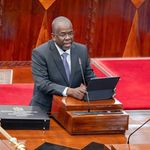
The issue returned to the spotlight yesterday following renewed calls by Parliament Speaker Mussa Zungu for tighter controls on the purchase, maintenance and operation of government vehicles, arguing that substantial savings could be redirected towards national development priorities.
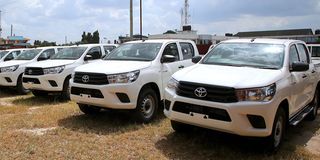
His remarks have reignited a debate that has surfaced repeatedly over the years: how much the government spends on maintaining official fleets and whether some of those resources could be put to better use elsewhere.

Speaking in Parliament, Mr Zungu revisited recommendations made by a Special Committee of the Speaker established on June 26, 2013, to review government revenue and expenditure patterns and identify opportunities to improve efficiency in the use of public resources.

The committee, chaired by veteran legislator and former Parliamentary Budget Committee chairman Andrew Chenge, found that the procurement of government vehicles often failed to adequately consider the long-term costs associated with fuel consumption, servicing and maintenance.

Its findings painted a striking picture. Government expenditure on fuel and vehicle maintenance stood at Sh685 billion in the 2008/09 financial year, Sh530 billion in 2009/10 and Sh583 billion in 2010/11.

Combined, nearly Sh1.8 trillion was spent on operating and maintaining government vehicles over the three-year period.

The committee concluded that such expenditure represented a significant burden on public finances and recommended measures to reduce unnecessary costs.

More than a decade later, Mr Zungu believes the recommendations remain as relevant as ever.

"It is my appeal to leaders of ministries, institutions and public agencies to implement the committee's recommendations so that resources can be channelled towards development activities," he told lawmakers.

According to the Speaker, efforts to contain expenditure on vehicles should not be treated as a temporary cost-cutting exercise but as part of a broader commitment to improving efficiency across government operations.

He argued that every shilling saved from avoidable administrative expenses creates additional room for investment in projects that directly benefit citizens.

Mr Zungu also praised President Samia Suluhu Hassan for setting an example through measures aimed at reducing unnecessary spending, including scaling down official motorcades during public engagements.

"The President has shown the way. It is now time for other leaders, including ministers, the Prime Minister and senior government officials, to support these efforts through practical action," he said.

The Speaker further revealed that he had personally opted for a more modest official vehicle as part of efforts to demonstrate leadership by example.

His remarks come as the government continues to emphasise fiscal discipline amid rising demands for investment in critical sectors and the implementation of ambitious development programmes.

The call also echoes a position repeatedly advanced by then Finance Minister Mwigulu Nchemba, who had long argued that reducing vehicle-related expenditure is one way of controlling recurrent government spending.

In November 2023, Dr Nchemba told Parliament that the government was exploring ways of reducing costs associated with official vehicles, including facilitating eligible public servants to acquire vehicles through loan arrangements rather than relying entirely on government-owned fleets.

"The government's approach is to continue reducing expenditure on vehicles. Under the budget framework, eligible public servants can access vehicle loans so that the vehicles become their personal property, reducing costs incurred by the government," Dr Nchemba said.

He argued that such a system would help lower spending on maintenance, repairs and day-to-day operations while allowing institutions to focus resources on their primary responsibilities.

Economist and fiscal policy expert Samson Rutashobya of the University of Iringa said the discussion highlights the importance of ensuring that public expenditure generates maximum value for taxpayers.

"Tanzania has made notable progress in strengthening fiscal discipline over the years, but recurrent expenditure remains an important challenge.

Transport-related spending is one area where savings can be realised without affecting service delivery if institutions adopt stricter controls and more cost-effective transport systems," he said.

Mr Rutashobya noted that reducing unnecessary operational costs can help improve budget efficiency and strengthen the government's ability to finance development priorities without increasing fiscal pressure.

REPOA Executive Director Donald Mmari said expenditure reforms are increasingly important as governments face growing demands for investment in public services and economic transformation.

"Every shilling saved from non-essential expenditure creates additional fiscal space for investments in sectors such as health, education, water and infrastructure.

The key issue is ensuring that savings are measurable and redirected to priority development areas that directly improve people's lives," he said.

According to Dr Mmari, expenditure control measures become meaningful when they are accompanied by clear mechanisms that ensure savings are translated into tangible development outcomes.

For her part, Ardhi University economist and assistant lecturer Jasmine Christian said the conversation should extend beyond vehicles and encourage broader reforms in public financial management.

"The discussion should not focus only on the number of vehicles or the size of motorcades. It should be part of a wider strategy to improve value for money across government operations.

Citizens want to see public resources being used efficiently, transparently and in ways that generate tangible development outcomes," she said.

Ms Christian added that public confidence in government spending increases when citizens can clearly see resources being directed towards projects that improve livelihoods and support economic growth.

Meanwhile, finance expert and economist from Ardhi University Alfred Kiariga said efforts to reduce vehicle-related expenditure should be viewed within the broader context of strengthening fiscal sustainability and improving public sector efficiency.

He said while transport remains an essential component of government operations, expenditure decisions should always be guided by value for money considerations.

"Public resources are always limited compared to the country's development needs.

Any initiative that helps reduce unnecessary recurrent expenditure creates room for greater investment in productive sectors of the economy," he said.

Mr Kiariga noted that controlling vehicle costs could help ensure that a larger share of public funds is directed towards investments capable of generating long-term economic and social returns.

"The objective is not simply to spend less, but to spend wisely. Savings realised from administrative costs should translate into improved service delivery and development outcomes," he said.