Dodoma. Parliament's Budget Committee has proposed a raft of measures to curb government expenditure, including reducing purchases of expensive vehicles, cutting foreign travel and trimming subsidies to commercially viable state-owned entities, as part of efforts to free up resources for development projects.
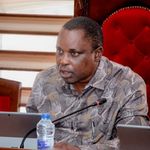
Presenting the committee's recommendations during debate on the government's Sh62.3 trillion budget for the 2026/27 financial year on Monday, June 15, 2026, committee chairman Mr Mashimba Ndaki warned that government spending was growing faster than revenue collection, increasing pressure on public finances.
The committee's analysis showed that between 2020/21 and 2023/24, tax revenue collected by the Tanzania Revenue Authority (TRA) grew at an average annual rate of 8.9 percent, compared to expenditure growth of 10.2 percent.
According to the committee, the trend has contributed to budget deficits and forced the government to seek additional financing to meet its obligations.
To reverse the trend, lawmakers urged the government to ensure that growth in recurrent expenditure does not exceed growth in tax revenue.
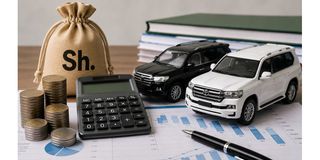
The committee also called for a reduction in what it described as non-essential spending, including the purchase and use of high-cost government vehicles.
It further recommended wider use of technology in public administration, including conducting meetings online, reducing paper consumption, digitising government correspondence and limiting unnecessary workshops and meetings outside offices.
Parliament also urged the government to strengthen value-for-money procurement by ensuring that goods and services are purchased at prevailing market prices.
The committee raised concerns over vehicle maintenance costs and recommended that the Tanzania Electrical, Mechanical and Electronics Services Agency (Temesa) review its charges to match rates offered by private garages.
Lawmakers further advised the government to review procedures governing the disposal of obsolete assets, arguing that some items sold as surplus could still be utilised by other public institutions.
The committee also proposed reducing expenditure on foreign travel and participation in international meetings that do not yield tangible benefits.
In addition, it recommended scaling back subsidies to state-owned enterprises and public institutions capable of operating on a commercial basis.
The committee specifically proposed that commercially oriented entities such as the National Insurance Corporation (NIC), Tanzania Commercial Bank (TCB), Puma Energy Tanzania and Tanzania Telecommunications Corporation Limited (TTCL) be encouraged to raise capital through the stock market rather than relying on government support.
To improve efficiency, Parliament called for greater coordination of projects across sectors to avoid duplication of expenditure. It cited the example of dams constructed for domestic water supply also being used for irrigation and fish farming.
The committee also urged the government to reduce the size of official delegations accompanying leaders on government assignments.
Mr Ndaki said implementing the recommendations would ease pressure on public finances and allow more resources to be directed towards development priorities.
"If the government implements these measures, it will create fiscal space and enable more revenue to be channelled to development projects," he told Parliament.
The recommendations were presented as Parliament continued debating the budget proposals tabled by Finance Minister Khamis Mussa Omar on June 11, 2026.