Silent killer: The true cost of Shinyanga’s charcoal racket
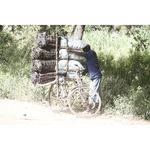
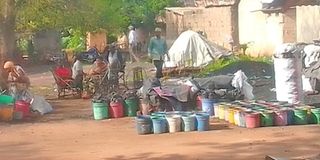
A charcoal market near Tinde Primary School in Tinde Ward, Shinyanga Region. It is a key collection and transit point for charcoal destined for Shinyanga Municipality. PHOTO | JULIUS MARICHA
Dar es Salaam/Shinyanga. As dawn breaks over Tinde, Samuye and Ishina Bulaindi villages in Shinyanga Region, bicycles and motorcycles loaded with sacks of charcoal slip out along dusty tracks towards main roads linking rural settlements to urban markets.
Across the landscape, land lies stripped bare. Fresh stumps and blackened earth bear witness to recent tree felling for charcoal production.
Here, charcoal is more than a household fuel. It is the backbone of a sprawling informal economy that continues to expand despite forest laws, enforcement checkpoints and patrols.
Yet the scale of the trade has exposed what analysts describe as a major forest governance failure.
Data from the Ministry of Natural Resources and Tourism shows that 95 percent of charcoal in Shinyanga enters the market illegally, bypassing licensing requirements, royalty payments and official transport procedures.
The findings, contained in a 2019 technical report on Tanzania’s charcoal sub-sector, suggest nearly all charcoal from the region is harvested, moved and sold outside the legal framework.
Under the Forest Act, commercial harvesting requires permits issued by authorised forest officers, while transportation must be accompanied by Transit Passes under the Forest (Amendment) Regulations, 2022.
The law also empowers the Tanzania Forest Services Agency to inspect, seize and halt illegal consignments.
However, evidence from villages visited shows the illegal trade operating at a scale that continues to evade state control.
Residents describe a system in which charcoal is transported through informal “rat routes” using bicycles and motorcycles, bypassing official checkpoints almost entirely.
These routes connect villages such as Tinde, Samuye and Ishina Bulaindi to urban trading points.
Shinyanga District Forest Officer and senior conservator Fabian Balere acknowledged ongoing violations despite enforcement efforts.
“I do not have complete data to confirm the 95 percent figure, but violations in harvesting and transport still occur,” he said.
He added that authorities continue patrols and awareness campaigns with local leaders to improve compliance.
However, the volume of charcoal movement raises questions about enforcement systems.
In the villages, residents say transport often takes place openly, particularly at night and early morning.
Some say local economies now depend directly or indirectly on the trade.
Producer Maduhu Alphonce, known locally as Pako, said charcoal remains one of the few reliable sources of income.
“We cut trees, prepare kilns and sell charcoal to traders who take it to town,” he said, adding that “This is how many people survive because opportunities are limited.”
Another producer, Mr Mponhela Jumanne, said demand keeps the business growing.
“As long as there are trees and buyers, people will continue producing charcoal,” he said.
However, villagers say environmental damage is increasingly visible.
Some describe once-wooded areas now reduced to bare land, with shifting rainfall patterns and declining soil quality.
“We used to have many trees, but now large areas are empty,” said 69-year-old Rebeka Hamduni. “The heat is worse and farming is not the same.”
Another resident, Mr Rajabu Njige, 76, said households remain trapped between survival and destruction.
“We know trees are disappearing, but people need money and fuel,” he said.
Women also report health impacts from heavy smoke exposure during cooking.
“When cooking, the smoke affects the chest and eyes,” said Ms Hamduni, adding, “We live like this because charcoal is what we can afford.”
The International Energy Agency estimates household air pollution from traditional cooking fuels causes about 815,000 premature deaths annually in Africa.
In Tanzania, more than 33,000 deaths a year are linked to biomass-related illnesses.
Experts warn that communities dependent on charcoal remain highly exposed. Environmental damage is also accelerating regionally.
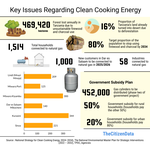
Government data shows the Lake Zone loses about 193,424 hectares of forest annually, while national estimates suggest 469,420 hectares are lost each year.
Poor production efficiency worsens the crisis, with traditional methods recovering only about 20 percent of wood energy.
Despite this, demand continues to rise; census data shows that over 80 percent of households in Shinyanga rely on biomass fuels.
Charcoal trader Dora Katunzi said prices range between 32,000 and 70,000 shillings per sack, depending on size.
“The demand is constant because many households depend on it,” she said.
Trader Dotto Leonard said most transport remains informal due to difficult licensing procedures.
At the village level, leaders say communities gain little from the trade despite bearing its environmental costs.
Nyambui sub-village chairman Masesa Chaula said local leaders are often excluded from forest management decisions.
Councillor Jafary Makwaya said pressure is increasing as dependence on charcoal grows.
Analysts say the situation reflects a broader crisis involving weak enforcement, illegal trade, health risks and environmental degradation.
Environmental governance expert Nehemia Shimwela said institutional weaknesses are driving forest loss.
“When enforcement is weak, forests disappear faster and communities remain trapped in dependence on unsafe energy,” he said across the wider region and beyond. (To be continued)
Register to begin your journey to our premium contentSubscribe for full access to premium content