Singapore, Tanzania deepen economic ties in push for trade and investment growth
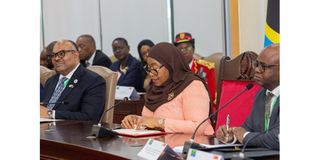
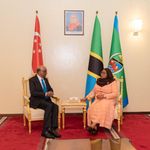
President Samia Suluhu Hassan leads the Tanzanian delegation during bilateral talks with a Singaporean delegation led by President Tharman Shanmugaratnam in Dar es Salaam on June 9, 2026. PHOTO | STATE HOUSE
Dar es Salaam. Singapore and Tanzania have pledged to deepen economic cooperation, with leaders and business executives from both countries identifying trade, investment, logistics, tourism and the digital economy as priority areas for future collaboration.
Speaking at the Tanzania-Singapore Business Forum on Tuesday, June 09, 2026, Singapore President Tharman Shanmugaratnam said the two countries were building on long-standing ties rooted in centuries of Indian Ocean trade.
Although geographically distant, he said Tanzania and Singapore share a history of exchange that can be leveraged to strengthen economic partnerships in an increasingly uncertain global environment.
“We know the international trading order is not what it used to be. It is more uncertain, and that uncertainty is likely to endure. In such a world, the answer must be to diversify, build new corridors of opportunity and create more resilient supply chains,” he said.
President Shanmugaratnam described Tanzania as a country of immense promise, pointing to its youthful population, abundant natural resources, expanding investment opportunities and strategic location linking regional and global markets.
He said sectors such as agribusiness, tourism, infrastructure, logistics and the digital economy present strong prospects for collaboration between Tanzanian and Singaporean firms.
“From sectors like agribusiness to tourism, there is real potential for meaningful partnership, combining Tanzania’s advantages with Singapore’s experience in efficient systems, advanced supply chain management, high-value services and the digital economy,” he said.
He said that stronger cooperation would help create jobs, enhance skills and support inclusive growth in both countries.
During the visit, the two governments signed an agreement on the avoidance of double taxation and a memorandum of understanding on carbon credit cooperation.
President Shanmugaratnam said the tax agreement would reduce the cost and risk of doing business while boosting investor confidence.
“We signed an avoidance of double taxation agreement, which will lower the cost of doing business, reduce the risks of doing business and thereby give investors greater confidence,” he said.
The two countries are also working towards a bilateral framework to facilitate carbon credit transactions and climate-related investments.
On her part, President Samia Suluhu Hassan described the visit as historic, marking the first state visit by a Singaporean Head of State to Tanzania, coinciding with 45 years of diplomatic relations between the two countries.
She said talks between the two leaders had resulted in agreements aimed at elevating bilateral relations and expanding economic cooperation.
President Hassan noted that Singapore’s experience in economic transformation, port development, technology and investment management offers valuable lessons for Tanzania as it advances its industrialisation agenda.
She said Tanzania remains one of Africa’s fastest-growing and most stable economies, strategically positioned as a gateway to East and Southern Africa and the wider African market of more than 1.4 billion people.
“Despite strong diplomatic ties, significant opportunities remain untapped, particularly in trade, logistics, tourism, infrastructure and digital services,” she said.
The President added that both countries should work towards building resilient supply chains and diversifying economic partnerships amid growing uncertainty in the global trading environment.
Tanzania Private Sector Foundation (TPSF) chairperson Angelina Ngalula said the long-standing friendship between the two countries should now translate into concrete commercial partnerships, joint ventures and investments.
She said Tanzania offers growing opportunities in agriculture, agro-processing, mining, transport and logistics, energy and infrastructure.
According to her, Singapore’s strengths in technology, financial services, logistics, engineering and skills development align closely with Tanzania’s development priorities.
“Governments can create an enabling environment and open doors, but it is the private sector that must drive trade and investment. The real deals will be made by businesses,” she said.
Ms Ngalula urged companies from both countries to use business-to-business engagements to identify investment opportunities and commit to practical follow-up actions.
Meanwhile, the Singapore Business Federation (SBF) said it plans to expand its presence in Tanzania and across Africa as part of efforts to deepen commercial ties with the continent.
SBF Vice Chairman Mark Lee said Africa is increasingly seen as a strategic growth market, with Tanzania emerging as one of the region’s most attractive investment destinations.
“We believe in Africa and we aspire to do considerably more on this continent than we have done to date,” he said, citing Tanzania’s strategic location, East African Community membership, investment reforms and expanding logistics infrastructure as key attractions for Singaporean investors.
He said Singapore has registered 36 investment projects in Tanzania since 1997, valued at more than $500 million and creating over 3,000 jobs.
“Our role is to translate political momentum into commercial substance, into trade, investment and partnerships that endure beyond the headlines of a state visit,” he said.
A delegation of 15 Singaporean companies is currently exploring opportunities in industrial logistics, consumer goods, green technology, digital solutions and tourism, signalling growing interest in Tanzania as a gateway to East Africa.