Stakeholders called upon to sustain WASH policy reforms
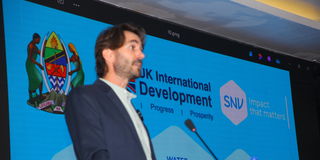
SNV Tanzania Water Sector Lead Olivier Germain speaks on Wednesday, July 15, 2026, during the official closing ceremony of the WASH Systems for Health (WS4H) Programme in Morogoro. The event brought together more than 80 representatives from government institutions, development partners and civil society organisations to review the programme’s achievements and lessons. PHOTO | COURTESY
The initiative strengthened planning, management, and service delivery by building the capacity of local institutions to manage water systems after construction
Morogoro. The government has urged development partners, local government authorities (LGAs) and the private sector to sustain reforms introduced under the WASH Systems for Health (WS4H) Programme, saying long-term access to water, sanitation, and hygiene services depends on strong institutions, effective coordination and reliable financing rather than infrastructure alone.
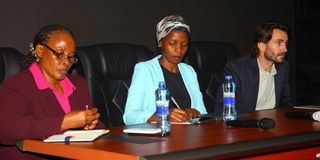
The call was made in Morogoro yesterday during the programme's official close, where more than 80 representatives from government institutions, development partners, and civil society organisations reviewed its achievements and lessons.
Speaking on behalf of the Permanent Secretary in the Ministry of Water, the ministry's senior statistician in the Department of Policy and Planning, Ms Diana Kimario, said the programme's conclusion marked a transition from donor support to national ownership.
"The real measure of success will be how well we sustain and scale the pilots, systems, partnerships, and innovations established by this programme," she said, adding that the government would integrate the lessons into national planning and budgeting.
Implemented by SNV Netherlands Development Organisation with support from the UK's Foreign, Commonwealth and Development Office (FCDO), the programme operated in Dodoma, Arusha, and Simiyu regions through partnerships with the Ministry of Water, the Ministry of Health, and the Rural Water Supply and Sanitation Agency (Ruwasa).
Rather than focusing solely on infrastructure, the initiative strengthened planning, management, and service delivery by building the capacity of local institutions to manage water systems after construction.
Ms Kimario said the programme supported eight priority areas, including professionalising rural water supply through asset mapping and service clustering, strengthening the capacity of Ruwasa and the Ministry of Health, improving electronic data systems for evidence-based decision-making, and developing phased rural service regulation plans.
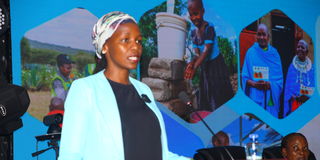
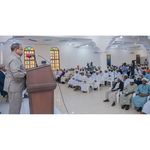
Ministry of Water Director of Monitoring and Planning Diana Kimario speaks on Wednesday, July 15, 2026, during the official closing ceremony of the WASH Systems for Health (WS4H) Programme in Morogoro. The event brought together more than 80 representatives from government institutions, development partners and civil society organisations to review the programme’s achievements and lessons. PHOTO | COURTESY
“It also promoted district-wide safety-managed sanitation planning, integrated climate resilience and gender equality and social inclusion into service delivery, strengthened sector monitoring, and reviewed reporting and service delivery monitoring systems,” she said.
Ms Kimario said the programme had demonstrated that sustainable WASH services depended on strengthening systems that support service delivery rather than simply constructing infrastructure.
She urged LGAs to institutionalise the tools and approaches developed under the programme and strengthen monitoring to improve accountability.
She also called on development partners to adopt systems-strengthening approaches in future initiatives, including programmes supported by the World Bank and Unicef.
SNV Water Sector Lead Olivier Germain said the programme's formal closure would not diminish its long-term contribution to the sector.
"The knowledge, partnerships, and systemic improvements achieved through WS4H will continue to support the nation's efforts to provide reliable and sustainable services for all citizens," he said.
A Dodoma resident, Ms Julieth Kafanabo, said one of the programme's major achievements was strengthening the capacity of local authorities and health institutions to improve service delivery while promoting climate resilience, gender equality, and social inclusion.
"Women, young people, and vulnerable groups were increasingly represented in decision-making," she said.
As Tanzania pursues Vision 2050, stakeholders said the partnerships, skills, and institutional reforms established through the programme should be sustained to accelerate progress towards universal access to safe, climate-resilient water, sanitation, and hygiene services.