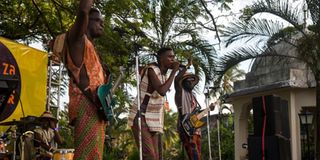
Dar es Salaam. Tanzania’s music industry should incorporate more elements of the country’s culture to strengthen its identity and create opportunities for other segments of the creative economy, stakeholders have said.
The call comes as Bongo Flava and Singeli continue to attract audiences beyond Tanzania, with stakeholders saying the growing international interest in the country’s music could be used to promote other cultural products, including fashion, dance, food and film.
Fashion designer Matrida Lugenga, popularly known as Metty Fashion, said cultural representation did not require artists to rely entirely on traditional attire.
“It is not necessary for everyone to wear Maasai attire for people to know that something is from Tanzania. There are certain things you can wear that immediately show that a person is from a particular place,” she said.
Ms Lugenga said music could serve as an entry point for international audiences to discover other aspects of Tanzanian culture, particularly fashion.
“When people discover a country through music, they can also become interested in its fashion,” she said.
Sony Music East Africa head Christina Mosha, popularly known as Seven Mosha, also stressed the importance of linking music with culture when promoting Tanzanian music internationally.
“It is not possible for us to take our music to the world without taking our culture with it,” she said.
Ms Mosha said international audiences often wanted to know the origins of the music they listened to, making cultural identity an important part of music promotion.
“When people listen to the music, they ask, where is this music coming from? That is one aspect that Nigerian music has done well,” she said.
She cited Nigeria, the Democratic Republic of Congo and Ethiopia as examples of countries where cultural elements have helped strengthen the identity and global appeal of their music.
“Someone can easily identify that this music is from Ethiopia because of the way people dress and even the food associated with it. It becomes easier to understand and connect with,” she said.
Ms Mosha, however, said incorporating culture into music did not mean Tanzanian artists should avoid international influences.
She said musical sounds continued to evolve as artists interacted with trends from different parts of the world.
“People say we are mixing sounds such as Amapiano or Afrobeats, but sound is usually influenced by what is happening in the world,” she said, citing Nigerian artiste Victony’s song Slick as an example of how different influences can be combined in contemporary music.
Artiste manager Godfrey Abel said the use of indigenous languages could also give Tanzanian music a stronger cultural identity.
He cited musician Msamiati, who has incorporated Kinyakyusa into his music.
“There is an artist called Msamiati who has been doing well by using Kinyakyusa in his music, and that makes his music even better,” he said.
Mr Abel said artists did not need to incorporate every aspect of traditional culture into their work, but could identify elements that complemented their music.
“Find something that you can add to your work while still flying the flag of your culture. At the end of the day, it can give the music a much better flavour,” he said.
Dancer and choreographer Sadiq Umar said the same approach could be applied to traditional dances.
Tanzania has a wide range of traditional dances from different communities that could be adapted and incorporated into contemporary music, he said.
“Our colleagues in South Africa have given us different dance styles. When you see them, you immediately say this is from their country. We can also explore dances from our own communities and create something that is uniquely ours,” he said.
Mr Umar said Singeli already had distinctive dance movements that could contribute to the genre’s identity.
“Some of the dances associated with Singeli are difficult to find elsewhere. If we can connect those dances with our music, people can learn about our culture and identify where the music comes from through the dance,” he said.
The stakeholders said stronger links between music and culture could create opportunities for people working across the creative economy, including fashion, dance, food, film and content production.
They said the international growth of Tanzanian music presented an opportunity to promote the country’s wider cultural products while increasing the creative sector’s contribution to the economy.
Register to begin your journey to our premium contentSubscribe for full access to premium content