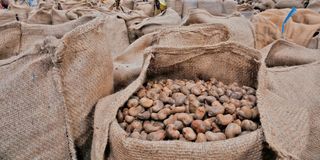
Dar es Salaam. All is set for the 2026/27 cashew trading season, which starts on Tuesday, September 1 (today), with key institutions pledging measures to boost production, improve market systems and prevent logistical bottlenecks.
The Cashewnut Board of Tanzania (CBT), Tanzania Agricultural Research Institute (Tari), Warehouse Receipts Regulatory Board (WRRB), Tanzania Mercantile Exchange (TMX), Tanzania Ports Authority (TPA) and Tanzania Cashew Processors Association (TCPA) outlined their preparations at the 2026 Stakeholders Annual General Assembly held recently in Morogoro.
CBT said it was implementing reforms in farmer registration, block farming and infrastructure development as it targets 750,000 tonnes in the coming season and one million tonnes by 2030.
CBT director general Francis Alfred said achieving the long-term target would require stakeholders to adopt new approaches and work together.
“If we unite and decide to work together as stakeholders, the target of one million tonnes by 2030 is possible,” he said.
Mr Alfred said the board was cleaning up the national agricultural database. During the 2025/26 season, CBT registered 556,967 farmers cultivating 4.914 million hectares, helping improve input distribution and eliminate ghost farms. Despite Tanzania having about 140 million cashew trees, average productivity stands at only 4.3 kilogrammes per tree, compared with a minimum benchmark of 15 kilogrammes, he said.
To close the gap, CBT plans to distribute 15 million improved seedlings in 2026/27, up from five million the previous season.
The programme will be supported by large-scale block farms, including the 35,676-acre Manyoni project and land secured in Rufiji, Kilwa, Chunya and Iringa.
The board also plans to introduce more mechanisation, including trials of two advanced boom sprayers in Manyoni to reduce production costs.
On storage and processing, Mr Alfred said CBT was completing a 3,000-tonne warehouse in Manyoni, the Maranje Industrial Park in Mtwara, a 15,000-tonne warehouse in Tunduru and an 8,000-tonne strategic warehouse at Mtwara Port. It will also distribute 100 electric processing machines to smallholder groups.
Research and technology
Tari director general Dr Thomas Bwana said the institute was ready to support the sector through research and technology.
Of Tari’s 25 research centres, Tari Naliendele remains the main hub for cashew research, managing 62 technologies.
“Agricultural growth is the foundation of national economic growth, and agriculture cannot grow without increasing productivity and crop yields, which can only be achieved through modern, scientifically researched technologies,” Dr Bwana said.
Following the release of improved varieties and testing of hybrid lines in 2025/26, Tari plans to research organic fertilisers, conduct drone pesticide-spraying trials and deploy an artificial intelligence-powered mobile application for disease diagnosis.
Tighter warehouse controls
WRRB executive director Asangye Bangu said the regulator had tightened warehouse licensing after auditing receipt systems during the 2025/26 season.
“No company will be permitted to operate a warehouse during this season unless it has successfully passed our comprehensive vetting and audit process,” he said.
The board has also proposed reallocating Sh2 from the Sh7 extension levy to WRRB to strengthen field inspections.
TMX market operations manager Augustino Mbulumi said the exchange had upgraded its locally developed online trading platform following its experience managing auctions during the previous season.
The exchange has also trained buyers and primary cooperative executives to generate invoices through the system.
Port preparations
Representing the Mtwara TPA manager, Hekima Ngeze said preparations included repairing mobile harbour cranes, upgrading shore-power capacity and moving container stuffing operations outside the port.
Mtwara Port experienced congestion during the 2025/26 season after an influx of breakbulk cashew vessels coincided with commercial cargo, including Dangote cement shipments to Zanzibar and cement exports to Mozambique.
Rain also disrupted loading as crews closed ship hatches to protect cashews from water damage, while shortages of handling equipment, including loading nets, pallets and heavy-duty ropes, added to the delays.
TPA responded by prioritising berth access for customs-cleared vessels, leasing machinery from private companies, repairing existing equipment and purchasing additional handling gear.
For the new season, preparations include repairing mobile harbour cranes to ensure five are operational, upgrading shore-power capacity for two ship-to-shore gantry cranes and finalising private machinery leases from September.
Local processing
TCPA vice-chairman Daniel Marwa said domestic processors increased processing to more than 30,000 tonnes during the 2025/26 season through the primary market.
For the new season, processors are working with CBT to tighten buyer licensing and have called for early guidelines to enable purchases to begin on September 1.
The preparations come as the industry seeks to raise productivity, strengthen market systems, expand domestic processing and minimise operational delays as farmers, processors, buyers, warehouse operators and transporters prepare for increased cashew volumes.
Register to begin your journey to our premium contentSubscribe for full access to premium content