Tanzania, FAO boost restoration finance through enterprise matchmaking platform


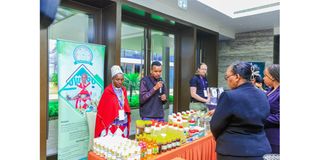
Dar es Salaam. The government, in collaboration with the Food and Agriculture Organization of the United Nations (FAO), has convened a high-level Restoration Enterprise and Finance Matchmaking Event to connect Forest and Farm Producer Organizations (FFPOs) and restoration-linked enterprises with domestic financial institutions.

Held under the AFR100 Programme, funded by the German Federal Ministry for Economic Cooperation and Development, the event focused on structured, transaction-oriented engagement, allowing enterprises to present bankable proposals while financiers explored tailored solutions for restorative value chains.

Opening the event, FAO Assistant Representative in Tanzania, Charles Tulahi, stressed the urgency of closing financing gaps affecting restoration actors.

“Today is about connection and ensuring that finance reaches those restoring Tanzania’s landscapes,” he said. “Restoration is not only an environmental imperative, it is an economic opportunity. With proper risk-sharing mechanisms, restoration-linked enterprises can become resilient and bankable investments.”

Representing the Tanzania Forest Services Agency (TFS) and serving as Tanzania’s AFR100 National Focal Point, Conservation Commissioner Prof Dos Santos Silayo reaffirmed the country’s commitment to sustainable forest and landscape restoration.

“Restoration is both a necessity and an opportunity: it generates jobs, strengthens climate resilience, and drives inclusive growth,” noted Dr Fortunate Senya, speaking on his behalf.

Arusha Regional Administrative Secretary’s Office welcomed the initiative, emphasising that improved access to finance for producers will directly contribute to regional economic development and livelihoods improvement.

Richard Masandika of Arusha Small Farmer Groups’ Network (MVIWAARUSHA) highlighted the importance of direct engagement with financiers.

“For many members, access to finance has been the missing link between vision and expansion. This platform allows us to present our business cases confidently and show that restoration-based enterprises are viable and ready to scale.”

CRDB Bank PLC Northern Zone Relationship Manager (Sustainable Finance), Hamid Mwikombe, praised the initiative.

“The matchmaking platform helps us understand restoration business models and associated risks. With risk-sharing mechanisms and technical support, financial institutions can responsibly expand lending to restoration-linked enterprises,” he said.

FFPO participant Hellen Gabriel, founder of The Meru’s Treasure, added: “We need capital that matches our production cycles. Today’s discussions give us hope that financing solutions can be tailored to the realities of small-scale forest and farm producers.”

The event brought together commercial banks, microfinance institutions, SACCOs, government ministries and development partners, marking a practical step toward strengthening Tanzania’s restoration finance ecosystem.

Success will be measured by strengthened partnerships, clearer financing pathways, and sustained follow-up actions to make restoration finance accessible, inclusive, and scalable nationwide.