Tanzania Mainland at 64: Leaders’ role in economic transformation

Dar es Salaam. As Tanzania charts its path toward becoming a $1 trillion economy by 2050, economists say the journey ahead will demand the same resolve that carried the nation through its defining economic eras, from independence and socialist transformation to liberalisation, stabilisation, and the growth momentum witnessed today.

This year, Tanzania marks 64 years since the independence of Tanganyika, a milestone that invites reflection on how successive Presidents shaped the economy and gradually transformed the country into an aspiring upper-middle-income nation under Vision 2050.
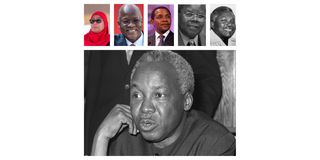
When Tanganyika gained independence in 1961 under President Julius Nyerere, the economy was small, agrarian and heavily dependent on raw exports. GDP stood at less than $1.5 billion, with over 80 percent of Tanzanians engaged in subsistence farming.

Nyerere’s socialist policies, including the Arusha Declaration and villagisation, expanded access to education, health and social cohesion. However, these reforms limited private-sector expansion. By the early 1980s, GDP had grown to around $4–5 billion—roughly 5–6 percent of today’s $83 billion economy.

A turning point came under President Ali Hassan Mwinyi, who assumed office in 1985. Faced with severe economic deterioration, his administration embraced liberalisation, opening markets, encouraging private investment and implementing macroeconomic reforms that revived key sectors. By the time he left office, GDP had risen to about $12.5 billion, equivalent to roughly 15 percent of today’s economic size. Yet these reforms came after a steep economic decline that began towards the end of Nyerere’s tenure, prompting difficult engagements with the Bretton Woods Institutions.

In his memoir Mzee Rukhsa: Safari ya Maisha Yangu, Mwinyi explains that negotiations with the IMF and World Bank began under Nyerere and were only formalised during his administration. “Contrary to what others think, I am not the one who initiated negotiations between the government and the IMF and the World Bank. Negotiations started during the reign of Father of the Nation, Julius Nyerere,” he wrote. By the time Mwinyi took office, the economy was reeling from multiple shocks. Foreign exchange earnings had fallen by $100 million following a dip in coffee exports. The 1979 war to oust Idi Amin cost Tanzania $500 million, and a further $100 million was spent supporting Uganda’s new administration. Floods that same year added another $100 million to the economic burden, followed by a drought with a similar financial toll. The drought escalated into widespread power shortages, forcing Tanesco to order major industrial consumers to suspend production for an entire month in November 1980, inflicting further economic damage. Rising global fuel prices compounded the crisis, consuming an additional $150 million of the country’s limited foreign reserves.

In total, Mwinyi estimates that Tanzania lost around $1.5 billion between 1977 and 1981.

“Whichever the situation, we had no option but to engage the IMF,” he wrote. The IMF’s conditions included a 25 percent devaluation of the shilling in exchange for financial support. Despite Nyerere’s reluctance, mounting hardship left the country little choice. Economic reforms deepened during the administration of President Benjamin William Mkapa, who led the country from 1995 to 2005. Drawing from his international networks, Mkapa personally lobbied global leaders to support Tanzania’s economic revival. In his autobiography My Life, My Purpose: A Tanzanian President Remembers, Mkapa recounts a direct conversation with US President Bill Clinton during the UN General Assembly in 1999. He questioned why Tanzania had met all IMF and World Bank requirements but was still blocked—by the US—from receiving debt relief under the Paris Club framework. Clinton assured him the matter would be resolved.

Mkapa delivered the message to Nyerere, who was receiving treatment in London at the time, informing him that the US had finally agreed to support Tanzania’s debt relief efforts. In 2001, Tanzania secured a $3 billion debt cancellation, reducing its external debt by 54 percent and significantly cutting interest payments. Improved fiscal management, strengthened revenue collection and restored international confidence helped revive the economy. Revenue collection for the 2005/06 financial year reached Sh2.125 trillion. Mkapa left office with the country’s foreign reserves covering 5.3 months of imports and inflation contained at single digits.

Economic growth quickened as reforms took hold. By the early 2000s, GDP had surpassed $10 billion—an increase of 12 percent driven by privatisation, financial-sector reforms and debt relief. Under President Jakaya Kikwete, the economy underwent further transformation. Massive investments in infrastructure, telecom modernisation and expansion of the financial sector boosted GDP to over $28 billion by 2015—around 34 percent of today’s output.

President John Magufuli accelerated industrialisation, tightened revenue collection and pushed large-scale infrastructure projects, driving GDP to $66 billion by 2020—nearly 80 percent of the current $83 billion economy. Today, under President Samia Suluhu Hassan, GDP has reached $83 billion, marking decades of cumulative policy choices, investments and economic recalibration.

Economists note that GDP growth is a cumulative process shaped by long-term investments, demographic trends, structural reforms, resource development and external shocks. Each administration—from Nyerere to Samia—has added distinct building blocks, including infrastructure, regulatory systems, market reforms and governance improvements.

Achieving a $1 trillion economy by 2050, they warn, will require sustaining an average annual growth rate of at least 10 percent. Such growth demands improvements in productivity, industrial output, value addition, and continued investment in energy, transport, and human capital.

Speaking to The Citizen, Bank of Tanzania Governor Emmanuel Tutuba said Tanzania’s 64-year journey carries significant achievements driven by deliberate economic strategies. “The economy has expanded to more than $83 billion, surpassing many countries globally—thanks to the deliberate strategies implemented over the decades,” he said. He cited infrastructure development—roads, railways, ports and energy—as a central pillar of growth. Inflation remained stable at 3.3 percent last year, compared to a global average of 4.7 percent, demonstrating resilience built over decades of reforms.

Looking ahead to Vision 2050, Mr Tutuba said the central bank is implementing strategies aimed at building an inclusive economy that benefits all Tanzanians. “We have developed various strategies, including financial literacy programmes, to help citizens lift themselves out of poverty.”

He added that the financial sector is expanding its range of products to address existing challenges, strengthen access to credit and support productive investment.

Independent economist Oscar Mkude said the $1 trillion goal, while ambitious, is not unattainable. However, he noted that maintaining 10 percent annual growth for 25 consecutive years would exceed Tanzania’s historical peak of 7.6–8 percent achieved in 2011 under President Kikwete. “Most of the world’s fastest-growing economies rarely sustain more than 7–8 percent growth over extended periods,” he said. “This makes Tanzania’s target challenging, but not impossible.”

To realise this vision, he said, Tanzania must pursue long-term strategies focused on raising productivity, maintaining moderate population growth, expanding value-added manufacturing, increasing exports, and continuing infrastructure development in transport, energy and logistics.

Mr Mkude emphasised that careful planning, detailed data analysis and strong policy simulations will be critical in transforming the $1 trillion ambition into a reality.