How infrastructure and interconnected logistic hubs is the future of intra regional trade and commerce
By Mohamed Besta
When a truck leaves Dar es Salaam heading to Kigali, Bujumbura or Lubumbashi, it is not just travelling on a strip of tarmac. It is moving through an entire economic system made up of ports, highways, bridges, weighbridges, dry ports, rail yards and border posts.
Together, these elements quietly decide whether a business can deliver on time, whether a factory can honour its contracts, and whether a region truly benefits from the promise of regional integration.
Across Africa, we often say that the future belongs to those who trade with their neighbours, not just with distant markets. Yet for many years, intra-African trade has remained far below its potential. One of the most important reasons is not lack of ambition, but the cost and complexity of moving goods from one country to another.
Every hour lost at a congested port, every detour around an impassable road, every duplication of inspections at a border adds cost to the final product.
These costs quietly push regional traders out of the market and make imported goods, shipped through more efficient global supply chains, look more attractive than they should.
This is why infrastructure, on its own, is no longer enough. A country can have an impressive road network and still face high logistics costs if those roads are not anchored in an intelligent web of logistics hubs.
Modern trade is built on corridors and nodes: high-quality trunk and regional roads linking to ports, dry ports, inland container depots, logistics parks, industrial zones and efficient border posts.
In this model, a highway is not just a way of moving trucks; it is a conveyor belt feeding logistics “cities” where goods are stored, sorted, processed, repackaged and forwarded deeper into the region.
Tanzania’s experience illustrates this shift. Over the last two decades, our national road network has been steadily upgraded and expanded, connecting the coast to the heart of the continent. Trunk roads link Dar es Salaam, Tanga and Mtwara to border posts serving Rwanda, Burundi, Uganda, the Democratic Republic of Congo, Malawi and Zambia.
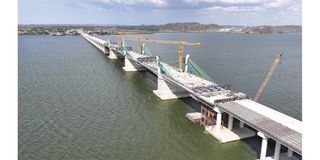
Bridges like Kigongo–Busisi over Lake Victoria, and bypass roads around growing cities, are being built not as stand-alone monuments, but as part of a wider vision of corridors that cut hours from journey times and make our neighbours’ access to the sea more reliable.
At the same time, a new generation of logistics hubs is emerging. Dry ports and inland container depots close to Dar es Salaam, and inland facilities such as Kwala, are designed to decongest the port by moving containers swiftly inland for clearance and redistribution.
For transporters and importers in the region, this means fewer days waiting at the port, lower storage costs and more predictable planning.
For manufacturers and farmers, it opens up opportunities to add value along the corridor – for example, through packaging, cold storage, light assembly or agro-processing carried out near these hubs, rather than shipping raw products in and finished products out.
For TANROADS, this interconnected reality has important implications. When we design and maintain a trunk road today, we do not see it as an isolated line on a map.
We see it as part of a living corridor that must serve ports, connect logistics hubs, and handle both regional transit and local economic activity safely and efficiently.
A road leading to a dry port or special economic zone, for instance, must be built to handle high and growing axle loads, reliable year-round access, and safe interaction between heavy trucks and surrounding communities. Our investment decisions increasingly take into account not just traffic volumes, but also the strategic role of each link in supporting trade and industrialisation.
Equally important is how we manage “soft” infrastructure. One-stop border posts, harmonised axle-load rules, digital weighbridge systems, road asset management tools and corridor performance monitoring all help ensure that each kilometre of road delivers maximum economic value. When customs procedures are simplified, when data flows between agencies, and when vehicles can move through weighbridges and border posts with fewer delays, the same road suddenly becomes more productive for traders and transporters. In this way, physical infrastructure and regulatory reforms reinforce each other.
Looking ahead, the African Continental Free Trade Area adds urgency and opportunity to this agenda. As tariffs gradually fall, the decisive question will be whether our infrastructure and logistics ecosystems are efficient enough to carry the expected rise in trade.
Countries that combine high-quality corridors, smart logistics hubs and investor-friendly regulations will become natural gateways for their regions. Tanzania is well-positioned to play this role for Eastern, Central and Southern Africa, provided we stay the course: completing ongoing flagship projects, maintaining existing roads to high standards, and planning new investments with a clear regional lens.
Eng. Mohamed Besta is Tanzania National Roads Agency (TANROADS)'s Chief Executive officer.