Tanzania now moves to rejoin continental court

What you need to know:

  • Deputy Minister for Constitutional and Legal Affairs, Zainab Katimba, confirmed that Tanzania has started internal deliberations on how to rejoin the declaration
Arusha. Tanzania has begun internal discussions on rejoining a key legal mechanism that would once again allow individuals to file cases directly against the Government before the African Court on Human and Peoples' Rights (AfCHPR), raising renewed optimism among human rights stakeholders across Africa.

The focus is on Article 34(6) of the Court’s Protocol, which requires African Union member states to make a special declaration permitting individuals and non-governmental organisations to bring cases directly before the Court.

Currently, only eight countries — Burkina Faso, The Gambia, Ghana, Guinea-Bissau, Malawi, Mali, Niger and Tunisia — have deposited such declarations.

Tanzania ratified the Court’s Protocol in 2006 and submitted the special declaration in 2010, joining a select group of African states that expanded access to regional justice.

However, the government withdrew in 2019, citing legal and procedural concerns, including claims that some applicants had bypassed domestic legal remedies before approaching the Court.

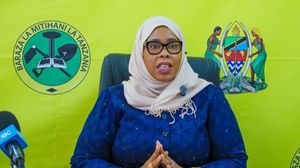
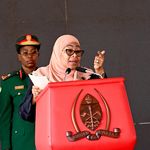
Speaking on 2 March 2026 during the official opening of the Court’s 2026 Judicial Year in Arusha, Deputy Minister for Constitutional and Legal Affairs, Zainab Katimba, confirmed that Tanzania has started internal deliberations on how to rejoin the declaration.

“As host of this Court, Tanzania will continue to support its authority. Our commitment is evident in the efforts we are making to implement decisions delivered here,” she said.

“Although Tanzania withdrew from Article 34(6), the good news is that we have begun addressing the challenges that led to that decision and are at an advanced stage of discussions on returning to its implementation.”

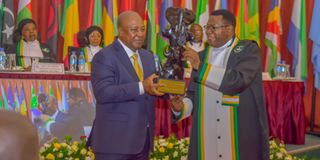
The ceremony also marked the 20th anniversary of the Court’s establishment. Ghana’s President, John Dramani Mahama, urged African states that have not yet ratified the declaration to do so, emphasising that respecting human rights strengthens, rather than weakens, states.

He further called on the Court to improve its legal systems and enforcement mechanisms to enhance credibility as a model institution and a refuge for Africans seeking justice.

Court President Blaise Tchikaya said the institution is implementing reforms to improve compliance with judgments and streamline compensation procedures. Since its inception, the Court has registered, heard and delivered judgments in more than 390 cases — a milestone achieved through cooperation with member states and support from Tanzania as host nation.

However, he said limited ratification of Article 34(6) and low awareness of the Court’s jurisdiction as major challenges across Africa’s 55 states.

Welcoming Tanzania’s renewed commitment, Chief Executive Officer of the Pan African Lawyers Union, John Deya, called for concrete action to ensure credibility. Statistics reveal a sharp decline in filings, with only eight new cases registered in 2025, down from 66 in 2019, raising concerns over the Court’s effectiveness as Africa’s leading human rights judicial body.

This renewed push by Tanzania signals an important step towards strengthening access to justice and reinforcing human rights protections across the continent.