Tanzania Prime Minister Nchemba orders end to excessive government convoys amid austerity measures

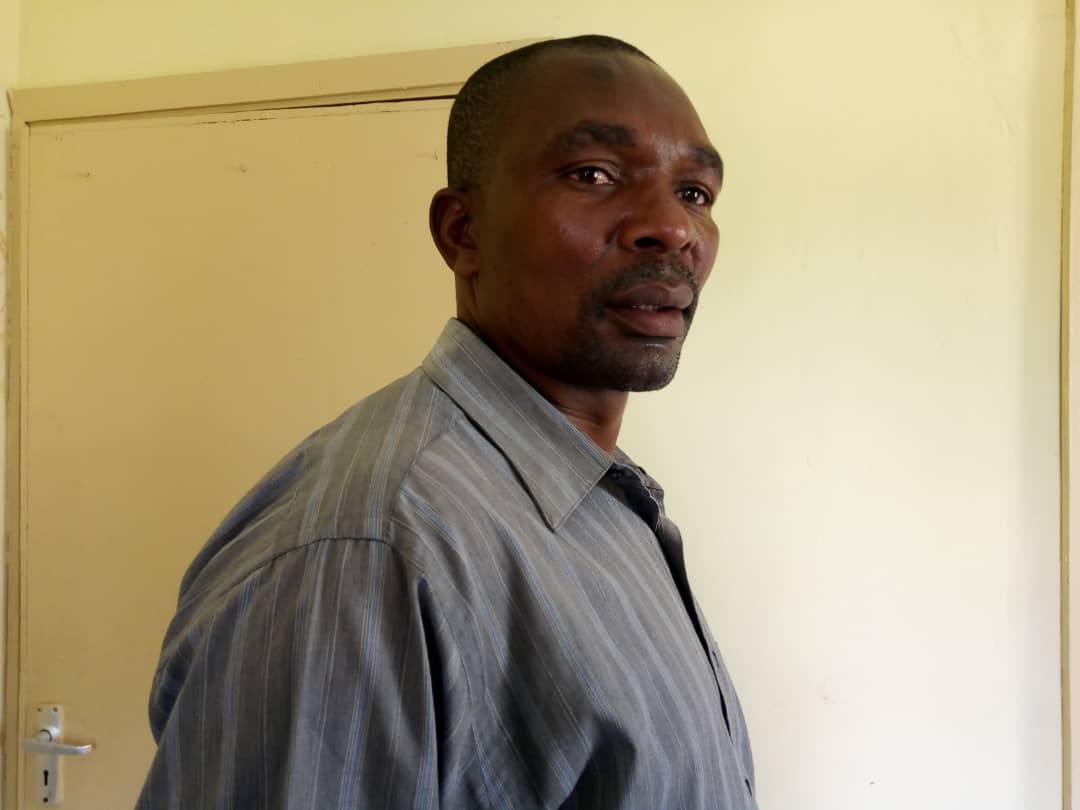
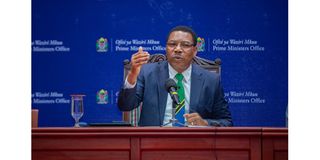
Prime Minister, Dr Mwigulu Nchemba

Dar es Salaam. Prime Minister, Dr Mwigulu Nchemba, has directed the government executives to reduce motorcades of regional and district officials accompanying leaders during official visits, in order to curb public spending.

He stated that when a leader visits all districts in a region, the Regional Commissioner and officials of the visited district suffice to accompany them, rather than all regional officials travelling to every district.
This order aligns closely with measures announced by President Samia Suluhu Hassan on April 8, 2026, when she stated she would reduce her convoy by using buses to transport some accompanying officials.

That measure also aimed to reduce fuel expenditure which had escalated in price.

The difference lies in President Hassan stressing fuel cost reduction, whilst Dr Nchemba targets overall government expenditure.

However, this step is not novel to Dr Nchemba. In 2022, whilst serving as Minister of Finance and Planning, he announced a scheme to cut government expenditure on vehicles, fuel, spare parts, and maintenance, which he stated then reached Sh558.45 billion.

Under that scheme, the government promised to alter vehicle usage procedures, including prohibiting transporting a leader's vehicle by road whilst the leader travels by air to be met by the vehicle afterwards.

Even Speaker of the National Assembly, Mr Mussa Zungu, has previously emphasised this issue, demanding steps to reduce those costs be implemented in practice.

Mr Zungu’s remarks sustained the debate surrounding government vehicle usage, an issue now given fresh momentum by Dr Nchemba’s directive as Prime Minister.

These measures demonstrate long-standing government efforts to eliminate unnecessary expenditure.

However, implementation has remained challenging, with large convoys in leaders' motorcades cited as inflating fuel, maintenance costs, and officials' time.

Dr Nchemba’s new directive now places emphasis on ensuring accompanying officials are strictly those with direct responsibilities in visited areas.

Nchemba’s instructions

Dr Nchemba issued this directive anew in Dodoma during his speech concluding the fourth session of the 13th Parliament, on Friday, September 4, 2026, emphasising the importance of government fiscal discipline.

He identified potential areas for austerity including government vehicle operational costs, diaries, domestic and foreign travel expenses, and budget process costs, by reducing participating staff numbers.

Other areas, he stated, include costs for meetings, workshops, conferences, alongside other trips.

He instructed Minister of State, Prime Minister’s Office, Regional Administration and Local Government (PMO-RALG), Prof Riziki Shemdoe, to direct regional and district commissioners to trim official motorcades during visits.

“You visit Region A where you will tour all districts. But across all districts, officials from the entire region, even from districts you will visit, are present in every district. Consequently, you go to inspect a classroom built for Sh24 million travelling with 150 vehicles, with the MP's car being the 151st,” he stated.

He emphasised that the regional commissioner and district commissioner of the visited district suffice to receive the leader and accompany them on that tour, whilst others should be met at their work stations.

“All districts go to receive, all institutions, offices are closed. When vehicles pass, it resembles wildebeest migrating from Tanzania heading to Kenya, for what? A tour. These habitual practices we can alter,” he stated.

Another area he noted had flaws in public funds spending is budget preparation processes, by reducing participating staff numbers.

“When PMO-RALG budget arrives, all directors and finance committees nationwide come before the Parliamentary Local Authorities Accounts Committee (LAAC). Meaning from one region 100 to 180 people attend, nationwide amounting to 5,000 to 6,000 people,” he stated.

“Yet those entering the room to meet the committee are three to four. All others wait outside. These are habitual matters we can avoid, directing those funds into constructing classrooms required during education reform implementation,” he added.

He stated that it is improper that a single budget review meeting involving three speakers involves carrying officials costing over Sh20 billion, funds that could successfully build all required classrooms.

He explained that starting 2028, the government anticipates students entering Form One will triple compared to those currently commencing.

He stated that under those circumstances over 8,000 science laboratories, 16,000 classrooms, and over 27,000 teachers will be required, hence expenditure habits must change.

Monitoring essential

Commenting on this, Political Analyst, Dr Baraka Mfinanga, stated a robust mechanism is required to monitor government directives ensuring implementation occurs.

“Directives are numerous; the issue lies in public service culture built over many years. Many officials are accustomed to demonstrating leaders' prominence through large motorcades, unaware they add unnecessary costs,” he said.

What Dr Mwigulu stated, he noted, makes sense because saved funds can be directed into education, health, and infrastructure sectors.

However, he stated success will depend on clear standards regarding allowable official numbers on visits and penalties for violators.

“Without accountability, these directives will become part of history concerning unimplemented statements,” he stated.

For his part, another political analyst, Mr Said Majjid, stated that the government cannot encourage spending discipline among citizens whilst itself funding unproductive activities.

“Large motorcades and meetings with numerous participants often enhance activity image, but do not necessarily boost results. Modern governance should measure success by results,” he explained.

He stated if few people present arguments before committees, there is no reason to transport thousands of employees at high travel and allowance costs.

“If directives remain purely political, they risk losing momentum later,” he said.

Councillors’ meetings

In another step, Dr Nchemba directed Prof Shemdoe to prepare a calendar for all councillors' meetings to take place three weeks prior to official Parliamentary week dates.

“Three weeks before Parliament means one week before Parliamentary committees. Therefore, these meetings will occur even before Parliamentary committees begin sitting. The objective is giving MPs, who are legally councillors, opportunity to participate in councillors' meetings before attending Parliamentary sessions,” he stated.

He explained he recognises in some areas MPs are deliberately excluded from meetings.

“If a director has their preferred MP or is preparing one or has their own agenda, they schedule meetings where MPs will inevitably miss out,” he stated.

He demanded that calendar be submitted and henceforth anyone violating it is defiant and unfit to hold office.

Regarding El Niño

Regarding anticipated El Niño rainfall, Dr Nchemba stated that the government continues taking precautionary measures while issuing directives to various sectors to enhance readiness against potential damage.

Steps taken, he stated, include strengthening disaster management committees to effectively respond when damage occurs.

Additionally, he stated funds are set aside for emergency infrastructure repairs to restore normalcy, all channelled to respective funds.

“Disaster committees at various levels down to village level must fully prepare to tackle potential challenges,” he stated.

He directed all high-risk areas be identified early, risk assessments conducted, appropriate steps taken, while rescue equipment, emergency services, and communication systems remain ready.

On electricity, water, and communications, he instructed plans be aligned to avert prospective damage and ensure uninterrupted services.

“We possess dam-digging machinery; let it construct flood control infrastructure. In some areas water spreads simply because it lacks drainage,” he stated.