Tanzania’s anti-drug czar unveils high-tech attack on drug financiers

Dar es Salaam. The Drug Control and Enforcement Authority (DCEA) has announced a major shift in its approach, turning to advanced technology to dismantle the financial networks that underpin the country’s narcotics trade.

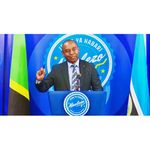
In a recent exclusive interview with The Citizen’s sister newspaper, Mwananchi, at the authority’s Dar es Salaam headquarters, DCEA Commissioner General Aretas Lyimo said the agency is boosting its digital capabilities to identify and apprehend the elusive figures who bankroll the illicit industry.
This represents a strategic pivot from targeting street-level dealers to focusing on the sophisticated "white-collar" operators who finance large-scale drug movements but rarely handle the product themselves.

Mr Lyimo explained that the new systems will allow the agency to track influential individuals involved in the trade, ensuring their arrest and prosecution regardless of social or political standing.

"To tackle this problem decisively, we must go beyond conventional operations. We have arrested both small and major dealers, but financiers must be apprehended through digital and technological means. They operate in the shadows, believing their influence shields them from scrutiny. That ends now," insisted Mr Lyimo.

Furthermore, DCEA officers have been sent abroad for specialised training to master technological systems capable of mapping every actor in the illicit supply chain.

According to him, the strategy reflects the authority’s recognition that the narcotics trade is a tiered ecosystem.

Beyond well-known traffickers and street-level dealers, he said it is sustained by a silent class of financiers insulated from the "dirty work" by multiple layers of intermediaries, making them historically hard to trace.

Dismantling the ‘financial backbone.’

Mr Lyimo outlined the structure of these criminal networks, which typically comprise three tiers: major dealers who control the physical supply and logistics, mid-level operatives responsible for coordinating regional distribution, and financiers in charge of capital provision, but remain behind the scenes.

"These financiers rarely meet dealers directly. They operate through complex webs of intermediaries, funding dealers who, in turn, work with lower-level distributors. Because they are not caught with the drugs, they have often escaped justice," said the country’s drug control chief.

To address this gap, he said the DCEA is establishing a specialised forensic unit, noting that using data science and digital forensics, the unit will trace financial flows, encrypted communications, and digital footprints linking money to narcotics movements.

"We must connect individuals digitally to show how they relate to the major traffickers we have already apprehended," added Mr Lyimo.

"Anyone considering themselves untouchable must understand that under the law, no one is above it. Evidence linking you to narcotics financing is enough for an arrest," stressed the authority’s boss.

The unit is expected to become operational soon, with the Commissioner General confident it will solve long-standing evidentiary challenges that have hindered the prosecution of high-level suspects.

Clearing the streets: a three-year review

Reflecting on progress over the past three years, Mr Lyimo highlighted how Dar es Salaam has transformed.

He recalled a time when nearly every daladala (commuter bus) station and numerous neighbourhoods were overrun by drug addicts, locally known as mateja.

Hotspots included Mwenge, Makumbusho, Mwananyamala, Kinondoni, Manzese, and Kwa Mfuga Mbwa, where addiction fuelled petty and violent crime.

"Incidents of forceful robbery were frequent because addicts were desperate for money. Residents could not walk safely with their valuables. The desperation created a climate of fear," he said.

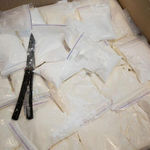
Sustained operations have reduced public drug use, a situation Mr Lyimo described as occurring "street by street, bush by bush, house by house, and farm by farm", resulting in the seizure of 5.4 million kilogrammes of narcotics over three years.

Shift to rehabilitation

As street-level drug availability fell, the government focused on addiction treatment. Thousands of users, confronted with their dependence, sought medical help.

Treatment clinics have increased to over 21 nationwide, while sober houses now number 77.

Public hospitals are also authorised to provide addiction treatment, benefiting approximately 900,000 individuals free of charge under government sponsorship during this period.

"When access to drugs became difficult, many users sought treatment, prompting the expansion of clinics and sober houses," said Mr Lyimo.

Cutting heroin and cocaine supply lines

The reduction in "hard" drugs such as heroin and cocaine followed the strategic dismantling of trafficking networks.

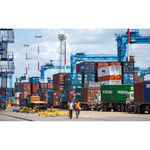
Mr Lyimo said the DCEA has broken 10 major international networks operating within Tanzania and across borders.

"Cocaine distribution involves a structured network. Key figures in Tanzania receive and distribute drugs, while others abroad handle smuggling logistics," said Mr Lyimo.

Local operatives managed packaging and recruited "mules" to transport drugs globally. By targeting network leaders, the DCEA disrupted entire distribution chains.

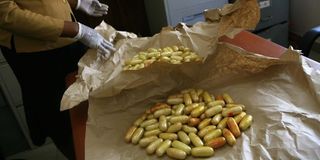
Operations have covered: cocaine and heroin "skunk" cannabis and traditional marijuana, Narcotic-based medicinal drugs, and precursor chemicals used in illicit production.

A notable seizure involved 30 tonnes of Mitragyna speciosa, a relatively new psychoactive substance. The network included traders from Sri Lanka, Dubai, and India.

International cooperation

Recognising the global nature of drug trafficking, the DCEA has strengthened collaboration with foreign law enforcement and Interpol, which has installed specialised equipment in Tanzania to improve digital communication and real-time data sharing on international suspects.

"When a network involves suspects overseas, we coordinate with respective countries to facilitate arrests," said Mr Lyimo.

"Suspects linked to South Africa were apprehended through cooperation there, while others were caught in Tanzania through shared intelligence," he added, stressing that all major traffickers in custody are being tried at the Corruption and Economic Crimes Courts.

A comprehensive strategy for the future

During the interview, Mr Lyimo concluded that Tanzania’s fight against drugs has reached a turning point.

Combining high-tech surveillance, international intelligence sharing, aggressive street-level enforcement, and a robust public health response, the government seeks to make the country inhospitable for traffickers at all levels.

"Our goal is not only to arrest traffickers but also to break the financial networks sustaining them and to rehabilitate those affected," he said, sharing the message to financiers, “your money can no longer buy you anonymity."

The DCEA’s forensic unit is expected to provide the scientific evidence needed to secure convictions for those at the top of the criminal hierarchy, completing the authority’s long-term strategy against the narcotics trade.