Tanzania's Benjamin Mkapa Hospital performs first minimally invasive heart surgery on three Burundian children
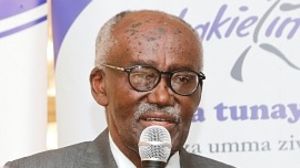
Benjamin Mkapa Hospital executive director, Prof Abel Makubi, speaks to journalists in Dodoma on Thursday, July 9, 2026, on minimally invasive heart surgery performed on three children from Burundians for the first time, marking another milestone in Tanzania's drive to become a regional hub for specialised healthcare. PHOTO | ELIDAIMA MANGELA

Dodoma. Benjamin Mkapa Hospital (BMH) has successfully performed minimally invasive heart surgery on three children from Burundians for the first time, marking another milestone in Tanzania's drive to become a regional hub for specialised healthcare.
The procedures were carried out jointly by specialists from BMH and the Jakaya Kikwete Cardiac Institute (JKCI) as part of efforts to strengthen local capacity in cardiac care and expand access to specialised treatment for patients from across the region.
Speaking about the achievement, BMH executive director, Prof Abel Makubi, said the milestone supports the government's medical tourism agenda, which seeks to attract patients from neighbouring countries and beyond to access specialised treatment in Tanzania instead of travelling outside the continent.
“We have successfully completed heart surgery on three children from Burundi. This demonstrates how we can work together by leveraging our expertise to serve Tanzanians while also expanding the country's capacity to provide specialised treatment for patients from neighbouring countries,” said Prof Makubi.
He said the procedures involved repairing congenital holes in the hearts of the three children.
Others with similar conditions received alternative treatment because the severity of their heart defects meant they were not eligible for the minimally invasive procedure.
Prof Makubi said the service had previously been available only to adults but has now been extended to children following the hospital's growing experience and expertise.
The development, he added, has significantly reduced the number of Tanzanians seeking similar treatment abroad.
“Today, our hospital provides cardiac care that meets both national and international standards, including pacemaker implantation for patients with slow heart rhythms and minimally invasive heart defect repair for adults. We have now extended the service to children,” he said.
National Medical Tourism Coordinator, Dr Asha Mahita, urged healthcare institutions to strengthen collaboration in delivering specialised and super-specialised services to help Tanzania realise the benefits of medical tourism while reducing the number of citizens travelling overseas for treatment.
She said stronger collaboration would also make specialised treatment more accessible to Tanzanians who cannot afford the high cost of seeking such services abroad, as they would be available locally at standard treatment costs.
Cardiologist, Dr Godwin Sharao of the Jakaya Kikwete Cardiac Institute said treating international patients would help improve the quality of cardiac care for Tanzanians by identifying gaps in service delivery and guiding further improvements.
“If we are able to treat our own patients here at home, we will save the money and time spent seeking treatment abroad. At the same time, we will build a highly skilled and competitive workforce capable of serving Tanzanians while attracting patients from other countries,” said Dr Sharao.